



Back to series


CHAPTER 10
Meditating on God’s Word
On the glorious splendor of your majesty,
and on your wondrous works,
I will meditate.
Psalm 145:5
As we have seen in the chapters above, God uses His Word as a major instrument of our transformation. This is why serious believers read and study the Bible and regularly listen to solid Bible teaching. These days, however, far fewer meditate on the Bible, even though previous generations emphasized meditation as a vital practice for maturing in the Christian life.
I have read and studied the Scriptures daily since my conversion in 1970, but only in recent years have I learned to meditate on them. Had I learned this earlier, I could have grown much deeper and stronger in the Lord than I have thus far. Knowing about God intellectually is not the same as knowing God personally; we need both. My experience with reading the Bible illustrates the fact that, as theologian Robert Saucy notes:
For the Word to have a transformative effect in our life, it must reach the depth of the heart and touch our whole person. Knowing it in our mind is not enough. …
Spiritual transformation does indeed come from knowing God through his Word, but the knowledge is a personal experiential knowledge. …
Change comes only when the truth of Scripture is truly heard in the biblical sense of “hear” or “heed.” …
According to Scripture, the “hearing” that receives the Word of God into the heart does not come simply through reading or even studying the Word but through meditating on it.1
Many Bible-believing Christians I have known and helped to grow as disciples of Jesus have, like me, neglected meditation. But that doesn’t have to be true of you if you will learn to meditate on God’s Word even now!

If you have tried in the past to learn to meditate and not found it helpful, consider this true story. In the mid-1800s, Rufus Upchurch Darby joined many others in the Colorado Gold Rush. He staked a claim, began mining, and found gold. But before long, the gold vein disappeared. Darby became discouraged and sold his equipment to someone else. That person later discovered that the gold vein had simply shifted—just three feet from where Darby stopped digging. This illustrates something true for everyone who wants to learn to meditate: it takes perseverance. Meditation isn’t learned quickly, nor are its riches harvested right away. It takes time. But with perseverance comes success.
Or consider this true story. Pastor Hoffmann is a gifted minister with a doctorate from Oxford University, but he felt something was missing and longed for greater intimacy with Christ. In the course of his times spent with a spiritual mentor, it became evident that while he regularly read and studied Scripture, he spent little time meditating on it. His mentor suggested a particular book on the subject, which he immediately began to read and ponder. Over the months that followed, his intimacy with the Lord began to deepen, and his ministry has become more vibrant and fruitful. He now sees meditation as a vital part of the Christian life he had been neglecting.
Throughout history, godly leaders have testified to the transforming effects of meditation. Consider a beautiful description by Thomas Brooks, a seventeenth-century church leader:
Remember that it is not hasty reading but serious meditation on holy and heavenly truths that makes them prove sweet and profitable to the soul. It is not the mere touching of the flower by the bee that gathers honey, but her abiding for a time on the flower that draws out the sweet. It is not he that reads most but he that meditates most that will prove to be the choicest, sweetest, wisest and strongest Christian.2
The examples and quotations above give us a glimpse of the power of meditating on God’s Word. But what do we mean by “meditating”?
What Is Biblical Meditation?
In the Old Testament, there are two Hebrew words that are typically translated with the English word “meditate.” One word (hagah) suggests a low-pitched murmuring sound (see Joshua 1:8, “you shall meditate … day and night”). The other (siyach) more commonly means to be taken up or absorbed with something (Psalm 77:6, “let me meditate in my heart”). Considering these two terms in tandem, we get the idea of pondering, carefully reflecting on a biblical word, verse, or story in one’s mind, and quietly and repeatedly vocalizing it until it becomes a lens through which we see and live our lives. Memorizing the text is a great aid to the process of meditation.
Christian meditation focuses on God’s Word (Ps. 1:1–2), seeing through it the glorious splendor of His majesty and His wondrous works and ways (Ps. 145:5–6), especially in and through Jesus, His Son. Meditation shapes both the inner life and outward behavior. J. I. Packer describes it this simple way:
Meditation is the activity of calling to mind, and thinking over, and dwelling on, and applying to oneself, the various things that one knows about the works and ways and purposes and promises of God … It is an activity of holy thought, consciously performed in the presence of God, under the eye of God, by the help of God, as a means of communion with God.3
Thus, meditation is a devotional practice that we engage in with God’s help to better know Him and to enjoy closer communion Him.
Meditation differs from formal, analytical study of the Bible; we must not confuse the two. “Meditation and study differ,” said the Puritan preacher Thomas Watson. He further explained:
Study is a work of the brain, meditation of the heart; study sets the attention on work, meditation sets the affection on work. Study is the finding out of a truth, meditation is the spiritual improvement of a truth; the one searches for the vein of gold, the other digs out the gold. Study is like a winter sun that has little warmth and influence: meditation leaves one in a holy frame: it melts the heart when it is frozen, and makes it drop into tears of love.4
Watson was keen to encourage disciples of Jesus to let their reading of Scripture not only inform them but inflame them through meditation. Although study can be a helpful preparation for meditation on a truth, it is not a substitute. He goes on to say:
Without meditation the truth will not stay with us; the heart is hard and the memory slippery, and without meditation all is lost; meditation imprints and fastens a truth in the mind. Without meditation the truths which we know will never affect our hearts. How can the word be wrought in the heart unless it be wrought in by meditation? As a hammer drives a nail to the head, so meditation drives a truth to the heart. Without meditation, the word preached may increase notion [knowledge], not affection. Meditation fetcheth life in a truth. There are many truths which lie, as it were, in the heart dead, which when we meditate upon, begin to have light and heat in them.”5
We should hasten to say that biblical meditation is not related to New Age or Eastern meditation, fear of which has caused some believers to avoid the practice altogether. The following explanation from theologian Peter Toon illustrates the great difference between Eastern and biblical meditation:
The simplest way to highlight the difference is to say that for the one, meditation is an inner journey to find the center of one’s being, while for the other, it is the concentration of the mind/heart upon an external Revelation. For the one, revelation/insight/illumination occurs when the inmost self (which is also the ultimate Self, the one final Reality) is reached by the journey into the soul, while for the other, it comes as a result of encounter with God in and through his objective Revelation, to which Holy Scripture witnesses.6
We should avoid Eastern meditation, whether Hindu, Buddhist, Transcendental, or various other forms of New Age meditation. But we should fully embrace biblical meditation, described above, as a valuable means of knowing God more intimately, growing in grace, becoming more Christlike, and fulfilling God’s purposes for our lives.
What Does the Bible Say about Meditation?
The Bible often urges God’s people to meditate.
When God commissioned Joshua to lead the Israelites into the Promised Land, the Lord said, “This Book of the Law shall not depart from your mouth, but you shall meditate on it day and night, so that you may be careful to do according to all that is written in it. For then you will make your way prosperous, and then you will have good success” (Josh. 1:8; my emphasis).
For Joshua to succeed in what God had called him to do, he needed to immerse himself in God’s Word and faithfully put it into practice. This helped him grow in the knowledge of God, through which he experienced divine enablement. This ancient truth applies as much to us today as it did to Joshua then. As James tells us, “Be doers of the word, and not hearers only, deceiving yourselves” (James 1:22). Meditation will help us succeed at whatever God has called us to do and to rest in Him when our progress seems scant.
The theme of meditation occurs often in the book of Psalms, which begins with Psalm 1 declaring the blessedness of the one “who walks not in the counsel of the wicked … but his delight is in the law of the Lord, and on his law he meditates day and night. He is like a tree planted by streams of water that yields its fruit in its season, and its leaf does not wither. In all that he does, he prospers” (vv. 1–3). This paints a picture of someone devoted to God who delights in saturating himself in God’s Word and applying it in daily life, which results in a life of fruitfulness. Such a person prospers in whatever God has appointed him or her to do.
Psalm 119 extols God’s Word and repeatedly refers to meditation (see, for example, vv. 6, 11, 15–16, and many more). In Psalm 145:5, David highlights the specific points of meditation: “On the glorious splendor of your majesty, and on your wondrous works, I will meditate.”
Jesus saturated Himself in Scripture and constantly quoted it. He illustrates for us the vital importance of meditating on God’s Word in preparation to succeed in fulfilling God’s purposes. We see a similar kind of saturation in Scripture in the life of the apostle Paul, who quoted Scripture constantly in his epistles and encouraged believers to “let the word of Christ dwell in you richly” (Col. 3:16, my emphasis).
A careful study of how Jesus and Paul used Scripture reveals that they had not simply read, or even memorized, scattered Bible verses as some believers do today. Rather, they had gone beyond casual reading to meditate deeply on the meaning of these verses in context. That treasury of truth in their hearts enabled them to use God’s Word in an accurate and effective way in whatever situations they encountered.

We need such a Spirit-empowered, solid, and ready grasp of God’s Word if we are to be transformed and successfully navigate life in a fallen world, where every day our own flesh and the schemes and temptations of the devil challenge us. Meditation provides us with essential resources for a wise and godly life, enabling us to “above all else, guard your heart, for everything you do flows from it” (Prov. 4:23 NIV). More importantly, it helps us to know God more intimately and enjoy communion with the Father, Son, and Holy Spirit. Failure to meditate on God’s Word, to learn from and commune with Him, leaves our hearts unguarded, spiritually impoverished, and shallow. No amount of knowledge about God can make up for lack of intimacy with God.
How Do We Learn to Meditate?
The Bible gives no hint that meditation requires instruction by gurus or utilizing special techniques such as controlling one’s breathing, repeating mantras, or descending inward. Rather, the Bible pictures a straightforward activity readily accessible to every believer.
Although Scripture does not give any specific instructions or models to guide us, the Hebrew words for meditation, along with Packer’s definition above, give us enough to find our way into the practice.
Below I describe two similar but slightly different approaches to biblical meditation recommended by Bible-believing, evangelical leaders. These are not intended as formulas but as examples of methods that others have found helpful. George Müller gives a simple, less structured account of how he learned to meditate, with examples of its positive impact. J. I. Packer describes an adapted version of a slightly more structured approach used since ancient times called lectio divina (divine reading).
Finding Nourishment in the Word
George Müller (1805–1898) was a man of prayer who founded over one hundred schools for Christian education and provided for the care of over ten thousand orphans during his lifetime. Müller’s approach to meditation is less structured than Packer’s adaptation of lectio divina and gives more attention to the affective dimension of the practice, illustrating the variety that is possible. In 1841, he reported a transformation in his understanding and practice of meditating on God’s Word:
While I was staying at Nailsworth … I saw more clearly than ever that the first great and primary business to which I ought to attend every day was to have my soul happy in the Lord. The first thing to be concerned about was not how much I might serve the Lord, how I might glorify the Lord; but how I might get my soul into a happy state and how my inner man might be nourished.
Before this time my practice had been … to give myself to prayer, after having dressed in the morning. Now I saw that the most important thing I had to do was to give myself to the reading of the Word of God and to meditation on it, that thus my heart might be comforted, encouraged, warned, reproved, instructed; and that thus, whilst meditating, my heart might be brought into experiential communion with the Lord. I began therefore to meditate on the New Testament, from the beginning, early in the morning. The first thing I did, after having asked in a few words the Lord’s blessing upon His precious Word, was to begin to meditate on the Word of God; searching, as it were, into every verse, to get blessing out of it … for the sake of obtaining food for my own soul. The result I have found to be almost invariably this, that after a very few minutes my soul has been led to confession, or to thanksgiving, or to intercession, or to supplication; so that though I did not, as it were, give myself to prayer, but to meditation, yet it turned almost immediately more or less into prayer.
When thus I have been for awhile making confession, or intercession, or supplication, or have given thanks, I go on to the next words or verse, turning all, as I go on, into prayer for myself or others, as the Word may lead to it; but still continually keeping before me, that food for my own soul is the object of my meditation. The result of this is, that there is always a good deal of confession, thanksgiving, supplication, or intercession mingled with my meditation, and that my inner man almost invariably is even sensibly nourished and strengthened and that by breakfast time, with rare exceptions, I am in a peaceful if not happy state of heart.
For my heart being nourished by the truth, being brought into experiential fellowship with God, I speak to my Father, and to my Friend (vile though I am, and unworthy of it!) about the things that He has brought before me in His precious Word. As the outward man is not fit for work for any length of time, except we take food, and as this is one of the first things we do in the morning, so it should be with the inner man. We should take food for that, as everyone must allow. Now what is the food for the inner man: not prayer, but the Word of God:
and here again not the simple reading of the Word of God, so that it only passes through our minds, just as water runs through a pipe, but considering what we read, pondering over it, and applying it to our hearts …
By the blessing of God I ascribe to this mode the help and strength which I have had from God to pass in peace through deeper trials in various ways than I had ever had before; and after having now above forty years tried this way, I can most fully, in the fear of God, commend it.7
Lectio Divina (Modified Version)
During the sixth century in what is modern-day Italy, the Christian monk Benedict of Nursia and his followers formalized a way of meditating on Scripture called lectio divina (“divine reading”). This approach to meditation and prayer helps believers focus attention on one section of God’s Word, approach it from several angles, and pray with it to draw out God’s message. Though there are several ways to engage in lectio divina, the steps outlined here show one way this approach to meditation on the Bible can be used by the Holy Spirit to illuminate your mind and help you absorb the meaning and application of a chosen text. Or, put differently, it is a way for God to address you personally through His Word. (Prior to practicing lectio divina, you may want to do some basic study of the chosen passage to ensure that you understand its meaning in context. This will help guard against untethered subjectivism.)
This description, first published in Never Beyond Hope by J. I. Packer and Carolyn Nystrom, places somewhat more emphasis on cognitive engagement than the typical practice of lectio divina:
Silence
Take time to be silent: prepare to communicate with God as He expresses Himself to you in [the] passage of Scripture [before you]. After a period of quiet, ask God’s help as you enter this session of meditative prayer.
Read
Read [a short passage of Scripture] aloud several times slowly. Allow its words and meanings to sink into your soul.
Meditate
Meditation is a little like chewing. It is slow and thorough. Write notes about what you see in this passage. Make connections between the various sections. Ask yourself, “What do these words from God say?” “What do they mean?” Place who you are and what you do next to this passage and ask God to examine you. Continue to write your findings. [Here Packer and Nystrom lean more toward study than meditation.]
Prayer
Pray using the passage as an outline for your prayer. Read the passage phrase-by-phrase, responding to God after each.
Contemplation
Wait in stillness once more. Ask that God bring to your mind any areas of your life that you need to shape more closely to His design as revealed in this passage. Contemplate God’s love and power as it is revealed [in this portion of His Word].
Live It Out
What precisely ought you to be believing, thinking, and doing as a result of this passage? Make notes about how you hope to bring these words from Jesus into your current practice.8
As the “Live It Out” step suggests, the purpose of meditation on Scripture doesn’t end when you stop meditating; what you glean in meditation should, in turn, influence your discipleship to Christ.
Recommendations for Your Own Meditation
Consider a few concluding suggestions to help you pursue your own meditation on God’s Word.
Meditation is not inductive Bible study.
To summarize, though meditation involves reflection on the meaning of a passage, it is not inductive study or preparation for teaching or preaching. Meditation is a devotional reading of the Scripture with the goal of drawing closer to God and Jesus. While both approaches give attention to the meaning of the text and are valuable for spiritual growth, they are not the same. Study focuses much more on understanding the meaning of the text, while meditation focuses more on pondering the personal application of the text before God.
Meditation will have limited value unless pursued with right motivation.
David guides us here when he writes, “I remember the days of old; I meditate on all that you have done; I ponder the works of your hands. I stretch out my hands to you, my soul thirsts for you like a parched land” (Ps. 143:5–6; my emphasis). This psalm reveals that David’s heart thirsted for God. He had a strong desire for close communion with God through His Word. If we do not share that orientation, we can ask God to make it so.
Meditation encourages communion with God as mediated by the Holy Spirit’s inward illumination of the Word.
Although communion with God through His Word involves focused thought, prayer for the Spirit’s help is a vital part of the practice. Some days you may experience an elevation of feelings; other times, you won’t. Remember that one’s feelings cannot measure the depth or intensity of one’s communion with God.
It takes time to reap the benefits of meditation.
Look up the biblical passages that speak of meditation and ask God to help you see its importance and strengthen your desire to practice it. Then discipline yourself to stick with it over time to gain its enormous benefits. You may also find it helpful to talk with other Christians who meditate regularly on God’s Word in order to learn about their approaches, experiences, and motivations.
Profitable meditation requires waiting on God.
Blaise Pascal observed that “all the troubles of life come upon us because we refuse to sit quietly for a while each day in our rooms.”9 In this, he echoed David, who said, “For God alone, O my soul, wait in silence, for my hope is from him” (Ps. 62:5). Meditation requires a measure of discipline to sit quietly before God in silent worship, but it yields blessings not available in any other way.
Before you begin meditation proper, it can be helpful to first quiet your heart in the presence of God and focus your attention on Him, remembering that we live coram deo, that is, before the face of God (Ps. 56:13). The words of teacher and pastor Andrew Murray give us helpful guidance in preparing to meditate:
Take time to be separate from all friends and all duties, all cares and all joys; time to be still and silent before God. Take time not only to secure stillness from man and the world, but from self and its energy. Let the Word and prayer be very precious; but remember, even these may hinder the quiet waiting. The activity of the mind in studying the Word, or giving expression to its thoughts in prayer, the activity of the heart, with its desires and hopes and fears, may so engage us that we do not come to the still waiting on the All-glorious One. Though at first it may appear difficult to know how thus quietly to wait, with the activities of the mind and heart for a time subdued, every effort after it will be rewarded; we shall find that it grows upon us, and a little season of silent worship will bring a peace and a rest that give a blessing not only in prayer, but all the day.10
Don’t let busyness stop you.
For many of us, busyness hinders our ability to meditate. In today’s fast-paced, stress-filled, high-pressure world, life is hectic; time is at a premium. Meditation takes time out of our already overloaded schedule. But as pastoral writer A. W. Tozer wisely said,
We Christians must simplify our lives or lose untold treasures on earth and in eternity. Modern civilization is so complex as to make the devotional life all but impossible. It wears us out by multiplying distractions and beats us down by destroying our solitude, where otherwise we might drink and renew our strength before going out to face the world again. The need for solitude and quietness was never greater than it is today.11
The busyness of our lives isn’t really a reason not to meditate; actually, it’s one of the main reasons we should! Finding time to meditate means making time to meditate and setting ourselves apart from the pressing needs of the day so that we do not feel rushed, hurrying to move on to the next thing.

Here are a few practical steps to guide your time of meditation.
- Find a quiet place where you will not feel distracted. Allow fifteen to twenty minutes for meditating.
- Bring your Bible, a notebook, and a pen. Record important insights if they come; jot down any tasks or memories that pop into your mind and may distract you.
- To keep from becoming drowsy, avoid beds, overstuffed chairs, or sofas; sit in a chair with an upright back.
- Select your text from your daily Scripture reading or a passage that speaks to an important need or concern in your life.
- Select anywhere from one verse to several, or possibly a brief parable or story of Jesus.
- Open your time with prayer and ask God to meet you.
- If you have not tried meditation before, start small, perhaps one time a week, and live with one text for the whole week, recalling and pondering it periodically.
- Most people find it helpful to memorize the text and read it aloud several times; this ancient practice is still widely used today.
- Read the selected verses several times, as noted above.
- Attend to anything that applies to your life and resolve to make whatever changes seem necessary.
- Conclude your meditation by giving thanks to God.
The book Meditating on the Word by Dietrich Bonhoeffer has been a helpful guide to many people, as has Edmund Clowney’s Christian Meditation: What the Bible Teaches about Meditation and Spiritual Exercises.
Questions to Ponder
- Describe your exposure to and experience with the practice of meditation on Scripture. Are you inclined to appreciate or question the value of meditating on God’s Word? Explain your answer.
- List some benefits of consistently meditating on Scripture as mentioned in this chapter.
- Compare and contrast biblical meditation and Eastern or New Age meditation.
- Also compare and contrast biblical meditation and Bible study.
- Name some of the challenges to practicing biblical meditation in our day. How will you begin to overcome these challenges
- Are you ready to set a time and place to begin learning to meditate on Scripture? If not now, when?
Robert L. Saucy, Minding the Heart: The Way of Spiritual Transformation
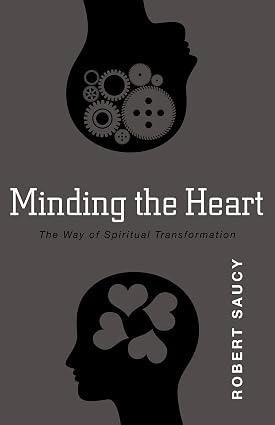 In Minding the Heart, Robert L Saucy offers insightful instruction on what spiritual transformation is and how to achieve it.
Matthew Bingham, A Heart Aflame: A Reformed Approach to Spiritual Formation
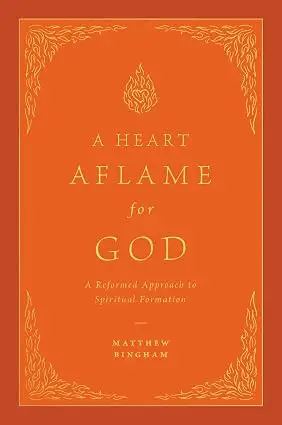 In A Heart Aflame for God, Matthew C. Bingham studies God-ordained spiritual practices modeled by the 16th- and 17th-century Reformers.
Thomas A. Tarrants
Thomas A. Tarrants is President Emeritus of the C.S. Lewis Institute. After serving twelve years as president and nine years as vice President, he retired from his position as Vice President for Ministry and Director, Washington Area Fellows Program, with CSLI in June 2019. He holds a Master's of Divinity Degree, as well as a Doctor of Ministry Degree in Christian Spirituality. Tom is an ordained minister in the Evangelical Church Alliance and a member of the Evangelical Theological Society. Tom is the author of Consumed by Hate, Redeemed by Love, published by Thomas Nelson Publishers and Following Jesus Christ. He spends his time writing, mentoring, consulting and traveling.
