



Back to series



CHAPTER 11
Pursuing Daily Communion with God
Draw near to God, and he will draw near to you.
James 4:8
God tells us that our communion with Him will grow and flourish as we intentionally seek and pursue Him—and He has given us several means by which to do so. Meditation, as discussed in the previous chapter, is one of these, but there are others. Through the diligent use of these means and the work of the Spirit, we can grow much closer to God—if we really desire to. A. W. Tozer said that “every man is as close to God as he wants to be.”1
Generally speaking, God intends that we pursue communion with Him in the context of active engagement in a congregation of His redeemed people. This means following the example of believers in the early church, who “devoted themselves to the apostles’ teaching and the fellowship, to the breaking of bread and the prayers” (Acts 2:42). God offers no substitute for regularly gathering to worship Him, sing His praises, listen attentively to the preaching of His Word, share our lives with one another, pray together, celebrate communion, and rejoice in the baptism of new believers.

Three of these corporate practices also have a private, personal dimension that we can experience by setting aside time each day to quietly read and reflect on God’s Word, lift our prayers to Him, and give thanks and praise to Him for who He is and for His goodness to us. We can see believers seeking God daily as far back as the Psalms (see 5:3; 119:147), many of which were written around 1000 BC. We also see God urging His people to learn and love His Word in the Pentateuch (see Deuteronomy 6:4–9, for instance). And, as we’ve already noted, Jesus often took time to get away from others and spend time in prayer (Mark 1:35; Luke 5:16; 6:12), a pattern of engagement and withdrawal. Those who have known God most intimately have devoted themselves to prayer, worship, and meditation on His Word.
I think of “Trevor,” a brilliant young philosophy professor and faithful follower of Jesus who often speaks to others about Christ. In the course of our times of spiritual counsel, he expressed a desire to draw closer to Christ. Further conversation indicated the need for a deeper and more consistent devotional life. He began to regularly read his New Testament (in Greek), savoring its richness, and soon found his prayer life growing fuller and more earnest, leading to deeper fellowship with Christ. No one who hungers and thirsts for Christ and seeks Him in His Word and prayer will be sent away empty! And you don’t need to read Greek to do this yourself!
Helpful Counsel for a Daily Time with God
Consider several helpful suggestions designed to aid you in developing your own daily time with God to know Him better and love Him more.
Set a specific time and place to meet with God each day.
Most people choose the early morning because they feel alert and can start the day with God before the busyness begins. But the morning doesn’t work for everyone. God made both larks and owls, so learn which you are and operate accordingly. If you have a lot of responsibilities in the morning and thus will always feel rushed, choose another time that works best for you. Select a place that is familiar, quiet, comfortable, free of distractions, and regularly available. Do what you can to make entry into this space simple. Put your Bible, notebook, and pen in easy reach. Remove any obstacles that might prevent you from getting started or might distract you once you begin. This includes your cell phone; turn it off and put it in a different room.
Make your daily time with God a top priority.
Consider your devotional time a key part of putting God first in your life. As your loving Father, He wants to spend time with you and help you—and this is why He speaks to you through His Word. What could be more important in your life than meeting with God? Many years ago, I realized that putting God first each day meant praying and reading His Word before reading the newspaper. Listening to God before listening to man. That made a significant difference in the quality of my time with God. Today, it means spending time with God before checking my cell phone in the morning. This choice will require desire, commitment, discipline, and planning.
And what if your reading in the Bible becomes dry and prayer grows stale? That has happened to me many times over the years. Other believers report the same thing. Do not stop reading and praying! Continue on, telling God of your weariness and asking Him to reveal any hindrances and restore you. Seek advice and encouragement from others in your congregation. Our continuing faithfulness in arid times pleases God, who sees that we do not simply seek the gift of good feelings in our devotional exercises, but the Giver of good gifts—God Himself (James 1:17).
Other recommendations are more practical: for instance, make sure that you get adequate sleep so you can meet with the Lord while alert. Research has shown that, for optimal health, most adults need to sleep seven hours or more each night.2
Attempts to operate on significantly less sleep will have a negative physical and mental impact, and for most people, this is not sustainable. It will also hinder your ability to pray, concentrate, and profit from reading Scripture.
Set a reasonable duration for your daily devotional time.
Although the Bible gives no directions here, you might start with twenty or thirty minutes a day, spending half of this time reading Scripture and half in prayer. Once that becomes an established pattern, you may want to try increasing to a longer period. Any expansion should grow out of a heartfelt desire for more time in Scripture and prayer, not out of a spirit of legalism, performance, or competition with others. Start from wherever you are, even if it’s only five minutes a day. Then let your appetite increase. Let God increase your appetite.
Pick an approach that works for you.
Although there is no such thing as “the best approach to Bible reading and prayer,” you may find it helpful to begin by reading the Bible, then praying, as George Müller did. Scripture teaches us truth about God, His works, His ways, ourselves, and the world, and thus can prepare our hearts and minds for fellowship with Him. When we prepare our hearts in this way, we will find that sometimes God highlights a truth in a way that brings special blessing and prompts us to offer specific prayers and praise. Others may find it more helpful to start with prayer, and in doing so prepare their hearts to receive the Word.
Before starting to read, ask God to illuminate your mind through the Holy Spirit so that you might rightly understand His Word and how it applies to your life.
As you prepare to read God’s Word, make sure you have a clean heart. Confess any sins of which you are aware, and ask God’s forgiveness (1 John 1:9). Unconfessed and unrepented sin will hinder your prayer (Ps. 66:18), so ask God to bring to mind anything that requires confession and repentance. You should also pray for God’s illumination and guidance as you read. Psalm 119:17–19 is a good starting point if you don’t have a prayer of your own.

When reading the Bible, slow is better than fast, and aloud is better than silent.
If you rush through your reading of Scripture, you will miss much of the benefit. Take time to ponder and reflect. Listen for what the Spirit may want to say to you, pausing to pray or praise or give thanks whenever appropriate. Reading aloud, the common practice of God’s people until recent times, adds a second sensory channel and will enhance your reading. You may also want to explore listening to Scripture read aloud.
Pick a place in the Bible to read.
Where in the Bible should you read? Many people like to read straight through from beginning to end, moving ahead at a comfortable pace. This approach has a long history and also has the virtue of showing the big picture of Scripture. Others prefer to focus on areas that address a present need or interest, or perhaps a section such as the Gospels or the Epistles, or the Pentateuch or the Psalms. Still others take a less structured approach. Each approach has its place, depending on one’s age, maturity, and present needs. Many Bible reading plans3 or study Bibles are available; you may want to find one that seems right for you and try it out. Whichever plan you choose, do not tie yourself down to completing it in one year unless you have ample time for reading each day. Otherwise, you can feel pressured to complete the daily portion and read it too fast, which can lead to a dry exercise of self-discipline with little spiritual benefit.
Meditate on what you read.
Reading the Bible without meditating on it can increase your knowledge but leave you with a shallow faith. As we saw in the previous chapter, Scripture places a strong emphasis on meditation—the prayerful, slow reading (ideally aloud) and pondering of selected Bible verses, passages, or stories. Through this practice, we gain deeper understanding and find ourselves increasingly transformed. Practicing meditation as part of your daily communion with God can be valuable if you have the time. But many people (for instance, those who typically have thirty minutes or less for reading the Word and praying) probably do not. In such cases, thoughtful reflection and pondering on a verse or two in the course of your reading is good option. Later, when you have a slightly longer period of time, you can do the kind of focused meditation described in Chapter 10.
To grow spiritually, apply whatever you learn from Scripture.
Approach reading God’s Word with the settled intention of obeying whatever you discover to be His will. Failure to obey God leads to self-deception (James 1:22–25) and hardens your heart. Many people have found the following questions helpful to ask as they try to discern how to respond to what they read:
• In this section of Scripture, what is God revealing about Himself—Father, Son, and Holy Spirit?
• What does God teach me about myself?
• What does God teach me about life in this world?
• What response do these verses require of me?
Be sure to have a notepad or journal and a pen handy to jot down any special insights (and any “to-do” items that come to mind, so they don’t distract you).
Use a version of the Bible that you can easily understand, translated by scholars who believe in the full trustworthiness of the Scriptures.
Some people find it helpful to read one version that takes a more literal approach to translating the Scriptures (such as ESV or NASB) alongside another that takes a more dynamic-equivalent approach (such as NIV or NLT). Comparing the two can sometimes clarify the meaning of passages that are fuzzy to you. Also, you can find answers to many questions in the notes included in good study Bibles, such as the ESV Study Bible, the NIV Study Bible, Fully Revised Edition, and the New Living Study Bible. All are reliable and cover the main issues, but some have notes that are more practically helpful or spiritually insightful, so check them out to find the one that is best for you. If you aren’t sure where to start, ask your pastor or a teacher at church.
Choose a specific approach to prayer
Many people pray about whatever comes to mind, perhaps prompted by what they have just read or even personal concerns. While this can work in some cases, we should not neglect Jesus’ teaching in the Disciples’ Prayer (see Chapter 7). Ask Jesus to teach you to pray as you try this approach; doing so will put you into the Jesus School of Prayer. Learning to pray this framework or pattern for prayer has greatly blessed God’s people over the centuries.
Another helpful and simple approach is to pray the Scriptures. Simply turn the Bible’s words into a prayer that you offer back to God. Many biblical passages are well suited to this approach, especially in the Psalms, Gospels, and Epistles. As mentioned above, Psalm 119:18 is a fitting prayer before you open God’s Word: “Open my eyes, that I may behold wondrous things out of your law.” Or James 4:17 could serve as the basis of a prayer for right understanding and right action. It reads, “So whoever knows the right thing to do and fails to do it, for him it is sin.” This could become a prayer such as “Lord, show me the right thing to do,” or “Lord, I know this is right; please give me the will and the power to do it.” A book by Donald Whitney called Praying the Bible provides additional guidance for turning Scripture into prayer.
Record in a journal any insights you gain from your Bible reading and meditation.
This practice has a long history and has proven beneficial for some, though others have not felt drawn to it. While using a journal isn’t necessary, you may want to give it a try. Writing things down can help crystallize and clarify your thoughts. If done regularly, taking notes (or recording audio notes) can also provide a record of milestones in your spiritual life, markers that enable you to see the pattern of God’s dealings with you over time. You might also consider keeping a prayer list, which records the date of requests and answers. This can help you remember specific prayer concerns and build your faith as you see answers come. The use of a journal to nurture your spiritual life can take many forms; it doesn’t require recording your inmost thoughts. Some people keep a jot list of theological questions or observations, or they reflect on the meaning of sermons they hear or Bible passages they read.
Remember that anything you do repeatedly can become routine and boring.
If you notice this happening, first, tell God, and ask Him to help you. Ask Him to show you what has gone wrong and to restore your hunger and thirst for Him. Also remember that sin will interrupt your fellowship with God and make your devotional times empty and hollow. Do you have any unconfessed sin, broken relationships, unforgiveness, or other hindrances? Pray Psalm 139:23–24, asking God to search you and show you what has gone off course.
Sometimes, of course, when God seems distant, we cannot find any reason except that He has chosen to remain silent with us for a time. In such cases, ask Him to help you learn any lessons He wants to teach you through His silence.
Because none of us is yet perfected, we can lose sight of God’s grace and drift into a joyless legalism in our devotional lives.
This is not uncommon. If it happens to you, ponder anew God’s love for you and how He has poured out His grace on you in salvation and call to mind the many other ways He has blessed you (Ps. 103:1–5). Remind yourself from time to time that prayer and Bible reading are not ends in themselves but means to an end. We read the Bible to personally know the One who spoke it. Sometimes we need to remind ourselves that knowing God is not simply intellectual but also experiential. We come to know Him more intimately through experience. He is not a thesis statement but a living Being.

Bible reading and prayer play a vital part in nurturing personal intimacy with the Father and the Son. At times, we may need to remind ourselves that neither our love for God nor our good works can earn His acceptance, because we can do nothing to increase or decrease His love for us. He calls us to holiness, but He loves us the same regardless of how well we are living the Christian life even when we disappoint or seriously fail Him. God has made us acceptable to Himself through the atoning work of Jesus His Son, who took upon Himself at the cross the penalty for all our sins. God saves us by His grace alone, through faith in Jesus alone and His finished work on the cross alone. And He blesses us and makes us fruitful by that same grace.
Questions to Ponder
- What do you think of A. W. Tozer’s comment, “Every man is as close to God as he wants to be”?
- Briefly discuss the one or two suggestions regarding a “devotional life” mentioned in this chapter that you would most like to integrate into your daily routines.
- Describe some of the potential challenges to be aware of as we develop a daily devotional life. Have you experienced any of these in the past? How might you respond to these challenges when you encounter them in the future?
- What have you found helpful in dealing with times of spiritual dryness or feelings of condemnation for an irregular pattern of devotional life? Are there any parts of Scripture that have become particularly meaningful to you during these times?
- What steps do you need to take to have a more consistent and fruitful devotional life with God?
A.W. Tozer, Prayer: Communing With God in Everything
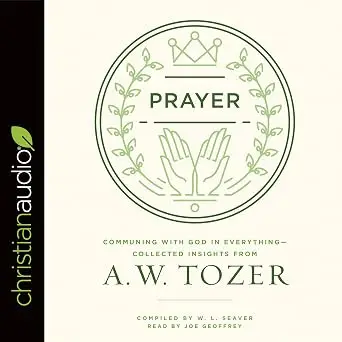 Prayer is doable. God is accessible. And Tozer provides the wisdom and encouragement to help us encounter Him daily.
Kenneth Boa, Life in the Presence of God: Practices for Living in Light of Eternity
 Ken Boa offers a contemporary guide to practicing the presence of God.
Thomas A. Tarrants
Thomas A. Tarrants is President Emeritus of the C.S. Lewis Institute. After serving twelve years as president and nine years as vice President, he retired from his position as Vice President for Ministry and Director, Washington Area Fellows Program, with CSLI in June 2019. He holds a Master's of Divinity Degree, as well as a Doctor of Ministry Degree in Christian Spirituality. Tom is an ordained minister in the Evangelical Church Alliance and a member of the Evangelical Theological Society. Tom is the author of Consumed by Hate, Redeemed by Love, published by Thomas Nelson Publishers and Following Jesus Christ. He spends his time writing, mentoring, consulting and traveling.
