



Back to series



CHAPTER 13
Learning about the Holy Spirit from Jesus
And I will ask the Father, and he will give you another Helper, to be with you
forever, even the Spirit of truth … [H]e dwells with you and will be in you.
John 14:16–17
You cannot become a faithful disciple of Jesus Christ without understanding and embracing the truths of discipleship that He taught, including in the Sermon on the Mount. But knowing what you must do, and even committing yourself to doing it, often reveals significant shortcomings. You and I need power if we’re going to live out such a commitment. And when we lack it, we become discouraged, then disillusioned, and finally we settle into a life of spiritual mediocrity.
This is not the abundant life Jesus offers us. He invites us to live hopeful and expectant lives and has provided the means to do so by the Holy Spirit.

Two dear friends of mine, a physicist and his historian wife, were career government workers. They were respectable citizens who, with their kids, regularly attended a liturgical church that had grown somewhat sleepy. They sensed something missing in their spiritual lives but couldn’t identify it. They lived with spiritual mediocracy and sluggishness.
When a seminary professor was invited to teach a series on the book of Acts, my friends and several others in the congregation who felt a similar spiritual hunger finally discovered what they lacked. They committed themselves afresh to the living Christ, were filled with the Holy Spirit, and found their lives filled with power, purpose, joy, and a deeper love for Jesus, for others, and for the Bible along with a greater passion to serve Him. And serve Him they did, for the rest of their lives, whether in the church, workplace, community, or mission outreaches. Over many years, I witnessed in them a truly amazing transformation and fruitfulness for Christ.
How do we get such life-changing power? Where does it come from? Jesus declares that only the Holy Spirit gives us that power; on this point, Protestants, Roman Catholics, and Eastern Orthodox believers all agree.1 Somehow, however, many believers continue to struggle in their spiritual lives, settling for a weak and anemic discipleship.
In this chapter, we will look at who the Holy Spirit is and what He does, based primarily on what Jesus taught in John’s Gospel. In later chapters, using primarily Paul’s teaching, we will explore the Spirit’s work in our daily lives: what it means to be filled with the Spirit, to walk in the Spirit, to bear the fruit of the Spirit, and to manifest the gifts of the Spirit.
Why are we going to devote so much attention to the Holy Spirit? Because He is the one who empowers and directs us to glorify Christ! After Jesus accomplished our redemption on the cross and was raised from the dead, He returned to heaven, where He now intercedes for us, seated at the right hand of the Father (Rom. 8:34; Heb. 1:3). Although He is no longer physically here to help us, that doesn’t mean we are left alone! Jesus and the Father have poured out the Holy Spirit to be with us, to apply all the benefits of Christ’s work in our lives,2 and to carry forward the work of making disciples, which Jesus began while on earth.
A Little Background
The Old Testament prophets, weary of hardhearted Israelites, looked forward with great anticipation to the end of the “present evil age” and the dawning of the “age to come.”3 The Messiah, a Spirit-anointed Davidic king with a ministry that would pour out God’s Spirit in life-changing power on all God’s people and establish a new covenant (Isa. 11:2; 44:3–5; Jer. 31:31–34; Ezek. 36:25–27; Joel 2:28–29), would inaugurate that new age. We saw earlier how God sent John the Baptist to announce the Messiah’s arrival and to call Israel to prepare for it through repentance and baptism. “I baptize you with water for repentance,” he said, “but he who is coming after me is mightier than I, whose sandals I am not worthy to carry. He will baptize you with the Holy Spirit and fire” (Matt. 3:11). When God revealed to John the identity of the coming one, John proclaimed:
Behold, the Lamb of God, who takes away the sin of the world!
… I saw the Spirit descend from heaven like a dove, and it remained on him. I myself did not know him, but he who sent me to baptize with water said to me, “He on whom you see the Spirit descend and remain, this is he who baptizes with the Holy Spirit.” And I have seen and have borne witness that this is the Son of God. (John 1:29, 32–34)
No one can enter God’s kingdom apart from the work of the Holy Spirit, as Jesus explained to a religious ruler named Nicodemus: “Truly, truly, I say to you, unless one is born of water and the Spirit, he cannot enter the kingdom of God. That which is born of the flesh is flesh, and that which is born of the Spirit is spirit” (John 3:5–6).
How does this spiritual rebirth happen? John explains: “God so loved the world, that he gave his only Son, that whoever believes in him should not perish but have eternal life” (John 3:16). To be born anew, we must believe and trust in Jesus as God’s Son and in His atoning death on the cross—not just for the whole world, but for us personally. Such faith comes as the Holy Spirit works, either instantaneously or over time, to draw us to Jesus through hearing and embracing the gospel message.
An element of mystery exists here, Jesus says, like the movement of the wind, but we can see its reality through its effects:
Do not marvel that I said to you, “You must be born again.” The wind blows where it wishes, and you hear its sound, but you do not know where it comes from or where it goes. So it is with everyone who is born of the Spirit. (John 3:7–8)
Regenerated by the Holy Spirit, we go from being dead in sin to being alive in God. Spirit-given belief in Jesus is more than bare intellectual assent. John signals this by using the verb believe (pisteuo) with the preposition eis, literally “believe in” or “believe into” (John 3:16: “whoever believes in him”). This emphasis contrasts with that of another common Greek phrasing, pisteou hoti, meaning “believing that.”4 As theologian Millard Erickson has observed, the Greek word pisteuo can mean either to accept a statement as factually true or to indicate personal trust “as distinct from mere credence or belief.” He concludes that “the type of faith necessary for salvation involves both ‘believing that’ and ‘believing in,’ that is, assenting to facts and trusting in a person.”5

The active trust in Jesus that John speaks of involves commitment to Him and His Word. This is seen quite clearly in John 3:17–21, where we read that whoever trusts Jesus and is born of the Spirit turns from the darkness of sin to the light of Christ and a new life. And what does such life look like? Jesus gives us a tantalizing hint in this scene from John 7:
On the last day of the feast, the great day, Jesus stood up and cried out, “If anyone thirsts, let him come to me and drink. Whoever believes in me, as the Scripture has said, ‘Out of his heart will flow rivers of living water.’” Now this he said about the Spirit, whom those who believed in him were to receive, for as yet the Spirit had not been given, because Jesus was not yet glorified. (vv. 37–39)
Those who believe in Jesus will find “rivers” of living water flowing out of their heart (their innermost being)! The source of these rivers “of living water” is Jesus, through the indwelling Holy Spirit. He first satisfies the thirst of the one who believes and then uses that person to carry His message to other thirsty souls. And the Spirit doesn’t produce a mere trickle; He produces rivers—a torrent of living water.
This is the heritage of all who savingly believe in Jesus. It became available after Jesus’ glorification at the cross and when God poured out the Holy Spirit at Pentecost. The late pastor Stephen Olford, who had a great influence on me, often said the normal Christian life is characterized by being “consciously, continuously, and conspicuously filled with the Holy Spirit.”6 May it be so for you and me and all God’s people!
Who Is the Holy Spirit?
Who or what is the Holy Spirit? From my observations over the years, it appears that many in the church have little understanding of the Bible’s teaching about the Holy Spirit. One often hears professing believers, for example, refer to the Holy Spirit as “it.” Others think of the Spirit in vague terms, not much different than an impersonal power such as electricity or “the Force” in the Star Wars universe. We see this in the 2025 State of Theology Survey, which found that 53% of evangelicals agree with the statement, “The Holy Spirit is a force but is not a personal being.”7
In the first of five passages on the Spirit in John 14–16, Jesus makes it clear that the Holy Spirit is a personal being. “If you love me,” he says, “you will keep my commandments. And I will ask the Father, and he will give you another Helper, to be with you forever, even the Spirit of truth, whom the world cannot receive, because it neither sees him nor knows him. You know him, for he dwells with you and will be in you” (John 14:15–17). When Jesus spoke of “another Helper” to take His place, he used a Greek word that means “another of the same kind”—that is, another divine person just like Jesus (though without a physical body). This Helper would carry on the work of Christ and make Him personally present to the disciples (and by extension, to all His subsequent followers).
Jesus referred to the Helper as “the Spirit of truth.” Just as Jesus spent much of His ministry teaching truth, so would the Helper dedicate Himself to teaching truth to Jesus’ followers. Although the Helper had been with the disciples during their three years with Jesus, empowering them in ministry, soon He would come to dwell in them—a momentous change.
In the second passage, John 14:26, Jesus further describes the Helper and His work: “But the Helper, the Holy Spirit, whom the Father will send in my name, he will teach you all things and bring to your remembrance all that I have said to you.” Here Jesus describes the Helper as the “Holy” Spirit, reminding the disciples of God’s command, “For I am the Lord your God. Consecrate yourselves therefore, and be holy, for I am holy” (Lev. 11:44). A major part of the Holy Spirit’s work, as His name implies, is to help God’s people become holy—that is, to become increasingly sanctified or Christlike. Jesus also spoke here again of the teaching ministry of the Spirit. The Spirit will “teach you all things” (no doubt with holiness high on the list). But He also would remind them of everything Jesus taught, ensuring (for example) that they would accurately recall and record Jesus’ words and works in the Gospels for future generations. The Spirit would ensure that Jesus’ disciples had the right words at the right time as they taught and preached about Jesus, which by extension applies to future disciples (see also Matt. 10:19–20).
In the third passage, Jesus again refers to the Helper as “the Spirit of truth”: “But when the Helper comes, whom I will send to you from the Father, the Spirit of truth, who proceeds from the Father, he will bear witness about me. And you also will bear witness, because you have been with me from the beginning” (John 15:26–27). Becoming equipped and transformed by truth paves the way for mission. The Spirit will bear witness to Jesus, causing the truth about Jesus and His work to be made known and lifted high. The disciples would join this great work of speaking truth about the Son of God, full of grace and truth (John 1:14), who called Himself the way, the truth, and the life (John 14:6) and said, “I have come into the world … to bear witness to the truth” (18:37). All who have received grace by the Spirit bear witness to Christ and His salvation.
Jesus’ fourth saying must have shocked the disciples, because it declared that His departure would result in great blessing. This blessing would come because by leaving them and returning to the Father, Jesus (in union with the Father) would pour out upon them the Holy Spirit, who would empower their witness about Him and bring conviction upon those who didn’t yet follow Jesus:
Nevertheless, I tell you the truth: it is to your advantage that I go away, for if I do not go away, the Helper will not come to you. But if I go, I will send him to you. And when he comes, he will convict the world concerning sin and righteousness and judgment: concerning sin, because they do not believe in me; concerning righteousness, because I go to the Father, and you will see me no longer; concerning judgment, because the ruler of this world is judged. (John 16:7–11)
The fact that only the Spirit can bring conviction to the hearts of sinners gives great encouragement to those of us who witness to others about Christ. We cannot save anyone. And that isn’t our job. We must speak the truth about Christ and point people to Him. But it is the Spirit who does the work of conversion.
The fifth and final passage assures the disciples that Jesus will not leave them helpless. The Spirit will guide them after Jesus departs. Again referring to the Spirit as “the Spirit of truth,” Jesus says the Spirit will reveal to His disciples things they cannot yet grasp, as well as future events:
I still have many things to say to you, but you cannot bear them now. When the Spirit of truth comes, he will guide you into all the truth, for he will not speak on his own authority, but whatever he hears he will speak, and he will declare to you the things that are to come. He will glorify me, for he will take what is mine and declare it to you. All that the Father has is mine; therefore I said that he will take what is mine and declare it to you. (John 16:12–15)
The Spirit will impart to the disciples truth about Jesus that will enable them to glorify Him. The Spirit seeks to glorify Jesus; He does not seek to glorify Himself. We need to reemphasize that point in today’s Christian world, where in some circles the Spirit is so emphasized that Jesus is overshadowed.
Jesus did not speak exhaustively in His teaching on the Holy Spirit in John’s Gospel. He did not say all that could be said. But He gave these foundational truths to comfort and strengthen His disciples in their mission and for all who would follow them.
Summarizing, we have seen that the Holy Spirit is not an impersonal force but both divine and a personal being, like Jesus. He dwells in true believers, helping them become holy, teaching them about Jesus, bringing truth to their minds whenever needed, empowering them to bear witness to Jesus and to glorify Him, and convicting those without Him of sin, righteousness, and judgment (see John 16:8).
More to Come
Jesus left much unsaid about the Spirit’s work in our lives, such as the Spirit’s filling and the fruit and gifts of the Spirit, rivers of living water that spring forth from Pentecost onward. Those things fell to the apostle Paul (from whom we’ll hear later). Paul will give us additional practical teaching on how to experience the fullness of the Spirit in our daily lives.

Questions to Ponder
- Why is it so important for us as disciples of Jesus to clearly understand and experience the ministry of the Holy Spirit?
- Where in the Gospels does Jesus describe the Holy Spirit in personal terms?
- Of the five sets of verses reviewed above, which one stands out to you the most? Which one would you like to look into further?
- What is significant about the personal nature of the Spirit? What’s wrong with thinking of the Spirit in impersonal terms, as “it” or a “force”?
- Why is it significant that the Spirit points us to Jesus?
- Where do you see the Spirit at work in you? Through you?
David Ewert, The Holy Spirit in the New Testament
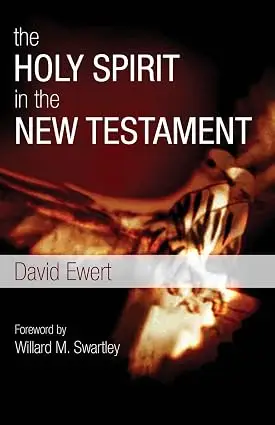 In fifteen thorough chapters David Ewert surveys the whole range of New Testament authors to discover what they have to say on the Holy Spirit and what this means for the life of the believer and for the church.
Fred Sanders, The Holy Spirit: An Introduction
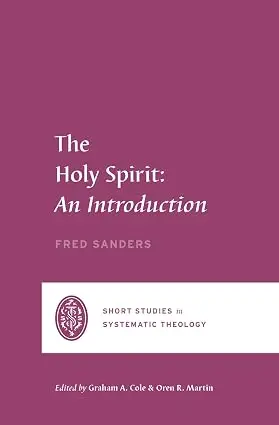 In this addition to the Short Studies in Systematic Theology series, Fred Sanders teaches his readers how to hold a proper biblical understanding of both the person and power of the Holy Spirit.
Thomas A. Tarrants
Thomas A. Tarrants is President Emeritus of the C.S. Lewis Institute. After serving twelve years as president and nine years as vice President, he retired from his position as Vice President for Ministry and Director, Washington Area Fellows Program, with CSLI in June 2019. He holds a Master's of Divinity Degree, as well as a Doctor of Ministry Degree in Christian Spirituality. Tom is an ordained minister in the Evangelical Church Alliance and a member of the Evangelical Theological Society. Tom is the author of Consumed by Hate, Redeemed by Love, published by Thomas Nelson Publishers and Following Jesus Christ. He spends his time writing, mentoring, consulting and traveling.
