



Back to series



A Spirituality of the Body
Click here to open a Print - Friendly PDF
It may seem unusual to speak of a spirituality of the body. After all, many Christians have believed that spirituality is being free from the body and its impulses. The spiritual life is understood as saying yes to the Spirit’s work in our spirit and saying no to the “flesh,” which is often perceived to be related to the human body. Moreover, our body often gives us fits. We are not sure what to do with its urges, failures, and pain. Thus, many perceive the human body to be an enemy of true spirituality.
But true spirituality is not a disembodied faith. We live within the body God has given to us, and God calls us to lives of holiness and spirituality within and through our bodies.
Role of the Body in Christianity
The starting point for a spirituality of the body is to understand its role in Christian theology. Some theologians have suggested that Christianity is the most physical or material religion in the world. By this they do not mean a love of money or a fixation on material things. Rather, in contrast to many religions and philosophies that find the body and material reality to be problematic, biblical faith strongly affirms the material world, including the human body. Christian spirituality is not a freedom from the body, but a freedom within the body. Spiritual maturity comes not by negating our physical dimension, but by harnessing its capacities and impulses for the glory of God through the power of the Holy Spirit.
 The significance of the body and material reality is grounded in several biblical doctrines. First, a theology of creation incorporates a strong affirmation of the material world with God’s pronouncement of its goodness (Gen. 1). Genesis 2:9 notes that “out of the ground the Lord God made to grow every tree that is pleasant to the sight and good for food.”
When God created humans in his image, “male and female he created them” (Gen. 1:27), clearly implying that the biological and physiological side of life is significant. After God made this physical world and embodied humans, he looked at all he had made and pronounced it “very good.”
Second, the body is affirmed in the incarnation: God taking on human flesh in his Son, Jesus Christ. That “the word became flesh and lived among” (Jn. 1:14) is a clear sign that the body in and of itself is not evil. Some early Christians had problems with the incarnation, believing that the physical realm is so evil that God could never take up residence in a real physical body. This view, called docetism, said that Jesus only appeared to have a material body. The Church condemned this view as heresy, declaring that Jesus was fully divine and fully human. All of this means that if God can come in a human body, it is evidence that the body itself is not our primary spiritual foe. Rather, the incarnation is a model for our own lives.
Third, the physiological side of life is avowed through the future resurrection of the body. In our final abode we will not exist as disembodied souls, but as resurrected bodies. Such a notion would be foreign to a worldview in which the body is intrinsically evil or the primary barrier to goodness. Life in eternity with a body is an affirmation of its significance.
Of course the body, like mind and heart, bears the marks of the fall, and as such is prone to lead us to sin. But God has created us to be in bodies. We might say that we are embodied souls, or ensouled bodies. Our bodies in and of themselves are not evil. They are a significant part of who we are and even have a role in influencing our thinking and the affections and emotions of our hearts. As Dallas Willard puts it, “My body is the original and primary place of my dominion and my responsibility. It is only through it that I have a world in which to live. That is why it, and not other physical objects in my world, is part of who I am and is essential to my identity. My life experiences come to me through or in conjunction with my body” (Dallas Willard, Renovation of the Heart, p. 161).
Whenever we act within the world we do so in our bodies; we can never act apart from them. Our interaction with other people and the world in which God has placed us is always in and through our physical existence.
The Body and Sin
Though the body is not inherently evil, it is fallen and thus is often the locus and impetus for unrighteousness, injustice, and moral failure. In Romans 6, in the context of clarifying freedom in Christ, Paul writes: “Do not let sin exercise dominion in your mortal bodies, to make you obey their passions. No longer present your members to sin as instruments of wickedness, but present yourselves to God as those who have been brought from death to life, and present your members to God as instruments of righteousness” (vs. 12-13). Sin often reflects itself in bodily actions and through various parts of the human body, what Paul calls our members. These bodily actions certainly reflect our thinking and our passions, but the body also has its own impulses and tendencies.
For example, James speaks of the deadly role of the tongue:
The tongue is a small member, yet it boasts of great exploits. How great a forest is set ablaze by a small fire! And the tongue is a fire. The tongue is placed among our members as a world of iniquity; it stains the whole body, sets on fire the cycle of nature, and is itself set on fire by hell…. No one can tame the tongue—a restless evil, full of deadly poison (3:5-8).
The tongue, as James points out, has great potential for good, such as worshipping God, speaking the truth, and encouraging other people. But in its fallen state, this good divine gift also has a propensity for great damage and evil.
We can further understand the role of the body in sin when we think about sexual immorality. God has created our bodies good, and that includes our sexual parts as well. Yet, in our fallen state the sexual parts can be misused. In I Corinthians 6, Paul reminds us that our “body is not meant for fornication but for the Lord” (vs.14). The body meant for the Lord includes the sexual dimension when it is utilized for God’s glory, within the purposes and designs of God in creation. Even bodily pleasure in sex can be for the glory of God, for the physical parts that bring pleasure are gifts of God’s good creation. But sexual immorality is a misuse of the bodily gift, forgetting “that our bodies are members of Christ” (v.16). Thus, in sexual immorality (sexual intimacy outside God’s designs), “the fornicator sins against the body itself” (v.18).
We live in a time when the right to control our own bodies is deemed to be an absolute right. The judicial system in the United States (and in many countries of the world) has extended bodily control to the right to terminate another human life growing in one’s own body. In a few countries and jurisdictions the right over one’s body has been extended to ending one’s own life when faced with extreme pain or physical debilitations. Euthanasia, or its narrower version of physician-assisted suicide, is really an extension of the ethos that we have an absolute right over our own body.
These kinds of sentiments are certainly understandable within a naturalistic worldview in which the body and material reality are the only givens. But solid reasoning, observation, and historical experience can help us see the dead-end street to which this can lead. We are never isolated beings, and thus what we do with our bodies always impacts others and society. And Paul writes, “Do you not know that your body is a temple of the Holy Spirit within you, which you have from God, and that you are not your own? For you were bought with a price; therefore glorify God in your body” (I Cor. 6:19-20).
The Body and Righteousness
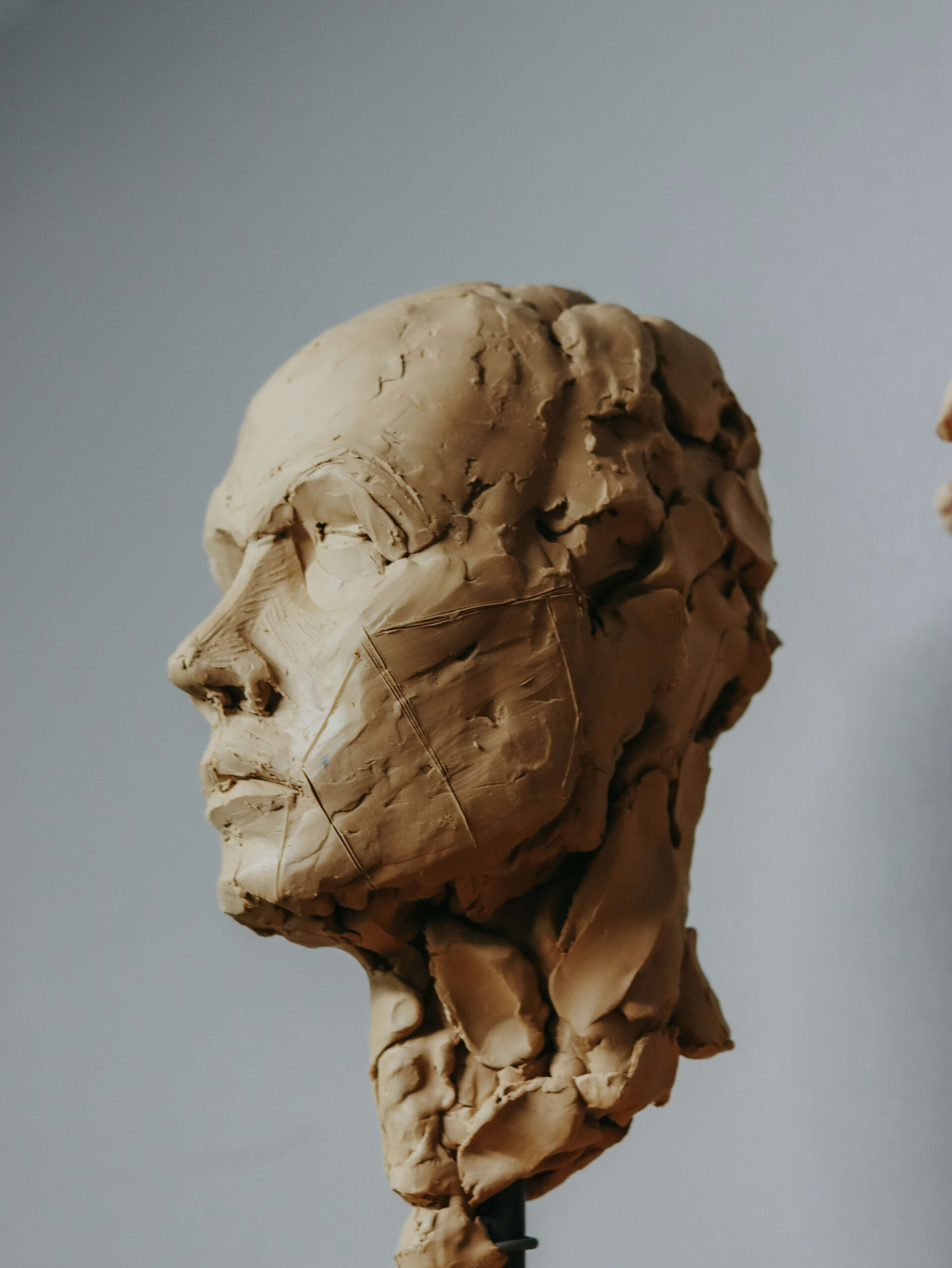 Though our fallen bodies have a propensity for sin and injustice, the believer is called to use his or her body for good. Our hands, face, eyes, feet, stomach, and genitals can be the instruments of evil but also instruments of righteousness, love, and justice. The very same tongue that through slander, lies, and cursing can cause so much pain to another person is the same tongue that can bring comfort and encouragement to another and adoration to God. The bodily parts that fornicate and even rape are the same parts that can express love to a spouse and generate the beginning of new human life. The key is that our bodies need to be brought under the lordship of Christ and the power of the Holy Spirit.
Just as our thinking and inner affections must experience the ongoing work of God’s grace and transformation, so too must the body. Thus, Paul writes, “I appeal to you therefore, brothers and sisters, by the mercies of God, to present your bodies as a living sacrifice, holy and acceptable to God, which is your spiritual worship” (Rom. 12:1). Here the focus is on commitment of our bodies as acts of worship to God through what we do in them. Not only are we to refrain from letting our bodies be under the domain of sin, but we are to “present [our] members to God as instruments of righteousness” (Rom 6:14).
This means that God’s work within us will be demonstrated not only by what we refrain from doing, but even more significantly, by what we do in and through our physical body. Our actions in everyday life are the real test of our faith and commitment to Christ. In one sense they are the natural overflow of minds and hearts shaped by the work of God, and certainly good bodily actions will never develop without a transformation of these dimensions. But we must also give attention to the body in the process. The body too must be made holy (i.e. sanctified in traditional language) so that we act for the glory of God.
Conclusion
True, vibrant spirituality is not a freedom from our bodies. The body is not intrinsically evil. It is a good gift of God, and though fallen, it is the physical reality through which we are called to live our lives for the glory of God.
We face a host of problems in and through our bodies: physical lust, eating disorders, rejection of our bodies, idolatry of the body, addictions to certain physical impulses, and the list could go on. The real issue in all of the problems is not our physical body any more than our soul. The real issue is that our good, but fallen body, like our soul or spirit, needs the renovation of the Holy Spirit to bring our total being into the image of Jesus Christ. Our calling is to glorify God in our body—in the physical world— the place to which God has called us. And even that final place to which God has called us, presence with Him in heaven, will likely turn out to be more physical than we ever imagined.
Dennis Hollinger
Dennis Hollinger is President Emeritus and the Distinguished Senior Professor of Christian Ethics at Gordon-Conwell Theological Seminary. He served there as President and Colman M. Mockler Distinguished Professor of Christian Ethics. Prior to assuming this role, he served as President and Professor of Christian Ethics at Evangelical Theological Seminary. He is the author of four books which include The Meaning of Sex: Christian Ethics and the Moral Life and Choosing the Good: Christian Ethics in a Complex World. Dennis is also a visiting professor of Christian ethics at Trinity International University in the graduate program in Bioethics. He received an M.Div. from Trinity Evangelical Divinity School, an M.Phil. and Ph.D. from Drew University, and did post-doctoral studies at Oxford University.
 COPYRIGHT: This publication is published by C.S. Lewis Institute; 8001 Braddock Road, Suite 301; Springfield, VA 22151. Portions of the publication may be reproduced for noncommercial, local church or ministry use without prior permission. Electronic copies of the PDF files may be duplicated and transmitted via e-mail for personal and church use. Articles may not be modified without prior written permission of the Institute. For questions, contact the Institute: 703.914.5602 or email us.
-
Recent Podcasts

From New Age Seeker to Encountering Jesus – Robert Hotchkin’s Story
Raised in a loving but largely non-religious home,...Read More
- After Theory by Terry Eagleton
- Almost Heretical – Deconstructing Christian Finds His Way Back – Nate Hanson’s Story
-
Recent Publications

Is It Really That Important to Pay Attention to Others?
The Gospels paint a vivid picture of Jesus...Read More
- Should My Children Have Robot Friends?
- Stranded in Space, Grounded in Faith
Grow Your Faith with a New Online Course:
