



Back to series


After Theory by Terry Eagleton
Click here to open a Print - Friendly PDF
Academic papers are read at untold numbers of conferences each year and, in the worst cases, simply allow professors to document one more item in their curriculum vita to satisfy those who scrutinize the tenure process. In the best cases, these papers stimulate academic discussions that invite scrutiny of new ideas and widen debate. Students paying the high cost of tuition do not want courses taught from a teacher’s old, yellowing notes; these papers and presentations demonstrate the professor’s mind is on the stretch.
 But most papers create no stir; most are read and forgotten. Many, many ships raise their sails in this harbor, but few actually catch the winds of the imagination and launch their vessels out onto the high seas to influence the thinking of a generation or two and perhaps even start a movement. While no single event creates a movement, such papers can be the match that lights the fire. Such was the case with Derrida’s paper on Difference in Toronto in 1968.Martin Luther’s 95 Theses did not cause the Reformation. Hus, with similar ideas, had been burned at the stake some 100 years earlier; and Wycliffe was stirring up the pot about 80 years before that. As C.S. Lewis once observed, there is nothing in the history of thought like a shoreline in geography. But as Luther was the match in the Reformation tinderbox, so too Derrida was the match in the tinderbox that started the fires of postmodernism, although it took another twenty or thirty years before the word “postmodern” was on the lips of the populous.
Why is it that some ships are launched out of the harbor of the academy and sail on to affect the culture so widely? It would make an interesting study if one could ever discover the answer; but the question would still remain, who could ever predict when and why such a thing might happen? What is the next movement that will replace postmodernism?
In his book, The Structure of Scientific Revolutions, Thomas Kuhn reminds us that reality is far more complex than the capacity of any paradigm or worldview to describe completely. Certainly some truth is acquired and remains after each paradigmatic exploration, but in the end, the periphery of human ideologies must give way to larger, more robust descriptions of the world. As C.S. Lewis wisely noted, all images of the universe must, in the end, become discarded images, holding on to what they can and purging what they must. Certainly not everything that appears to be an advance proves to be so. History is full of examples. Nevertheless, it may be possible both descriptively and definitionally to argue which ships ought to be affecting the next generation of thought; new presentations describe reality with at least enough precision to stir up significant conversation given the state of the present tinderbox.
Perhaps such a book is Terry Eagleton’s After Theory. Eagleton was formerly the John Edward Taylor Professor of Cultural Theory at Manchester University and is now teaching at Lancaster University.
After Theory is written in recognition that postmodernism, as a dominant worldview, has nearly run its course and is on the threshold of giving way to some new paradigm. Eagleton is convinced there will not be a regression, at least in one particular regard. The postmodernists have taught the culture to be aware of embedded assumptions in texts and also in the interpretations of those texts. It is good to be mindful of impulses that can cloud objectivity and prevent sane debate and helpful discussion. In this regard, Eagleton acknowledges that the early postmodernists were not relativists; they were perspectivalists. The relativist point of view is seldom shaped by reality; it champions what C.S. Lewis called a subjectivism.
Lewis is not denying the necessity of subjectivity; all attempts to know must be filtered through lenses, but all human lenses are fraught with limits. The relativist, like the fundamentalist, tends to be too self-referential to be objective. The community is seldom benefited by relativists or fundamentalists, for both are functional anarchists. Unable to participate in dialectically safe engagement, their tendencies are utilitarian. The fundamentalist may paint a “Thus saith the Lord” across his own opinions, but the relativist, acting in anarchist fashion, plays a sort of godlike role as well.
Who can ever discuss with such people? The delusion that one’s view is equal to God’s is very difficult to dissipate by reason; it is not held by reason and it will not dissolve by debate. Eagleton reminds his readers that the early postmodernists were perspectivalists. They did not deny objective reality, they simply asserted that it is complex and therefore to understand it well requires community. It is open to perspectives that invite participants from both genders and a variety of cultures, races, and economic positions to contribute what they see from their various points of view.
Eagleton laments the fact that many in the second generation of postmodernists did not stay true to this vision and turned the movement toward relativism. Postmodernism is itself a complex movement, and those who spoke against it, failing to address the complexity, simplified their descriptions and leveled their attacks at a straw man. The irony cannot be neglected. Those who opposed postmodernism for its relativism and self-referential ways were equally self-referential in their descriptions of the postmodernists. In the end, the critics were jousting at windmills. Nevertheless, the relativism that did creep into the second generation of postmodernists certainly contributed to its present unraveling. Relativists are not good at unity; their alliance cannot last very long. Eagleton gives a brief, but helpful, informed survey of the history of postmodernism, sorting out truth from myth.
The most compelling chapter in After Theory is “Truth, Virtue, and Objectivity,” in which one discovers Eagleton’s hope for the future. Beyond the debates of the modernists and postmodernists, this chapter is a call to return to the objectivity of texts. No matter what the buried assumptions are, texts still say something, and those wanting to grow beyond the limits of their own assumptions will seek to understand what others have said before disagreeing with them.
 Eagleton’s call to objectivity is also a call to dialectically safe community. He writes, “Trying to be objective is an arduous, fatiguing business, which in the end only the virtuous can attain. Only those with patience, honesty, courage, and persistence can delve through the dense layers of self-deception which prevent us from seeing the situation as it really is. This is especially difficult for those who wield power—for power tends to breed fantasy, reducing the self to a state of querulous narcissism.” Quick to take on atheists such as Richard Dawkins and Christopher Hitchens, Eagleton, far from a model Christian, is nonetheless grateful for his Catholic background. He believes it was the Church that provided him an example of how to think critically in community.
He writes, “Nobody who was not open to dialogue with others, willing to listen, argue honestly, and admit when he or she was wrong could make real headway in investigating the world.” In rhetoric that reads as if it was informed by the Upper Room Discourse, Eagleton notes that love is necessary to any environment where dialectically safe engagements can occur. “In the act of trusting self-disclosure, knowledge and value go hand in hand. Similarly, only if one knows that one will still be accepted can one dare to encounter the truth of oneself.
In these senses, too, value and objectivity are not the opposites which so many seem to think them.” In fact, Eagleton notes that “Objectivity does not mean judging from nowhere…you can only know how the situation is if you are standing in a position to know. Only by standing at a certain angle to reality can it be illuminated for you.” The perspectivalist is able to champion his point of view without asserting that it be universally accepted. The truth one sees from his angle of vision allows one to make a significant contribution to the corporate understanding.
Party politics and creedal prevent one from growing if those positions shut down dialogue. Furthermore, such positioning can distance one from those very points of view that will allow for the possibility of holding to a position and doing it without prejudice or rancor. Perhaps it is through participation in the daily struggle of life’s complexities that we begin to sense our need for dialectically safe community; perhaps, but not necessarily. Some tend to justify their own positions even if those positions, by their very nature, are incomplete if not wrong altogether. These rationalizations can take a good idea and make it static. Once such a position is self-justified it will look at all difference with condescension, and the static idea calcifies.
Understanding becomes dynamic and vital only when it remains in a context where it is infused with challenge and debate is valued. Again, Eagleton sees that this approach is difficult to achieve without that kind of psychological wholeness that breeds love and trust.
It remains to be seen if Eagleton has raised his sails enough for the winds of the imagination to launch After Theory out of the harbor and onto the high seas. What is certain is that his call for objectivity in the midst of dialectically safe engagement is not new. The New Testament is full of such instruction. Christians should heed this call to dialectically safe community, for Christ called them to it two thousand years ago.
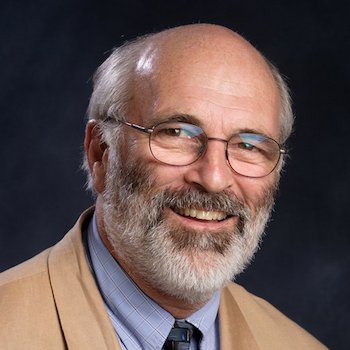
Jerry Root
Jerry Root is the Christopher W. Mitchell Senior Fellow for C.S. Lewis Studies at the C.S. Lewis Institute; Emeritus Professor of Wheaton College in Wheaton, Illinois and a visiting Professor at Biola University. He received his Ph.D. from the Open University through the Oxford Centre for Missions Studies. Jerry has nine published books, as well as numerous articles and publications about C. S. Lewis and evangelism in other books, journals, and periodicals, as well as read numerous academic papers at various academic venues. Recently, he published, Splendour in the Dark, a book about C. S. Lewis’s narrative poem Dymer (the book also includes Lewis’s 100-page poem). Jerry has lectured on Lewis topics at 79 Universities in 19 different countries.
 COPYRIGHT: This publication is published by C.S. Lewis Institute; 8001 Braddock Road, Suite 301; Springfield, VA 22151. Portions of the publication may be reproduced for noncommercial, local church or ministry use without prior permission. Electronic copies of the PDF files may be duplicated and transmitted via e-mail for personal and church use. Articles may not be modified without prior written permission of the Institute. For questions, contact the Institute: 703.914.5602 or email us.
-
Recent Podcasts
From New Age Seeker to Encountering Jesus – Robert Hotchkin’s Story
Raised in a loving but largely non-religious home,...Read More
- After Theory by Terry Eagleton
- Almost Heretical – Deconstructing Christian Finds His Way Back – Nate Hanson’s Story
-
Recent Publications

Is It Really That Important to Pay Attention to Others?
The Gospels paint a vivid picture of Jesus...Read More
- Should My Children Have Robot Friends?
- Stranded in Space, Grounded in Faith
Grow Your Faith with a New Online Course:
