



Back to series



CHAPTER 20
Being Assured of Salvation
I write these things to you who believe in the name of the Son of God,
that you may know that you have eternal life.
1 John 5:13
In this concluding chapter, we look at a question that troubles many (but not all) followers of Jesus at some point in their Christian life: Can I be sure that I am saved and will go to heaven when I die? This question is of vital importance for everyone who professes to be a Christian and can arise at any time in a person’s life. When it does, it can cause anguish and anxiety.
Despite differences of opinion among believers,1 if we look to Scripture as our guide,2 the answer must be yes, we can be sure of our salvation. True believers can indeed have assurance of their salvation, and this assurance gives them great encouragement, comfort, and hope in life and in the hour of death. Some believers enjoy this assurance throughout their lives and never doubt; others question, struggle, and experience it only after earnest seeking. Still others, who give good evidence of being truly saved, never find full assurance, for assurance is not of the essence of saving faith.3

There is also such a thing as false assurance of salvation, and that is where we will begin. Scripture gives a number of examples of people who believed themselves to be saved but were not. Judas Iscariot, for example (John 6:70–71). Or the “many” on Judgment Day, spoken of by Jesus:
Not everyone who says to me, “Lord, Lord,” will enter the kingdom of heaven, but the one who does the will of my Father who is in heaven. On that day many will say to me, “Lord, Lord, did we not prophesy in your name, and cast out demons in your name, and do many mighty works in your name?” And then will I declare to them, “I never knew you; depart from me, you workers of lawlessness.” (Matt. 7:21–23)
In this sobering passage, we see people who feel confident of their salvation and cite impressive examples of supernatural ministry in Jesus’ name: prophesying, casting out demons, doing mighty works. Jesus did not dispute their claims of activity in His name (for His name is indeed powerful), but He did dispute their claim to salvation. Tragically, they had deceived themselves; they had false assurance. Their profession of faith was orthodox (“Lord, Lord”), and their ministry was striking, but the fruit of their lives revealed an unconverted heart. Notably, Jesus declares they are “many” in number, not few.
In light of the possibility of false assurance and the blessing of true assurance, how can we be sure that our salvation is genuine? Jesus, John, and Paul give us helpful guidance, and we will look at each in turn.
What Does Jesus Say?
As we just read, Jesus says that those who enter God’s eternal kingdom are not people who merely say “Lord, Lord,” but those who actually do “the will of my Father who is in heaven.” Profession of true faith does not guarantee possession of true faith, which is manifested not only in one’s words but also in one’s deeds. John Stott explains, “The reason for their rejection by him is that their profession was verbal, not moral. It concerned their lips only, and not their life. They called Jesus ‘Lord, Lord’, but never submitted to his lordship or obeyed the will of his heavenly Father.”4 Jesus said, “The Father loves the Son and has given all things into his hand. Whoever believes in the Son has eternal life; whoever does not obey the Son shall not see life, but the wrath of God remains on him” (John 3:35–36).
Jesus called attention to this fact when He described these individuals as “workers of lawlessness.” They were not ordinary believers who experienced occasional lapses into sin (which is normal), but people who habitually disobeyed God’s will and Word (they were “workers of lawlessness” in an ongoing manner). By contrast, true disciples of Jesus rejoice in God’s grace and delight to do His will as taught by Jesus, even though they sometimes sin. Clearly, those whom Jesus “never knew” had an imaginary Christ—that is, a Christ of their own making. And as John Owen commented long ago, those who have an imaginary Christ will one day discover that they have an imaginary salvation.5 This puts a sharp point on questions such as “Am I truly converted?” or “Have I opened my heart to the good news of God’s kingdom and heeded Jesus’ call to ‘repent and believe in the gospel’?” (Mark 1:15). As we saw in Chapter 3, repentance involves an awakening to and turning from our sins, while faith involves both believing that Jesus is indeed God’s Son, the Messiah, and trusting Him and His atoning sacrifice to pay for our sins. Like different sides of the same coin, repentance and faith are inseparable. Repentant faith is the door through which we enter God’s kingdom as well as the path on which we walk thereafter. Faith and repentance are not simply one-time events at the moment of conversion but are ongoing realities in our lives.
The experience of coming to genuine faith and repentance can be sudden or gradual, dramatic or quiet, but it is always the work of the Holy Spirit—and Jesus says it contains an element of mystery. Like the wind, it is invisible, but we can see its effects (John 3:8). Some believers know the exact time of their conversion, while others (often those raised in Christian families) do not. In all cases, however, new birth brings new life and with it a Godward change of direction in one’s life. That change begins in the heart and moves outward to attitudes and behavior. We usually experience some degree of change right away, but sometimes change emerges more slowly. The degree of observable change will vary depending on a person’s lifestyle prior to conversion. For example, someone who was living a generally honest and morally upright life before meeting Christ may not have as much external behavior to change as a person who was living a wild, immoral lifestyle.
Jesus said, “I am the way, and the truth, and the life. No one comes to the Father except through me” (John 14:6), and “This is the will of my Father, that everyone who looks on the Son and believes in him should have eternal life” (John 6:40). Do you believe these words? Have you been drawn to believe in and trust Jesus as your Savior and Lord? Do you see signs of this new life in the Spirit? Take time to consider these fundamental questions. If you have truly come to Jesus, you can rest in the assurance of Jesus’ powerful words: “All that the Father gives me will come to me, and whoever comes to me I will never cast out” (John 6:37).
What Does the Apostle John Say?
John wrote his first epistle “to you who believe in the name of the Son of God, that you may know that you have eternal life” (1 John 5:13). He devoted 1 John to providing that assurance to God’s children.
This epistle gives us a front row seat from which to observe how John advised people about this vital subject and reminds us that it has always been an important question for believers. John gives practical, objective ways to assess our lives, and they are just as applicable today as they were when he first wrote. Ask yourself the following questions and prayerfully reflect on the scriptures that follow:
Do I “believe in the name of the Son of God”?
As we saw earlier (in Chapter 3), when John uses the word “believe,” referring to Jesus and salvation, he doesn’t mean giving bare intellectual assent to the fact that Jesus was God’s Son. Remember that in the Gospels, even demons recognized Jesus as the Son of God, and James 2:19 likewise says that “even the demons believe—and shudder.” Rather than simply believing that certain facts about Jesus are true, John has in mind both a belief that Jesus is truly God’s Son and Messiah and a personal trust and commitment to Him as Savior and Lord. You cannot have salvation without this kind of belief and trust in Jesus.
You must embrace it personally as well as accept it doctrinally, for this kind of trust grasps God’s pardoning love in Christ and inspires an answering love in your heart. Does such belief and trust in Jesus characterize you? Does your heart have a responsive, grateful love for God and His Son? Answering this question isn’t just about how we feel in the moment, for it is not unusual to go through dry spells where our depth of feeling wanes. When considering these questions, step back and look at your life with God over time. Do you trust God with your life?
Am I seeking to obey the commandments of Jesus and live as He lived?
John says genuine belief reveals itself in a changed life, one characterized by obedience to God rooted in love:
And by this we know that we have come to know him, if we keep his commandments. Whoever says “I know him” but does not keep his commandments is a liar, and the truth is not in him, but whoever keeps his word, in him truly the love of God is perfected. By this we may know that we are in him: whoever says he abides in him ought to walk in the same way in which he walked. (1 John 2:3–6)
Ask yourself, “Do I desire to walk as Jesus walked—to consciously obey God in my daily life?” The question is not whether you do so perfectly (no one does) but whether you are making a serious effort to do so out of love for God and a desire to please Him.
What about remaining sin in my life?
No Christian attains sinless perfection in this life. Sin still tempts all believers, and sometimes they give in. Some also struggle with what is called a besetting sin—one especially hard to overcome. But if they confess, repent, and return to the Lord, He forgives and restores them, and they can focus on rooting it out of their lives. This differs from a lifestyle of disobedience to God, which raises serious questions about the presence of genuine belief, the indwelling of the Holy Spirit, and thus eternal life. John says, “No one who abides in him keeps on sinning; no one who keeps on sinning has either seen him or known him” (1 John 3:6). A few sentences later, he adds: “By this it is evident who are the children of God, and who are the children of the devil: whoever does not practice righteousness is not of God, nor is the one who does not love his brother” (v. 10). These verses do not refer to occasional sins by a believer who otherwise seeks to obey God and follow Jesus, for John recognizes that believers do sometimes sin and says that “if we say we have no sin, we deceive ourselves … . If we confess our sins, he is faithful and just to forgive our sins and to cleanse us from all unrighteousness” (1 John 1:8–9). Rather, as the Greek verb tense indicates, they refer to a pattern of continual, habitual sin by someone who has no interest in living a righteous life but who lives in persistent sin. Is that true of you? Do you live in persistent sin and have no interest in living a righteous life? Or do you seek to live a life that pleases God even though you sometimes fail Him?
Do I love fellow believers?
Next, John says, “We know that we have passed out of death into life, because we love the brothers. Whoever does not love abides in death” (1 John 3:14). Obedience to the command to love fellow believers indicates the presence of eternal life. This love is not simply a positive sentiment or emotion but is a disposition expressed in acts of the will in which we seek the good of our fellow believers in practical ways. John gives us an example, “By this we know love, that he laid down his life for us, and we ought to lay down our lives for the brothers. But if anyone has the world’s goods and sees his brother in need, yet closes his heart against him, how does God’s love abide in him? Little children, let us not love in word or talk but in deed and in truth” (vv. 16–18). We are also to seek the good of our neighbor, which includes those who are not believers (Matt. 22:39; Gal. 6:10).
Loving other believers is so important that John repeats his point. In the next chapter, he exhorts: “Beloved, let us love one another, for love is from God, and whoever loves has been born of God and knows God. Anyone who does not love does not know God, because God is love” (1 John 4:7–8). Loving fellow believers “in deed and truth” (3:18) is another sign that we have eternal life. Conversely, a lifestyle that ignores the needs of others is a sign that we do not. Do you love fellow believers and seek their good in practical ways such as prayer, service, encouragement, finances, and more?
Does the Holy Spirit abide in me?
The power to believe, to love God and neighbor, and to obey Jesus’ commandments comes from the Holy Spirit, who dwells in everyone who has eternal life. “By this we know that we abide in him and he in us, because he has given us of his Spirit” (1 John 4:13). Do you see evidence of the Spirit living in you, prompting and empowering you to love God and others and to walk in obedience to the teaching of God and Jesus?

We can sum up John’s comments in this New Testament letter by saying that those who have eternal life believe that Jesus is God’s Son and Messiah and trust Him for salvation, have evidence that the Holy Spirit indwells them, have a desire to obey His commands and to love fellow believers, do not live in persistent sin, and seek to walk as Jesus walked.
What Does the Apostle Peter Say?
Peter gives us encouraging, practical guidance as we seek assurance. Because God’s “divine power has granted to us all things that pertain to life and godliness” (2 Pet. 1:3), Peter exhorts believers to “be all the more diligent to confirm your calling and election” and assures us that by doing so, “you will never fall” (v. 10). He is saying that earnest pursuit of Christ and growth in grace will confirm our calling and election. To this end, he lists a series of important moral qualities that supplement one’s faith (vv. 5–7). These require active engagement and will “keep you from being ineffective or unfruitful in the knowledge of our Lord Jesus Christ” (v. 8). Memorizing and meditating on this passage and applying it to daily life will encourage the soul and give hope!
What Does the Apostle Paul Say?
Although John spoke only briefly about the indwelling Holy Spirit as a sign of eternal life, and Peter said even less, the apostle Paul explains the role of the Spirit in greater detail. And he also insists that no one has eternal life unless the Holy Spirit dwells in them. Ask yourself the following questions and prayerfully reflect on the Scriptures that follow.
Does the Holy Spirit dwell in you?
In Romans 8, Paul says, “You, however, are not in the flesh but in the Spirit, if in fact the Spirit of God dwells in you. Anyone who does not have the Spirit of Christ does not belong to him” (v. 9). Paul insists that the decisive evidence of whether a person is a true Christian is the presence of the Holy Spirit in his or her life.
How do we know if the Spirit dwells in us? One of the main signs of the Spirit’s presence is His convicting of sin and leading and empowering the believer to obey God’s Word, resulting in moral transformation: “If by the Spirit you are putting to death the deeds of the body, you will live. For all who are being led by the Spirit of God, these are sons and daughters of God” (Rom. 8:13–14 NASB 2020). Here again the present tense verb (“are putting to death”) indicates something that occurs on a continuing basis. It does not indicate an experience of instant transformation.
Do you experience conviction of sin? Is the Spirit leading and empowering you to steadily seek to put to death the sinful deeds of the body? Do you see growing victory over areas of remaining sin in your life? These are signs of true conversion.
Does your life bear the fruit of the Holy Spirit?
A closely related question is whether the fruit of the Spirit is evident in our lives. Putting to death the deeds of the body, like uprooting weeds in a garden, clears the ground for the fruit of the Spirit to emerge.
This process unfolds over time, like the growth of apples on a tree. Just as fruit reveals the nature of the tree, so the fruit of a person’s life reveals the nature of his heart. “The fruit of the Spirit is love, joy, peace, patience, kindness, goodness, faithfulness, gentleness, self-control,” wrote Paul (Gal. 5:22-23), and those qualities showing up in an individual’s life reveal a converted heart. Can you see some measure of the Spirit’s fruit in your life? Not perfection, but ongoing growth. More this year than last year or the years before?
By contrast, works of the flesh reveal the unconverted heart. Paul also says to the Galatians, “Now the works of the flesh are evident: sexual immorality, impurity, sensuality, idolatry, sorcery, enmity, strife, jealousy, fits of anger, rivalries, dissensions, divisions, envy, drunkenness, orgies, and things like these. I warn you, as I warned you before, that those who do such things will not inherit the kingdom of God” (5:19–21). He gives similar warnings in 1 Corinthians 6:9–11 and Ephesians 5:5–8. Like John, Paul speaks of a lifestyle of persistent, ongoing sin, not an occasional failure. Do any of the works of the flesh characterize your life? If so, and you are at ease with them and not trying to root them out, take heed to Paul’s warning, and seek God’s mercy.
Does the Holy Spirit assure you that God is your Father?
Paul had a strong and clear sense that God had adopted him and was his Father. Note that in Romans, he addresses a group of people like himself who have been “called to belong to Jesus Christ … and are loved by God” (Rom. 1:6–7). He goes on to write, “You did not receive the spirit of slavery to fall back into fear, but you have received the Spirit of adoption as sons, by whom we cry, ‘Abba! Father!’ The Spirit himself bears witness with our spirit that we are children of God” (Rom. 8:15–16). Clearly, these Romans were born-again believers, God’s adopted children, and Paul expected that the inner witness of God’s Spirit would be a normative part of their experience.
Does the Holy Spirit witness to your spirit that God is your Father and that you are His dearly loved child? This subjective aspect of assurance, this inner knowing, is the birthright of God’s children. It is “a direct and immediate sense of God’s fatherly love given as kind of an immediate communication, like God saying, ‘I love you,’ immediately to the soul through His word.”6
Some experience this more intensely than others, and it can manifest itself in various ways at different seasons of life. Some have reported dramatic experiences of being filled with the Spirit that bring a palpable sense of God’s love, while others experience a quieter and more gentle form of assurance. But whether strong or weak, this inner witness gives assurance of the Spirit’s presence in us and our adoption into God’s family. (In cases of serious sin or backsliding, which grieve the Spirit, He may hide His face from us and withdraw the sense of His presence, even though He remains present.)
There have always been believers who, despite earnestly seeking, never experience the inner witness of the Spirit. The cause varies. Lack of good teaching (or any teaching at all) explains some cases. In other instances, unrepented sin, ignoring the indwelling Spirit, distrust of subjective experiences, a deficit of parental love in childhood, depression, or other barriers may be at work. Anyone who lacks the inner witness of God as Father should continue to seek it; and as they do, they should look to, meditate on, and trust the promises of eternal life in God’s written Word, especially the invitations and promises of Christ, as well as the more objective aspects of assurance we have just considered. The counsel of a spiritually mature, godly pastor or elder can be of great help in working through these concerns. If emotional issues or a dysfunctional background are involved, a biblically grounded, spiritually mature Christian counselor can be a valuable help.
Ultimately, we must all rest in that fact that God knows the best way to assure each of us of His fatherly love. And we remember Paul’s declaration: “God’s firm foundation stands, bearing this seal: ‘The Lord knows those who are his’” (2 Tim. 2:19).
Apostolic Confidence and Ours
The apostle Paul moves on from the witness of the Spirit to say:
We know that for those who love God all things work together for good, for those who are called according to his purpose. For those whom he foreknew he also predestined to be conformed to the image of his Son, in order that he might be the firstborn among many brothers. And those whom he predestined he also called, and those whom he called he also justified, and those whom he justified he also glorified. (Rom. 8:28–30)
Do you love the God who has been so merciful, gracious, patient, and loving as to call you to Himself through Christ? If so, you may take comfort from this passage. This powerful affirmation assures us of a glorious destiny regardless of what may happen in our lives. God’s calling will be fulfilled; He will preserve us unto glorification in His eternal kingdom. Because this is true, Paul can go on to proclaim,
What then shall we say to these things? If God is for us, who can be against us? He who did not spare his own Son but gave him up for us all, how will he not also with him graciously give us all things? Who shall bring any charge against God’s elect? It is God who justifies. Who is to condemn? Christ Jesus is the one who died—more than that, who was raised—who is at the right hand of God, who indeed is interceding for us. Who shall separate us from the love of Christ? Shall tribulation, or distress, or persecution, or famine, or nakedness, or danger, or sword? As it is written, “For your sake we are being killed all the day long; we are regarded as sheep to be slaughtered.”
No, in all these things we are more than conquerors through him who loved us. For I am sure that neither death nor life, nor angels nor rulers, nor things present nor things to come, nor powers, nor height nor depth, nor anything else in all creation, will be able to separate us from the love of God in Christ Jesus our Lord. (Rom. 8:31–39)
Assurance Can Grow Over Time
We conclude with some helpful and encouraging pastoral observations about how we grow in assurance of our salvation from the English pastor, John Newton:
Assurance grows by repeated conflict; by our repeated experimental proof of the Lord’s power and goodness to save; when we have been brought very low and helped, sorely wounded and healed, cast down and raised again, have given up all hope, and been suddenly snatched from danger, and placed in safety; and when these things have been repeated to us and in us a thousand times over, we begin to learn to trust simply to the Word and power of God, beyond and against appearances: and this trust, when habitual and strong, bears the name of assurance … . But this assurance, though desirable, is not absolutely necessary to our safety, or even to our comfort; for we are not saved by the degree of our assurance, but by the reality of our faith in the Son of God; and He that has begun the good work, will carry it on, in defiance of all opposition, and will perfect it in His own time and way.7
Newton’s pastoral wisdom echoes that of other wise, godly leaders in history and is well worth pondering and taking to heart as we seek assurance of our salvation.

Suggestions to Consider
- As you seek assurance, pour out your heart to God in prayer, asking Him to grant you the witness of the Spirit, which brings assurance of sonship (Rom. 8:15–16). Pray through the many verses of Scripture discussed in this chapter, focusing on what God has said to us about our adoption in Christ.
- Don’t be overcome by your past but abide in the present; cling to the cross of Jesus and hold tightly to Him. It can be difficult to go back and analyze your conversion to see if you had “enough” faith and repentance, especially if you were converted a long time ago or as a child. Consider instead: Do you currently see evidence that you have turned from your sins and are trusting in Jesus’ sacrifice to pay for your sins?
- Ask God to show you if any sin or resistance to His will is blocking your sense of assurance. If needed, seek counsel and prayer from a wise, godly pastor or elder.
Martyn Lloyd Jones, The Assurance of Our Salvation: Exploring the Prayers of Jesus for His Own (Studies in John 17)
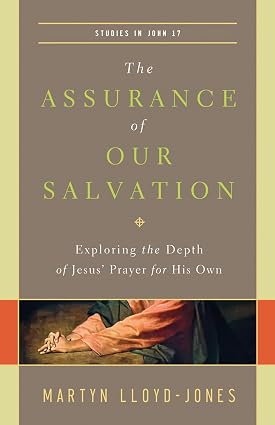 In this masterful, verse-by-verse exposition of Jesus’s words, renowned Bible teacher and preacher Dr. Martyn Lloyd-Jones lays before us the richness, the depth, the wonder―and the assurance―of God’s plan of salvation.
J.C. Ryle, Assurance: How to Know You are a Christian
 It is right to have confidence in your Christian life, if that confidence stems from God’s saving power. J.C. Ryle shows us that assurance is something every Christian should desire.
Thomas A. Tarrants
Thomas A. Tarrants is President Emeritus of the C.S. Lewis Institute. After serving twelve years as president and nine years as vice President, he retired from his position as Vice President for Ministry and Director, Washington Area Fellows Program, with CSLI in June 2019. He holds a Master's of Divinity Degree, as well as a Doctor of Ministry Degree in Christian Spirituality. Tom is an ordained minister in the Evangelical Church Alliance and a member of the Evangelical Theological Society. Tom is the author of Consumed by Hate, Redeemed by Love, published by Thomas Nelson Publishers and Following Jesus Christ. He spends his time writing, mentoring, consulting and traveling.
