



Back to series


CHAPTER 16
Being Filled with the Spirit
Do not get drunk with wine, for that is debauchery,
but be filled with the Spirit.
Ephesians 5:18
Our new life in God begins when Jesus baptizes us with the Holy Spirit into the body of Christ. This can happen anywhere and anytime, as we see in the book of Acts. Prior to that moment, we are dead in sin, regardless of any formal religious involvements we may have. After that moment, we are alive to God through Jesus Christ by the Spirit (Rom. 6:11). Like the blind man whom Jesus healed, we can say, “One thing I do know, that though I was blind, now I see” (John 9:25).
This conversion may come suddenly, as it did with Paul on the road to Damascus (Acts 9:1–17), or it may come gradually, as with Timothy (2 Tim. 1:5; 3:15), who came to faith through the nurture of his mother and grandmother. It may look dramatic, as with Cornelius and his family and friends (Acts 10:34–48), or it may look quiet and gentle, as with Lydia (Acts 16:14). One thing will remain true in all cases, however: the man or woman who once was spiritually dead is now alive to God through Jesus Christ and becomes part of the new creation. He or she is a new creature in Christ. Paul put it this way: “If anyone is in Christ, he is a new creation. The old has passed away; behold, the new has come” (2 Cor. 5:17). Evangelist and author Leonard Ravenhill sums this up memorably: “Jesus didn’t come into the world just to make bad men good. He came into the world to make dead men live.”1
Live in the Fullness of God’s Spirit
From new birth onward and throughout our life on earth, God calls us to live each day in the fullness of the Holy Spirit. The Spirit is the key to authentic Christian living—discipleship—and without His empowerment, teaching, and guidance, none of us can live faithfully or fruitfully.

To experience the fullness of the new life God has given us, we must learn how to live in the Spirit. This supernatural, Spirit-filled life is just as available to us today as it was to first-century believers. And what’s more, the Scripture does not suggest or recommend, but commands us to seek it (Eph. 5:18). This means that everyone who obeys the command can be full of the Spirit. It also means that everyone who disobeys the command is not walking in the Spirit’s fullness. Living in the fullness of the Spirit is essential for transformation, for as theologian John Murray said, “It is the Spirit who is the agent of sanctification.”2 Sanctification is that great, lifelong work of transformation into the image of Christ that the Holy Spirit carries on in everyone who has been justified by faith and born again.
How do we live such a life? Consider one important guiding principle from an unknown source: “Believe everything the Scriptures teach about the Holy Spirit and expect everything that the Scriptures promise from the Holy Spirit.” Although this brief chapter cannot cover the full teaching of Scripture, we will look at one of the most important keys to living in the Spirit.
Be Filled with the Holy Spirit
The Holy Spirit comes to reside within us when we are baptized with the Holy Spirit and born again. If at that point we give ourselves over to the Spirit’s leadership as we should, He can fill us and reign in us at once, allowing sanctification to advance. But for a variety of reasons, many believers do not make a full commitment at conversion, or they only do so for a short time. A striking example of this occurs among the believers in Corinth. Paul gave thanks to God for them “because of the grace of God that was given to you in Christ Jesus” and also because “you are not lacking in any [spiritual] gift” (1 Cor. 1:4, 7). And yet, he also said to them,
But I, brothers, could not address you as spiritual people, but as people of the flesh, as infants in Christ. I fed you with milk, not solid food, for you were not ready for it. And even now you are not yet ready, for you are still of the flesh. For while there is jealousy and strife among you, are you not of the flesh and behaving only in a human way? For when one says, “I follow Paul,” and another, “I follow Apollos,” are you not being merely human? (3:1–4)
The Spirit resided in the Corinthians, but He could not reign in them; they had become stuck in prolonged spiritual infancy. The root cause of their stagnation was lack of wholehearted commitment to God, resulting in a proliferation of sinful attitudes and behaviors which apparently went unrecognized, unconfessed, and unrepented. This sad state of affairs effectively quenched the Spirit and denied Him control of these believers’ lives. They had defaulted to human strength and wisdom and thus manifested little of the Spirit’s fruit and the self-control He produces. This helps explain F. B. Meyer’s observation: “In every born-again Christian the Spirit of Christ is present; in some He is prominent; in only a few, alas, He is preeminent.”3
Research has shown that most professing believers in the American church have never made such a surrender of themselves to God.4 They have never taken a decisive stand against the flesh—their old, sinful self and its desires—and have never put God first in their lives. That is, they have never bowed to God as supreme in their lives and aimed to make everything else secondary to Him and His will and to live under the lordship of Christ. From my observation, this often fails to occur because Christians haven’t been properly taught, and therefore they lack a clear understanding of what God wants of them. In other cases, believers do know what God wants but refuse His conditions. They say “no” to sin only so long as doing so doesn’t conflict with what they want to do. They have one foot in the kingdom and one foot in the world, which means they live with a divided heart and a compromised life.
Such a situation may well have contributed to the arrested development of the people addressed in the book of Hebrews, who were told, “You have become dull of hearing. For though by this time you ought to be teachers, you need someone to teach you again the basic oracles of God. You need milk, not solid food” (5:11–14). Sadly, this appears to be the state of many in the American church.
What should we make of this? If such individuals have been truly converted, they are indwelled by the Spirit but not filled with the Spirit. Or, as we said earlier, the Spirit resides in them but does not reign in them. On the other hand, if they are not converted, then the Spirit does not dwell in them at all. An indication of the latter is a lack of spiritual interest, hunger, and growth over a long time; the absence of sanctification suggests the absence of justification.
How can we be filled with the Holy Spirit so that He reigns in us? The fundamental starting point is hunger for God, a desire for greater intimacy with the God who loves us and has done so much for us. This desire fuels an eagerness to do the things that please Him. If we lack this desire, we can ask God to give it to us, to stir up in us a hunger and thirst for Himself, His Son, His Spirit, and His glory. When we come to this stage, we are at the threshold of being filled with the Spirit.
Next, we must reckon with the decisive issue: Who will be in charge of our life? For being filled with God’s Spirit is not about me having more of the Spirit, but about Him having more of me. This requires abdicating the throne of our self-rule and giving control to Him. Are we ready to renounce our autonomy and let Him rule over and lead our life, with all that this entails? This is the critical question we must answer in the affirmative. If we do not cede control to the Spirit, we block Him from filling us (Gal. 5:16–17). But if we do, the moment we surrender, He can begin to reign in us.
How Do We Surrender to God?
In the book of Romans, Paul wrote eleven chapters about God’s grace and mercy, and then he shifted his focus to how we should respond: “I appeal to you therefore, brothers,” he writes, “by the mercies of God, to present your bodies as a living sacrifice, holy and acceptable to God, which is your spiritual worship” (Rom. 12:1). Paul means that the only appropriate response to God for the totally undeserved grace and mercy He has lavished upon these disciples of Christ is for them to give themselves over to Him wholeheartedly and continually live under His lordship. To borrow a phrase from Oswald Chambers, they must “recklessly abandon themselves to God.”5 To some, this may sound like a harsh demand. But it isn’t. As Bible commentator William Barclay observed, “Christianity does not think of a man finally submitting to the power of God; it thinks of him as finally surrendering to the love of God. It is not that man’s will is crushed, but that man’s heart is broken.”6
God’s love, manifested in grace and mercy at the cross, must grip our hearts and motivate our surrender. This surrender is not passive in nature but active—a decisive act, a commitment which we must reaffirm daily, sometimes even moment by moment. It means freely giving ourselves, body and soul, to the loving Father who sent His only Son to rescue us from our sin and rebellion and lead us into what is “good and acceptable and perfect” (Rom. 12:2 KJV). This requires, as Paul said elsewhere, recognizing “that your body is a temple of the Holy Spirit within you, whom you have from God[.] You are not your own, for you were bought with a price,” and that you are to “glorify God in your body” (1 Cor. 6:19–20). Thus, we present ourselves to God as children who want to please Him and be used for His purposes, no matter the cost, for as long as we live. (If you are not yet willing to make this commitment, ask God to help you become willing.)
Paul had already explained in Romans 6 that this is simply an implication of what it means to be united with Christ, to be truly converted. It is not something extra, not an optional, higher-level commitment made only by those who choose to be “all in.” But apparently, not every believer in the Roman church understood this (otherwise, Paul would not have needed to stress it in Romans 6, especially verses 12 to 14, and in Romans 12:1). Many today seem to be completely unaware of this crucial truth—and their lives show it. But thanks be to God, once we learn this truth and hand over control of our life to God, His Spirit can fill, empower, and direct us into all that He has for us. And as our knowledge of Him grows, the expanding circle of light will illuminate areas to give Him that we did not recognize earlier; we will experience even deeper transformation as life unfolds.

How specifically do we, as born-again believers, give ourselves wholly to God if we have not already done so? By sincerely abandoning ourselves to God from the heart, prayerfully confessing and forsaking any known sin, and trusting Him to forgive us and accept our self-giving. This is not simply an emotional impulse but is first of all a principled decision, a choice and commitment to no longer live for self but for God and with God for His glory. Some people experience the Spirit’s presence in an unusual way at the moment of commitment, but others do not. And to be clear, the nature of one’s personal experience is not the issue. Regardless of what we experience or don’t experience, what we feel or do not feel, the key is a decisive act of our will, made in faith.
Paul’s instructions to the believers in Ephesus about the Spirit-filled life hold valuable practical insights for us today. Note first that he told this church, “You also, when you heard the word of truth, the gospel of your salvation, and believed in him, were sealed with the promised Holy Spirit” (Eph. 1:13; my emphasis). In Paul’s day, a seal was a mark of ownership—a visible mark that, in essence, represented the person to whom the seal belonged (somewhat comparable to a person’s signature in today’s economy). The phrasing of this verse in Greek suggests that this seal, this mark of ownership, was placed on them at once when they placed their trust in Christ. Clearly, then, these people were born of God—they were His children—and the Holy Spirit was dwelling in them. But some of them were not filled with the Spirit—that is, not under His full control. Put differently, the Spirit resided in them, but He did not reign in them. We can say this because Paul goes on to command them, “Do not get drunk with wine, for that is debauchery, but be filled with the Spirit” (5:18). This exhortation shows us that being filled is not automatic. We have an essential part to play: we must give ourselves over to the Spirit continually.
The verb translated “be filled” has several characteristics that help us understand God’s desire for us when it comes to life in the Spirit: the Greek verb is imperative, plural, passive, and present tense. Paul is commanding (imperative mood) the entire congregation (plural) to allow themselves (passive voice—they are not the primary actors) to be continually filled (present tense) with the Spirit and to follow His direction. This command is a loving call to continually enjoy all that is theirs in Christ by yielding to the Spirit of Christ, who resides in them. Herein lies the abundant life Jesus offers, the fullness of Christian life.
Being Filled with the Spirit in Daily Life
What does this look like in daily living? Some have pointed out that a glass filled to the brim with water has no room for anything else; the water fully possesses the glass. This is what life in the Spirit is like for us.
To be filled with the Holy Spirit is to give God full possession of our lives. We cannot live the Spirit-filled life without the wholehearted commitment described in Romans 12:1, without giving God full control. John Stott says of being filled with the Spirit: “There is no technique to learn and no formula to recite. What is essential is such a penitent turning from what grieves the Holy Spirit and such a believing openness to him that nothing hinders him.”7
After Paul urges the Ephesians to “be filled with the Spirit” (5:18), he describes in practical terms some of the ways being “filled with the Spirit” shows up in the community of God’s people. Stott points out four participles that appear in verses 19–21:
addressing one another in psalms and hymns and spiritual psalms (v. 19)
singing and making melody (v. 19)
giving thanks always (v. 20)
submitting to one another (v. 21).
Then Paul moves on to describe loving relationships between husbands and wives, children and parents, and slaves and masters. At times, these relationships can challenge us and cause difficulty. No wonder God calls us to be filled continually! Paul concludes with an exhortation for the Ephesian believers to “put on the full armor of God” (6:11), to prepare themselves for spiritual warfare, which he tells them to expect (v. 12).
Then Paul moves on to describe loving relationships between husbands and wives, children and parents, and slaves and masters. At times, these relationships can challenge us and cause difficulty. No wonder God calls us to be filled continually! Paul concludes with an exhortation for the Ephesian believers to “put on the full armor of God” (6:11), to prepare themselves for spiritual warfare, which he tells them to expect (v. 12).
Our ability to consistently live in the Spirit grows stronger as we devote ourselves to the means of grace (the ways He communicates His grace to us) in a community of Jesus’ disciples and learn how to let the Spirit have more and more control of our lives. As we do this, our life comes to be characterized by being full of the Spirit, like Stephen (Acts 6:5) and Barnabas (Acts 11:22–24).
Being Filled with the Spirit in Ministry
What does being filled with the Holy Spirit look like in ministry situations, as, for example, in Acts? At certain times, the Spirit can enable us to speak or act effectively to glorify Christ and/or minister to people. One example is when we present the gospel to those who don’t yet know Jesus. When the Spirit filled Peter at Pentecost, Peter preached a sermon that God used to bring three thousand people to Christ (Acts 2:14–41).
The Spirit filled Peter again as he addressed a group of hostile Jewish rulers (Acts 4:8), giving him the right words to say just as Jesus had promised that the Spirit would (Luke 12:11–12). Soon after that, he was filled yet again when the Spirit was poured out on the church in response to prayer for boldness in the face of persecution (Acts 4:23–31). He was filled multiple times, as the need arose.
Likewise, in another extraordinary evangelistic encounter, the Spirit filled Paul and led him to place a curse of immediate blindness on a magician who was attempting to block his effort to share the gospel with a Roman proconsul (Acts 4:6–11). This dramatic demonstration of God’s power so impacted the proconsul that he trusted Christ as Savior (v. 12).
How do we understand these and similar instances of someone being spiritually “filled”? They are instances of the Holy Spirit filling people in whom the Spirit already reigns and giving them special surges of power for specific mission situations. This seems especially common when believers are proclaiming God’s Word. Anyone today can experience such special surges of the Spirit’s power when needed (and not only for evangelism).
More broadly, we need the Spirit’s fullness for ministry of every sort, even for distributing bread and serving tables (Acts 6:3)! Our ministry activities may or may not be dramatic, but that isn’t the issue. What matters is the Spirit’s special empowerment for the service we offer to God and others. As noted earlier, although we experience only one baptism of the Spirit, we can be (and should be) filled with the Spirit again and again. If this teaching is unfamiliar to you, prayerfully study the book of Acts and other passages mentioned in this and the previous chapter and ask God to bring you into the fullness of life in the Holy Spirit.
Do Not Grieve the Holy Spirit
In his letters, Paul issues two specific warnings about dangers that will hinder the Spirit’s fullness in our life. The first appears in Ephesians 4: “Do not grieve the Holy Spirit of God, by whom you were sealed for the day of redemption” (v. 30). As one commentator observed, Paul’s use of the formal description “the Holy Spirit of God” here makes this a very sober warning.8
The verses immediately before and after this verse focus on sinful speech and attitudes, teaching us to avoid “corrupting talk” (v. 29) along with “bitterness and wrath and anger and clamor and slander” (v. 31). Such warnings about the tongue appear throughout the Bible in one form or another, for words can be very destructive in people’s lives. Paul would have known Proverbs 18:21, which says that “death and life are in the power of the tongue,” but perhaps when writing to the Ephesians he also had in mind the sobering words of Jesus: “I tell you, on the day of judgment people will give account for every careless word they speak, for by your words you will be justified, and by your words you will be condemned” (Matt. 12:36–37). The tongue is one of the members of our body that we are to present to God as instruments of righteousness (Rom. 6:12–14).
In many churches today, people seem unaware of the seriousness of sins of the tongue or of the connection between sinful words and ongoing fellowship with the Spirit. We must always remember that the Holy Spirit is holy and therefore is naturally offended and grieved by sin. Our words reveal our heart, for “out of the abundance of the heart the mouth speaks” (Matt. 12:34). Unholy words arise from unholy attitudes of heart and can grieve the Spirit and interrupt our communion with Him. When this happens, we will not only have a diminished sense of His presence but also a diminished experience of His power. This, in turn, makes us less able to overcome other sins and temptations. As James 3:6 says, “The tongue is a fire, a world of unrighteousness. The tongue is set among our members, staining the whole body, setting on fire the whole course of life, and set on fire by hell.”
What specific sins of the tongue does Paul have in mind when he says, “Do not grieve the Spirit”? From the context of Ephesians 4:30, it seems clear that he includes any form of unwholesome or corrupting talk, whether gossip, lies, cursing, dirty jokes, or critical comments about others. Speaking evil of others offends God, often corrupts those who hear it, and amounts to the sin of spreading an evil report (Exod. 23:1). Not least, it can trigger ripple effects that do great and sometimes lasting damage to the subjects of our sinful comments.
If we go through the day with a loose tongue, carelessly speaking words that grieve the Spirit, we are walking in the flesh and will not enjoy fellowship with Him (1 John 1:6–7). But if we want to walk in the Spirit and not grieve Him, if we would like to enjoy close fellowship with Him and experience His power to overcome sin, if we would like to grow in Christlikeness, if we would like to have fruitful ministry to others, we must bridle our tongue. As James said, “If anyone thinks he is religious and does not bridle his tongue but deceives his heart, this person’s religion is worthless” (James 1:26), and, “Let every person be quick to hear, slow to speak, slow to anger” (v. 19). If we cannot speak well of another person, we should remain quiet. And when we do speak, we must be careful to “let no corrupting talk come out of your mouths, but only such as is good for building up, as fits the occasion, that it may give grace to those who hear” (Eph. 4:29).
As the Word of God teaches in these verses and elsewhere, we should always aim to speak in gracious ways to bless and lift up those with whom we speak, as befits people of grace and love. Prayer is vital: “Let the words of my mouth and the meditation of my heart be acceptable in your sight, O Lord, my rock and my redeemer” (Ps. 19:14). It is also important to set a guard or sentinel over our lips, as David prayed: “Set a guard, O Lord, over my mouth; keep watch over the door of my lips!” (Ps. 141:3). It can help to ask ourselves, before we speak, these questions suggested by the great missionary Amy Carmichael, which she calls “three sieves”: “Is it true? Is it kind? Is it necessary?”9 If it isn’t all three, we should hold our tongues.
James says that if we will discipline our tongues, we can bridle our whole body (James 3:2). On the other hand, as we just saw, “If anyone thinks he is religious and does not bridle his tongue but deceives his heart, this person’s religion is worthless” (1:26). This counsel is sometimes overlooked, but it provides an important key to walking in the Spirit. Sadly, many of us do sin with our tongues; many of us do it often as one of the “respectable” sins we regularly commit. But thanks be to God, confession and repentance open the door to forgiveness and restored fellowship with the Holy Spirit.
Misusing the tongue is only one way to grieve the Holy Spirit and impair our fellowship with Him. Harboring a range of other sinful attitudes, desires, and behaviors can have the same effect.
Do Not Quench the Spirit
Paul’s second warning concerns “quenching” the Holy Spirit. In his closing instructions to the believers in Thessalonica, Paul writes, “Do not quench the Spirit. Do not despise prophecies, but test everything; hold fast what is good. Abstain from every form of evil” (1 Thess. 5:19–22).
In five of the six times the New Testament uses the word “quench,” it refers to putting out a fire. Paul’s basic meaning here, then, is “do not put out the Spirit’s fire.”
With respect to “prophecies” (v. 20), Paul is teaching that if a prophetic utterance is offered by someone in the congregation, it should not automatically be despised or disregarded; it might be from the Holy Spirit.10 Because “prophetic utterances” have become more common in some churches today, mainly Pentecostal and charismatic, this injunction perhaps has more relevance than in years past. Leaders and members of such churches must weigh and discern the content of a presumed prophetic word to evaluate whether it indeed came from God. The same applies to any other extraordinary manifestations of spiritual gifts in the church.
And how does one discern? By following the example of the Bereans, whom Luke commended. After listening to Paul preach, “they received the word with all eagerness, examining the Scriptures daily to see if these things were so” (Acts 17:11). Church members (and especially leaders) must test any message, sermon, lecture, or prophetic utterance by its agreement with what the Spirit has already said in Scripture. He is the Spirit of truth, who inspired the writing of the Scriptures and will never contradict Himself (John 16:13; 2 Pet. 1:21). When Scripture speaks, God speaks. What agrees with Scripture is to be embraced. What does not agree is to be rejected.
As we carefully study the Scripture and obey it as God’s direction for our lives, we will mature in our ability to discern what is true and what is false. It is also useful to consult with others in your church or denomination to further learn about the work of the Spirit. The counsel given here is not exhaustive but rather is designed to set us on the right track toward deeper knowledge and appreciation of the Spirit.
The Empowering Presence
The life of discipleship is made possible only through the empowering presence of the Holy Spirit, the Spirit of Jesus Christ. Discipleship—the Christian life—does not work on any other basis.

Only as we daily allow the Holy Spirit to fill us by consciously yielding ourselves to His control and direction, and as we avoid grieving and quenching Him, can we walk as Jesus walked. Only in this way can we experience transformation into Christlikeness and fulfill the work He has called us to do. And only then will we be in a position to receive special surges of the Spirit’s power for mission and ministry.
Questions to Ponder
- How would you describe your daily expectation regarding the empowering presence of the Holy Spirit in your life?
- Why is it so important that disciples of Jesus give themselves wholeheartedly to God and daily yield themselves to His will.
- Name some characteristics of a community of Jesus’ disciples who are being filled with the Holy Spirit.
- Describe the relationship between the influence of the Holy Spirit and the use of the tongue. What are some ways that walking in the Spirit affects our speech?
- Using language from some of Paul’s teachings discussed above, write out some short prayers asking God to help you hunger and thirst for His Spirit’s fullness. Pray these prayers every day for a week or more, perhaps at a certain time each day, and note any changes you see in your walk with God.
John Stott, Baptism and Fulness: The Work of the Holy Spirit Today
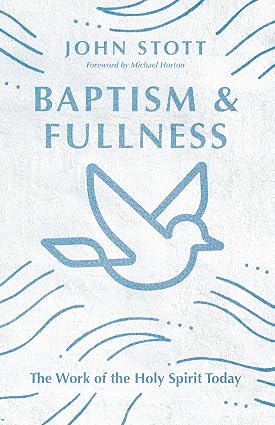 In this classic study, John Stott provides clear biblical exposition on the promise, the fruit and the gifts of the Holy Spirit.
Gordon Fee, Paul, the Spirit, and the People of God
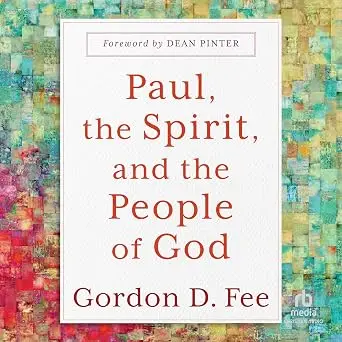 This contemporary classic by renowned scholar Gordon Fee explores the Spirit's significant role in Pauline life and thought.
Thomas A. Tarrants
Thomas A. Tarrants is President Emeritus of the C.S. Lewis Institute. After serving twelve years as president and nine years as vice President, he retired from his position as Vice President for Ministry and Director, Washington Area Fellows Program, with CSLI in June 2019. He holds a Master's of Divinity Degree, as well as a Doctor of Ministry Degree in Christian Spirituality. Tom is an ordained minister in the Evangelical Church Alliance and a member of the Evangelical Theological Society. Tom is the author of Consumed by Hate, Redeemed by Love, published by Thomas Nelson Publishers and Following Jesus Christ. He spends his time writing, mentoring, consulting and traveling.
