



Back to series



CHAPTER 19
Being Guided by the Word and the Spirit
Your word is a lamp to my feet and a light to my path.
Psalm 119:105
As a loving Father, God communicates with His children and guides them by His Word and His Spirit to fulfill His purposes for His glory. We have only to look at the people and events in the Bible and the world around us to see God as the greatest-ever strategic master planner. He works to bring to fruition His good plans for each of His children, giving them specific instructions and guidance in certain important areas of life while allowing them liberty to choose what they prefer in others. For instance, God does not typically give guidance about any number of inconsequential matters in life, such as which brand of toothpaste we use or whether we should wear solids or plaids.
The apostle Paul tells us that God has created each of us as a unique work of art in Christ Jesus to do good works, which He planned for us long ago (Eph. 2:10). As He works daily to make us more like Jesus, He has specific things for us to do to glorify Him and spread His kingdom. These go far beyond giving pocket change to a homeless person or helping a vulnerable person to safely cross a busy street. Discovering and fulfilling God’s plans for us should be among our highest priorities. Only by following His guidance and direction will this happen, and when it does, we will find our deepest satisfaction and fulfillment in life.
We should regularly ask God to transform us, guide us, and fulfill His plans for our lives. Although some people may find it hard to believe God can use them, the Bible shows us that God can use anyone. One anonymous believer said, “He can use any pipe that is open on both ends.”
How Does God Guide?
How and when does God guide us? As the sovereign Lord over all creation, God can guide us in any way He chooses and at any time He chooses. The psalmist says, “Good and upright is the Lord; therefore he instructs sinners in the way. He leads the humble in what is right, and teaches the humble his way. All the paths of the Lord are steadfast love and faithfulness, for those who keep his covenant and his testimonies” (Ps. 25:8–10). In another psalm, we read, “I will instruct you and teach you in the way you should go; I will counsel you with my eye upon you” (Ps. 32:8). The Scriptures reveal a variety of ways in which He has done this with people in the past.

For the sake of simplicity, we can put these examples into two categories: ordinary and extraordinary. God’s ordinary guidance covers the vast majority of what we need to know for daily life. His extraordinary guidance covers a much smaller number of situations.
God’s ordinary guidance
God ordinarily guides us by instructing us through His Word: “Your word is a lamp to my feet and a light to my path” (Ps. 119:105). The vast majority of what we need to know about God and how He wants us to live in this world can be found in His inspired Word, the Bible. The Old and New Testaments comprise His Word and are fully trustworthy; both overflow with important precepts and examples that can help guide our daily lives.
We should note, however, that as far back as the heretic Marcion (who lived from around AD 85 to 160), some people have rejected the Old Testament. Even those who do not explicitly deny it may minimize or neglect it in their study. But Jesus and Paul referred to it constantly, and Paul commended it strongly when he said, “For whatever was written in former days was written for our instruction, that through endurance and through the encouragement of the Scriptures we might have hope” (Rom. 15:4).
What are some reasons we should seek to deepen our knowledge of God’s revelation in the Old Testament? A quick sample might include:
- the basic foundations of the Christian worldview, including the nature of God, His creation of the world, the fall of humankind, God’s plan for redemption, and the coming consummation of all things
- the Ten Commandments, which give us God’s enduring moral guidance for life in this fallen world
- the prophets and historical books, which contain accounts of God’s works, past and future, and many stories rich with moral and practical guidance
- Proverbs, which provides timeless wisdom to guide us
- Psalms, which teaches us how to pray and shows us how to walk with God through the ups and downs of life (see 1 Cor. 10:11)
- The history of redemption up to the time of Jesus and many Scriptures that speak of His coming and His kingdom.
The Old Testament is a crucial part of God’s revelation to us. And in the New Testament, especially the life and teaching of Jesus, the Son, God has given us the rest of what He wants us to know (see Heb. 1:2). The Gospels are a gold mine indeed, showing us Jesus’ life, ministry, atoning death, resurrection and ascension (Luke 24:51). The Sermon on the Mount and many other passages in the Gospels give key precepts to guide us in following Jesus and in living in God’s kingdom, as well as a lens through which to look back and properly understand the Old Testament. The book of Acts reiterates Jesus’ ascension (1:6–11) and shows the birth of the church and the Great Commission in action as the growing community of Jesus’ disciples spreads the gospel throughout the world. The Epistles give a picture of various issues that arose in the early church, many of which still occur today. And they provide amplification and clarification of the actions and teachings of Jesus and how they apply to life in the church and the fallen world.
God’s ongoing transformation of our lives includes the vital component of guiding us by His Word. The more we prayerfully listen to, read, study, memorize, meditate on, internalize, and obey His Word, the more His transforming light will shine into our hearts and minds. That is why Paul urged the Colossians to “let the word of Christ dwell in you richly” (Col. 3:16; my emphasis). That is, he charged them to saturate themselves with the words of Jesus. And as we also do so, we will increasingly develop the mind of Christ (1 Cor. 2:16; Phil. 2:5), enabling us to know Him better, love Him more, become increasingly like Him, enter more fully into His ongoing ministry in the world, and more readily recognize how He wants us to respond in any circumstance that we encounter.
Prayerfully looking at our circumstances through the lens of Scripture and the eyes of Christ gives us the most basic form of God’s guidance. As we do so, the Holy Spirit will prompt and empower us to obey Him and reject the desires of the flesh (Gal. 5:16–18). In this way, the Spirit transforms us increasingly into the image of Jesus and glorifies God through us (see Rom. 8:29; 2 Cor. 3:18).
Unfortunately, however, the low level of biblical literacy among believers today presents real challenges for experiencing such basic guidance and underscores our urgent need to regularly read and study Scripture. If we do not seek God’s guidance in this most basic way, why should we expect Him to provide it through extraordinary means?
God’s extraordinary guidance
God’s extraordinary guidance is a supplement to His ordinary ways of leading us, and the two will never conflict. I say “supplement” because only a small fraction of life’s issues call for extraordinary guidance. But it is an important fraction. As with God’s ordinary ways, they also fulfill His purposes for His glory. In many instances, they involve aspects of ministry and mission requiring direction that biblical texts cannot give: situations that need real-time, on-the-ground navigational direction.
We find some instances of this kind of guidance in the book of Acts, especially where the Lord guided preachers of the gospel who sought to spread God’s kingdom. For example, Jesus spoke directly to Paul on two occasions (Acts 9:4–6; 23:11), through a vision twice (16:9; 18:9–10), a trance once (22:17–18, 21), and prophetic messages four times (11:27–30; 20:22–23; 21:4; 21:10–11). Jesus also spoke once in a vision to Ananias (9:10–16). An angel spoke once to Cornelius (10:1–6), twice to Peter (5:19–20; 12:7–8), and once to Paul (27:21–26). And the Holy Spirit spoke a direct message to Philip (8:29), to Peter (10:19–20), and to Paul (13:1–3; 16:6-7). These experiences came not only to apostles but also to ordinary believers who were filled with the Holy Spirit, and they had a divine quality, immediacy, and force that were self-authenticating.
It would be easy to assume that such exciting, extraordinary occurrences took place frequently in the early church, but that would be incorrect. We have no indication that either Peter or Paul (or any other New Testament leader) experienced a steady stream of such special guidance. Remember that the book of Acts covers a period of about thirty years and that the instances of guidance recorded there spread out over that period. Luke does not present them as common, everyday experiences but rather shows that they came unsought to people actively serving God. Most often they seem intended to help advance the work of God’s kingdom in some way. Moreover, they focused on important issues that the recipients would not otherwise have known about or even considered. And significantly, they demonstrated that through the Spirit, Jesus remained with His followers, as He had promised (Matt. 28:20). Through them, He continued to do the work of making disciples that He began while on earth.
Does God Still Guide Today?
God’s kingdom has continued to spread to the present day, and we may well ask: Does God still guide people in such special ways? Anyone who has been a believer very long will know of people who thought God was guiding them, only to discover they were wrong. That can prompt some to adopt a skeptical attitude about extraordinary guidance. While we do need to be discerning, we must not throw out the proverbial baby with the bathwater. Consider the following examples of two godly, Spirit-filled men.
Dr. R. A. Torrey, a close friend and colleague of D. L. Moody, who led the school now known as Moody Bible Institute at the turn of the twentieth century (1889–1904), was educated at Yale University and Yale Divinity School. He then did further theological studies at the universities of Leipzig and Erlangen in Germany. Torrey was not prone to give himself to frivolous, impulsive ideas. He recounts how one day as he walked down a busy street in Chicago, he received a direct word from the Holy Spirit:
Suddenly I met a man, a perfect stranger, and it seemed to me as if the Spirit of God said to me, “Speak to that man.” I caught up to him … laid my hand on his shoulder … and said to him, “Are you a Christian?” … He stopped and hung his head. He said, “This is very strange. I am a graduate of Amherst College, but I am a perfect wreck through drink here in Chicago, and only yesterday my cousin, who is a minister in this city, was speaking to me about my soul, and for you, a perfect stranger, to put this question to me here on this busy street…” I did not succeed in bringing the man to a decision there on the street, but shortly afterward he was led to a definite acceptance of Christ.1
As another example, consider the following account of extraordinary guidance:
In 1873, before the days of radio, the ship Ville de Harve sailed from New York, collided with the ship Loch Erne, and sank in eight minutes. Some survivors were saved by the Loch Erne and some by the ship Trimountain, which soon sailed away.
The next day, the Loch Erne began to sink. It lost its ability to steer and a strong wind blew the ship far out of the normal lane where Atlantic vessels traveled. Each day the ship settled lower in the water, and finally the captain announced that the ship would sink within a day.
On board was a godly minister by the name of Cook. After long hours of prayer, he announced that God had assured him all would be saved. By morning, the passengers stood knee deep in water and expected the ship to take the final plunge to the bottom at any moment. Suddenly, the British Queen hove into sight, rescuing all on board.
What had happened?
The night before, the captain of the British Queen, a Christian, felt impressed that God had a special work for him to do, someone to save. He felt led to turn the ship in a more northerly direction. Then he heard the inner voice say, “Steer north.” He turned the ship still further north and ordered that the ship sail at top speed all night. At the crack of dawn, the lookout called “Ship ahead!” There lay the Loch Erne. God had a Christian who discerned the voice of the Spirit, and through him the Lord saved the lives of everyone on board the Loch Erne.2
These two stories are examples of how God has guided people in extraordinary kingdom-oriented situations in more modern times. Over the centuries and up to the present day, believers have reported instances of such guidance which, when acted upon, later were confirmed to have come from the Holy Spirit. Are they everyday occurrences for all believers? No. But they do still happen, perhaps more frequently than we realize.
Here’s an extraordinary but much less dramatic experience from my own life—something that most people can relate to. One day in 2012, my car, which had about 143,000 miles on it, began to overheat. Instead of pulling over and turning off the engine, I decided to continue the mile or so to my home. That was all it took to destroy the engine. The dealership recommended installing a used engine. While they were searching for one, a friend from the other side of the country who knew nothing of this problem called me and said right away, “The Lord told me you need money. What’s going on?”
I told her what had happened, and she said that she and her husband would ask the Lord what to do. Meanwhile, the dealer found an engine and gave a total installed price of $4,957. A day or two later, a check arrived in my mailbox for $5,000. I was stunned! With no knowledge whatsoever of the amount I would need, they were led to send $5,000—covering the entire cost of replacement plus a little extra for a full tank of gas. This was obviously a great help financially, but even more importantly, it was a great encouragement to my soul for the Father to give me such an unmistakable assurance of His love and care. It was an example of God’s extraordinary guidance to my friend, who heard the Lord and responded. I could tell other stories like this, and so could people from a range of backgrounds, including what we call fundamentalist, evangelical, charismatic, and Pentecostal.
God has no problem guiding us whenever He wants to. He has many options to direct us, and He will always use the method best suited to the situation.
What Does God’s Ordinary Guidance Look Like?
Do these stories of God’s extraordinary guidance in mission and ministry situations mean that we should expect Him to guide us similarly in the affairs of our daily lives? And if so, when, and how often? Should we expect direct guidance from God for questions such as the following: What career shall I pursue? Where shall I attend university? Which job shall I take? Where shall I live? What church shall I join? Shall I get married, and if so, to whom? These questions and others like them are vitally important, and we can be sure that God wants to guide us . . . but how?
Relying on God’s ordinary guidance through his Word may seem incomplete in these situations because no verses in the Bible tell us to pursue a specific career, attend a certain university or church, work for a particular company, or marry a certain person. Prayerfully considering relevant biblical principles, our abilities, interests, desires, opportunities, and circumstances will all play an important part in our discerning of God’s direction, but they cannot give us a definitive answer. Thus, in addition to pondering all the factors listed above, some people will seek extraordinary guidance, such as a sign or special word from God.
While we should definitely expect the Good Shepherd to guide us when and where needed to fulfill His plans and purposes for us (Ps.23:2–3; 32:8–9), nowhere does Scripture tell us to seek or expect Him to do so by special, extraordinary means. He can certainly do so if He chooses, and sometimes He does. But in most cases, He wants us to use our minds to think and pray through the possibilities in light of the moral precepts, wisdom, stories, and examples (positive and negative) we discover by searching Scripture and seeking the wise counsel of mature believers. Why does He desire this? Because doing so helps us develop a deeper knowledge of His Word, His ways, and, ultimately, Himself.
Let’s take a brief look at two common examples in American culture for the sake of illustration: considering whom to date and marry, and determining what kind of work to do.
Guidance for Dating and Marriage
Scripture tells us that anyone who wants to marry is free to do so, provided they marry another believer (1 Cor. 7:39). Based on that teaching alone, we might close our Bibles and consider the matter settled. Any believer to whom I feel deeply attracted is an option for me, right?
Well, yes. But is every believer a wise option for you? Scripture calls us to use wisdom in making important decisions. It will shock many to discover that romantic attraction, while exciting and desirable, is not the only or even the most important consideration in choosing a spouse. Nor is it the wisest, because not all potential candidates are equally suitable partners for marriage. Thus, we should go further and seek biblically derived wisdom to answer significant questions such as these:
- What basic characteristics does a good husband or wife possess?
- How committed is the potential spouse to Christ and spiritual maturity?
- Will this person join, support, and encourage me as I seek to faithfully follow Christ?
- Could I do the same for him or her?
- Do we have compatible higher-level priorities and life goals and enough in common to sustain a healthy marriage?
- How compatible as a couple would we be in other ways?
- Is this person emotionally healthy enough to be a lifelong partner? Am I?
- What is the place for discernment and advice from parents, godly spiritual leaders, and friends?
For example, “Tim” and “Susan” both worked on Capitol Hill, though for different congressmen. Tim felt the time had come for him to get married and start a family. He felt attracted to Susan and prayed about whether he should begin dating her. He saw in her some of the qualities listed above. The better he got to know her, he saw even more, and the attraction grew.
Tim approached a man who had mentored him (who also knew Susan) and asked him for counsel. As the two discussed whether he should consider her as a marriage partner, it looked like a very good choice. The longer the pair dated, Susan concluded the same about Tim, also through prayer and godly counsel. Though romance blossomed, they did not have a relationship of mere emotional infatuation but one that also included sober, sensible consideration of whether the two of them would make a good couple and good parents, and whether they would have a fruitful ministry together.
This couple has now been happily married for more than twenty-five years and has three children, all of whom walk with the Lord. And they have had a fruitful ministry of evangelism over the years.
Guidance for Work
Or consider work. We may freely choose any type of work that is not illegal, immoral, or ungodly. But here as well, not all options are equally wise or God-glorifying. What does the Bible teach about our work?3
A very basic principle, derived from Genesis 1 and 2, holds that God has called human beings to work and that He has endowed each of His children with the gifts and abilities necessary to fulfill His plans for their work lives. Thus, we can start by taking into account our God given gifts, abilities, and motivations. If you did poorly in math and science while in school, God probably has not destined you to become an engineer or astronaut! Once our gifts become reasonably clear, we might ask questions such as these:
- Is a given job a good fit for my gifts and abilities, strengths and weaknesses, personality and temperament?
- Does it appeal to me?
- Will my gifts enable me to glorify God in this position?
- Is there a realistic possibility of being salt and light (see Matt.5:13–16) to those among whom I labor?
Prayer, sometimes with fasting, can aid us in achieving an accurate self-understanding. Godly counsel also can help, along with the Spirit’s guidance and self-surrender. Many modern believers will need to repeat this process a number of times over the course of their working lives. Such transition periods, though sometimes difficult, can play a crucial role in discerning and fulfilling God’s plans for them.
“Rich” was a senior leader in an organization. He met periodically with a mentor over several years. Though Rich was quite successful and satisfied in his career, it became clear to his mentor that Rich had undeveloped potential. The two talked about whether he might want to pursue some new opportunities for growth and service. He took several months to consider the idea, pray, and consult with his wife. As he pondered these questions, he concluded that he did have such a desire, which led to him getting additional education that built on his existing strengths, experiences, and interests. It also equipped him to work in a different field that has given him great satisfaction and fruitfulness.
If God wants to give us extraordinary guidance in such situations, He can certainly do so. But the voice of God is normally heard through a combination of prayer, Bible reading and meditation, discernment of circumstantial factors, godly counsel, and sometimes the promptings of the Holy Spirit. Though this path typically takes longer, feels less exciting, and may involve more difficulties, it has the great benefit of helping us grow into greater maturity and Christlikeness—God’s first priority in our lives.
In instances when God does grant special guidance, we can be sure that such guidance will never conflict with the morality and wisdom we find in Scripture. Any supposed special guidance that conflicts with the plain teaching of the Bible is not from God. It really is just that simple. We can be sure, for example, that God will never tell us that in our “unique” circumstances, it is okay to lie to or steal from our employer, or cheat on our taxes or on our spouse, or move in with our girlfriend or boyfriend. Any guidance God gives us about specific circumstances will always accord with the guidance He gives us in His Word.
What about Inner Impressions?
This brings us to a consideration of what some refer to as a prompting, inner impression, or nudge from the Holy Spirit. What are we to think about such things? Frankly, clear biblical examples here are not easy to find. Anecdotal evidence from the faithful seems to be the best we can do.
Are impressions and promptings a form of extraordinary guidance? Opinions differ. The passages sometimes cited in support of it, such as John 10:3–4 and 10:27, when read in context, do not deal with inner guidance. In John 10, Jesus is speaking about bad versus good shepherds, salvation, and the abundant life. When He says that His sheep hear His voice, He seems to be referring to His audible voice in preaching and teaching, not an inner impression.

And the examples of God speaking to the boy Samuel (1 Sam. 3:1–18) and His “still small voice” speaking to Elijah (1 Kings 19:12 KJV) both featured audible words, not inner impressions. Nor was Philip given an inner impression to encounter the Ethiopian eunuch; rather, an angel gave him a specific, detailed command, and then the Holy Spirit gave him additional instructions (Acts 8:26, 29).
Did God speak audibly to kings (especially David) and the Old Testament prophets? We don’t know. In any case, the Bible never suggests that we should seek guidance in this way. The Old Testament passages cited above do show, however, what we see in the New Testament: God has sometimes spoken audibly to people.
This doesn’t prove that He also speaks inaudibly, but does it leave open the possibility that He may also sometimes speak inaudibly through inner impressions and nudges? This seems plausible in light of the fact that the Holy Spirit is a Person who dwells in us, and that Scripture describes Him as the Spirit of truth and as our Teacher and Helper.
It also seems plausible when we consider that Jesus said “this is eternal life, that they know you, the only true God, and Jesus Christ whom you have sent” (John 17:3). In this context, the verb translated “know” (Greek ginosko) means personal knowledge. As New Testament scholar Andreas Köstenberger explains, “In biblical parlance, ‘to know’ God does not refer merely to cognitive knowledge (the Greek conception); it means living in fellowship with God.” He goes on to quote D. A. Carson, who says “knowledge of God and of Jesus Christ entails fellowship, trust, personal relationship, faith.”4
All of these things are mediated by the Holy Spirit.
What can we learn from anecdotal reports? Over the centuries, believers have testified to having “promptings” that later proved to have come from the Lord.
Such experiences do not happen every day, nor do they happen to every believer; but believers from all walks of life do continue to report them, and they are probably more common than we know. They also seem to be reported more often by those who walk humbly with God and who seek to be led by His Spirit.
What should we conclude about impressions and nudges? The possibility of self-deception is a legitimate concern, but “an abuse does not nullify proper use.”5
What should we do if we believe we’ve received a nudge from the Spirit? Acting on promptings to do good—to help someone in a practical way or to share the gospel—offers an opportunity for God to use us, as well as for us to discover whether the prompting really is from Him and to experience the thrill of His using us when it is. Assuming the nudge presents no conflict with biblical teaching or wisdom, proceeding with a gentle, humble approach seems appropriate.
I had such a nudge several years ago, when a Christian professor from an Eastern European country who had come to Washington for an academic conference called the C. S. Lewis Institute office to inquire about dropping by for a visit to learn more about our work. She asked whether I could meet with her the following day. Before I left home to go to work that day, I had an impression or nudge that I should give her some money, even though I knew nothing about this perfect stranger. We had a cordial conversation about her efforts to introduce the thought of C. S. Lewis into her mostly atheistic university, and I gave her some of our material to help her efforts.
At the end of our conversation, I reached into my pocket and pulled out $100. “I think I am to give this to you,” I said. The gift surprised her, and she expressed deep gratitude for it, because as she later confided, she had no money for taxi fare back to her hotel. She had stepped out in faith, trusting God to somehow provide her for need … and He did.
Or consider another, more recent example. A British young lady whom I have known since her childhood recently graduated from Edinburgh University with a degree in philosophy and theology (to aid her in evangelizing secular Europeans). She is very smart, shy, and humble. After graduation, she took an unpaid position as a church missions worker in the south of England, trusting God to provide for her needs.
One day she had a strong impression to walk to an IKEA store about a mile away, and that, if she did so, there she would see a blue couch on display and a woman sitting on it with whom she was to speak about Christ. Without delay, she walked to the IKEA store and saw a blue couch with a woman sitting on it. She gently engaged her in conversation about Christ and found her open to meeting for Bible study.
In situations like these, we may not have time for a discernment process. And in any case, the consequences of a mistake usually involve little more than embarrassment.
But in matters of greater significance, J. I. Packer urges discernment by the community of faith, “lest impressions that are rooted in egoism, pride, headstrong unrealism, a fancy that irrationality glorifies God, a sense that some human being is infallible, or any similar unhealthiness of soul, be allowed to masquerade as Spirit-given.”6
The church has a long history of believers who have made claims of promptings and impressions from God, only to see them later proven false. We see the same thing today. It has become especially problematic in contemporary Western culture, which is so oriented to feelings, sentiment, and the subjective aspects of life. We can easily mistake our random thoughts, desires, intuitions, or internal self-talk for a word from God, especially when we have a strong preference about a matter.
The great eighteenth-century evangelist George Whitefield is a classic example. He named his newborn son “John” because he believed God had shown him that the child would be a mighty preacher like John the Baptist. But when his little son died four months later, Whitefield realized that the Spirit had not spoken to him and that he had “misapplied” the Scripture. He had deceived himself, undermined his own credibility, and brought public reproach upon God’s name. His error had significant consequences.7
What would cause a strong, mature believer like Whitefield to make such a great mistake? In one word: self-deception. Any of us can tell ourselves what we want to hear and assume that it is God speaking to us, especially when we deeply desire it. Self-deception can afflict all believers, including leaders.
John Wesley saw this during his long ministry and advised (quoting 1 John 4:1), “Do not hastily ascribe things to God. Do not easily suppose dreams, voices, impressions, or revelations to be from God. They may be from him. They may be from nature. They may be from the devil. Therefore, believe not every spirit, but ‘try the spirits whether they be from God.’”8
Wesley’s advice is rooted in Scripture and highlights the importance of testing, wherever possible, any impressions or messages we think might have come from the Holy Spirit, as well as any dreams, visions, or prophetic words. In addition to our own assessments via prayer and study of God’s Word, it is wise to discuss these with a trusted spiritual advisor who can help us discern the validity of these perceptions, whether they align with Scripture, and whether we are deceiving ourselves.
What about Prophetic Utterances?
On the question of prophetic utterances, the apostle Paul knew very well of the critical need to discern the source of such things. “Do not quench the Spirit,” he told the Thessalonians. “Do not despise prophecies, but test everything; hold fast what is good” (1 Thess. 5:19–21). The apostle John likewise said, “Dear friends, do not believe every spirit, but test the spirits to see whether they are from God” (1 John 4:1).
The testing that Paul commands relates specifically to a prophetic word given by one believer to another or to a whole congregation (a practice that is more common these days in some circles than in others). Paul himself had received such a message from the prophet Agabus (Acts 21:10–11). He strongly encouraged the gift of prophecy because he knew from experience that “the one who prophesies speaks to people for their upbuilding and encouragement and consolation” (1 Cor. 14:3). This type of prophetic utterance was valued but was not considered on par with inspired Scripture.
How, then, do we understand such prophetic utterances? That question provokes much discussion and debate among scholars and is too complicated to address fully here. What we can say with certainty is that Paul required that prophetic words be “weighed” to assess their validity (1 Cor. 14:29). And we can also say with certainty that such words would never conflict with Scripture.
Leaders in congregations that experience public prophetic words have a special responsibility as shepherds of the sheep to carefully and prayerfully test the supposed prophecy, especially in light of the growing number of false and erroneous public prophecies that have spectacularly failed in recent years. Christians should publicly identify failed or erroneous prophecies and not sweep them under the rug, which is all too common.
Paul provides sound guidance on this matter. For him, testing meant evaluating a prophecy or other special guidance against the teaching of Scripture. He would have strongly insisted that no God given prophetic word, dream, vision, nudge, or prompting from the Holy Spirit will ever conflict with the Holy Scriptures, which the Spirit inspired. Likewise, he would insist that God does not contradict Himself and His words never fail to come true. Nor does God put bizarre or outlandish or immoral ideas into our minds although on occasion He may guide people to do things that may not make sense at the time, as with Philip (Acts 8:26) or Peter (Acts 10:9–48).
Godly, wise, and mature pastors and elders with a solid grounding in the Scriptures and in the spiritual life should do the testing Paul commands. In the case of a prophetic message, they should consider not only the content, but the life of the one who delivers it. Does orthodox belief, holiness, humility, and a servant heart characterize the person (as with Charles Spurgeon)? If they don’t know the answer, can they find someone who can verify the individual’s character and the genuineness of their gift? Leaders must reject any message from a person who embraces heretical beliefs. And they must be cautious of utterances from anyone who displays pride, haughtiness, attention seeking, narcissism, or other fleshly religiosity. Also, they should ask: Does the message edify? As mentioned above, Paul says, “The one who prophesies speaks to people for their upbuilding and encouragement and consolation” (1 Cor. 14:3).
Final Counsel
God loves us and has specific purposes and plans for each of our lives. You have a destiny, a significant role in God’s kingdom, and He wants to guide you in fulfilling it (Ps. 139:1–16). While this plan is for your good, it’s even more for His glory. What a tragedy it would be if, when we stand before the judgment seat of Christ, we were to discover that we had spent our entire life fulfilling our own plans and not His!

To wrap up this chapter, let’s review some of the most important principles of guidance:
Make prayer the starting point for seeking guidance.
Not casual prayer, but earnest, concentrated prayer. This begins with self-examination and a request for God to search our heart (Ps. 139:23–24). It involves repentance and confession of any known sin and asking forgiveness from anyone we have offended (Matt. 5:23–24). Humble yourself, for “he leads the humble in what is right, and teaches the humble his way” (Ps. 25:9).
Search God’s Word.
Once you have begun to pray, you should start searching for insights and wisdom in Scripture that apply to your situation, for God ordinarily guides us through His Word. This may come directly or indirectly, through precepts, principles, examples, stories, and more. In some cases, you may find yourself addressed by the Holy Spirit through a particular verse or passage that you know specifically applies to you in this circumstance.
Also, take note of ideas that keep coming back and explore them. God sometimes uses them to get our attention. And remember that when God does give us guidance, He usually gives just enough light to take the next step of faith and obedience, not a comprehensive master plan. If you lack a thorough grounding in the Scripture, seek counsel from someone who has it (see #5 below).
Be patient.
Wait on the Lord. Do not rush ahead and do what you desire if guidance doesn’t come when you want it. His timing is an extremely important factor. Knowing what God wants us to do is only part of the equation. Knowing when to do it is also crucial, and disregarding God’s timing can create big problems. While praying, searching the Scriptures, and waiting on God, think through your circumstances.
God has made us rational creatures and expects us to use our minds as we seek to know and do His will. Circumstances are part of the way He guides us. Make a careful, realistic assessment of your circumstances and possible options, including the likely outcomes of different courses of action. Then live with each one for a couple of days. Sometimes God’s will becomes clear as we consider His providential ordering of the circumstances in our life. But we should do our thinking and pondering from a posture of faith, with our mind submitted to His wisdom and will. “Trust in the Lord with all your heart, and do not lean on your own understanding” (Prov. 3:5).
Surrender yourself fully to God (Rom. 12:1).
This means committing yourself to doing His will, whatever it may be, and opens the door to being filled with the Holy Spirit, whom God uses to illuminate our understanding of the Scriptures and to guide, empower, and transform us.
Some may struggle to make this surrender, but they have no way forward in the Christian life (or in discerning God’s will) until they do. If you refuse to do God’s will or have disregarded His previous guidance, is He likely to give you more? Obedience is crucial. To receive more light, we must walk in the light He has already given. To be guided, we must come to a point where we desire His will more than our own, even if it conflicts with our wishes and desires (John 7:17). Otherwise, our desires will influence our thinking like a magnet does a compass, pulling it away from the true north.
George Müller said, “Nine-tenths of the trouble with people … are overcome when our hearts are ready to do the Lord’s will, whatever it may be. When one is truly in this state, it is usually but a little way to the knowledge of what his will is.”9
This reality prompted one wise saint to comment, “There are few crises of guidance, but there are many crises of obedience.”10
Seek counsel as needed.
The experience of wise, godly, mature believers who have walked with God for years and who know Scripture well can often greatly help us as we ponder the way forward. Depend upon a community of honest believers who will speak the truth, not necessarily what you want to hear (see Acts 15). In cases where you are seeking confirmation of guidance you believe you have received, say, “I think the Lord is telling me” (rather than “God told me…,” which shuts down further discussion). This requires humility of heart, which God promises to bless, for He “leads the humble in what is right, and teaches the humble His way” (Ps. 25:9).
While you wait for God’s guidance, do the duty that lies nearest at hand.
As Elisabeth Elliot, wife of missionary martyr Jim Elliot advised, “Just do the next right thing.” That is, do the next right thing in life, considering how Scripture says we should live and conduct ourselves, even if you cannot yet see how it fits into the big picture or where each step is leading.
For difficult situations in which you cannot clearly see the way forward, consider the wisdom of Andrew Murray.
Missionary Amy Carmichael records witnessing how Andrew Murray responded to a particularly painful situation in his life:
He was quiet for a while with his Lord, then he wrote these words: “First, He brought me here, it is by his will I am in this straight place; in that fact I will rest. Next, He will keep me here in his love, and give me grace to behave as His child. Then, He will make the trial a blessing, teaching me the lessons He intends me to learn, and working in me the grace He means to bestow. Last, in His good time He can bring me out again—how and when He knows. Let then me say I am here, (1) By God’s appointment, (2) In His keeping, (3) Under His Training, (4) For His time.”11
Give yourself wholeheartedly to God and ask Him to fulfill His plans for your life, calling upon the Holy Spirit to give you whatever guidance and direction you need through His Word or through any other way He desires.
Questions to Ponder
- How would you describe the focus of the Bible’s teaching on divine guidance?
- In what ways have you experienced God’s guidance, both ordinary and extraordinary?
- What do you think about the idea of “inner prompting” in the life of a disciple of Jesus?
- How can we avoid self-deception in guidance?
- When considering God’s direction for our lives, what are some actions we should take?
Billy Graham, The Holy Spirit: Activating God’s Power In Your Life
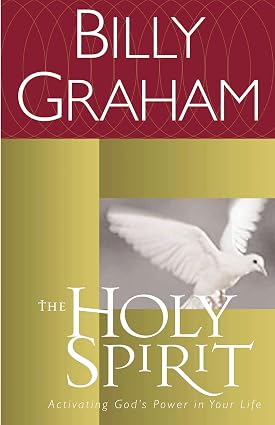 In this classic volume, Billy Graham offers a timeless, sensitive, and comprehensive portrait of this much discussed, but often misunderstood, member of the Trinity.
Graham Cole, He Who Gives Life: The Doctrine of the Holy Spirit
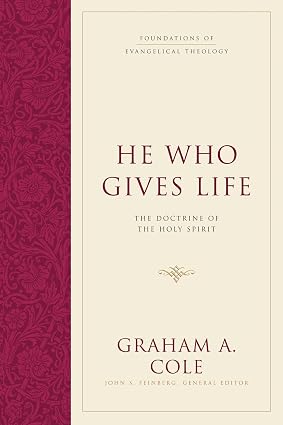 In this addition to Crossway's Foundations of Evangelical Theology series, Dr. Graham Cole has written a work that offers a comprehensive theology of the Holy Spirit.
Thomas A. Tarrants
Thomas A. Tarrants is President Emeritus of the C.S. Lewis Institute. After serving twelve years as president and nine years as vice President, he retired from his position as Vice President for Ministry and Director, Washington Area Fellows Program, with CSLI in June 2019. He holds a Master's of Divinity Degree, as well as a Doctor of Ministry Degree in Christian Spirituality. Tom is an ordained minister in the Evangelical Church Alliance and a member of the Evangelical Theological Society. Tom is the author of Consumed by Hate, Redeemed by Love, published by Thomas Nelson Publishers and Following Jesus Christ. He spends his time writing, mentoring, consulting and traveling.
