Back to series
Subscribe
Listen or Download the Podcast
Episode 6: Natural Evil: How Can a Good and Powerful God Allow Natural Disasters and Disease?
Sharon Dirckx, PhD., trained neuroscientist, prolific speaker, and author of award-winning books on the problem of evil and human consciousness, helps us to tackle the problem of natural evil. There are evils in our world which can't be directly attributed to human moral error: natural disasters, parasites, and disease attack seemingly indiscriminately, causing rampant death and destruction of innocent people. How can the Judeo-Christian God be simultaneously good, loving, and all-powerful and yet allow disaster and disease to occur on his watch? Did God create these evils, does he passively permit them, or is he powerless to stop them?
Resources for Further Study:
- Sharon's Website
- Broken Planet by Sharon Dirckx
- Other Books by Sharon Dirckx
- Unseen Realm by Michael Heiser
- eX-skeptic interview on Sharon's conversion to Christianity
Subscribe


 Our Newest Podcast
The Questioning Belief podcast explores objections to Christianity through in-depth discussions with experts. Drawing from her background as a former atheist and her experience in apologetics, Dr. Kathleen Milani invites you to explore thoughtful responses to serious questions about faith. Learn more.
 Connect with Kathleen
Explore written reflections from Dr. Kathleen Milani and get in touch with her through her Substack, The Reformed Gadfly.
Transcript
Kathleen Milani: Welcome to Dr. Kathleen Milani. I’m your host, Dr. Milani, former atheist turned Christian and biomedical scientist. Thank you for joining me as we interrogate Christianity to see if it can stand up to our toughest objections.
On today’s episode, Dr. Sharon Dirckx and I tackle the following objection: If God created our world and everything in it, and He remains in control of it today, then the presence of evils that cannot be directly attributed to man’s sinful actions—such as earthquakes, hurricanes, and viruses—prove that either God authored evil, passively permits evil, or is powerless to stop evil. He cannot be simultaneously good, loving, and all-powerful. Given the evil that plagues our world, God must be sadistic, uninterested, or weak. So let me introduce our speaker briefly before we dive into that.
Dr. Sharon Dirckx is a prolific speaker and author of award-winning books on both suffering and human consciousness, which we’ll link in our show notes. She has a PhD in brain imaging from the University of Cambridge and conducted research in functional MRI and neuroscience. She grew up in a secular household and became a Christian as an adult. She now focuses on tackling hard questions related to faith and Christianity. Her most recent book, which we’re talking about today, Broken Planet, combines real-life narrative with apologetic and scientific arguments to respond to the question: If there’s a God, then why are there natural disasters and diseases? Dr. Dirckx, thank you so much for being here.
Sharon Dirckx: Oh, it’s a pleasure. Thanks for having me.
Kathleen Milani: Yeah, of course. So, in this objection to Christianity that I posed in the introduction, I’ve thrown around a lot of morally charged words. The first of those is the concept of evil. I feel like we have this intrinsic understanding of what evil might be, but if you look up definitions of evil, it’s kind of hard to pin down. I just looked it up in the Oxford dictionary; it defines it as “profoundly immoral and wicked.” That might vaguely describe some human transgressions of some absent moral law, but it doesn’t really apply to entities that you talk about—like natural disasters and diseases—which cause these terrible outcomes but lack moral agency and moral responsibility. So how do you define evil in this book, and are there different types of evil?
Sharon Dirckx: Yes, I think that in terms of Christians trying to address the problem of evil in general, there are two different kinds. There’s obviously moral evil, relating to how people behave, how they treat each other. Often what’s given in response to why God might allow suffering in general is a free will defense—that humans can use their freedom for good or evil in people’s lives. But that obviously doesn’t help us with the type of evil that we want to talk about today, which is evil that seems to impact nature itself. In terms of defining evil, obviously someone like Augustine would define it as the absence of good—the lack of something good. But in my argumentation and in my thinking, I would take it further than that to say that if God exists, then there is also such a thing as transcendent evil in the form of a kind of personal being, often referred to as Satan or the devil. That’s something that’s not necessarily talked about very much in the Bible—in Scripture—and there’s an element of mystery to it. But somewhere along the line, it’s not simply the absence of good; it’s the presence of something that is malevolent.
There are lots of responses that we would give to the question of natural disasters. Somewhere along the line, I make the case for why the presence of evil is also part of what we need to make sense of discontinuity in the natural world and in our bodies. This is not straightforward, and I don’t want to be giving trite answers, but it’s in the picture.
Kathleen Milani: Yeah, absolutely. I think that’s an interesting point, and good to remember the person of Satan, because oftentimes in Christian theology—or at least in the apologetics that I’ve looked at—evil is just defined as the absence of good or being far from God or something like that. Those are all elements of it, as you’ve mentioned. But then when you do have a being like Satan or something like natural evil, it seems a little bit different.
So, if we look at, for example, let’s just take a hurricane. Is natural evil the hurricane itself—like the geophysical processes of the hurricane? Is it the pain and the destruction and suffering resulting from the hurricane? Is it everything? Or how do we make sense of that practically?
Sharon Dirckx: Yeah, so I think the way that I think about this is through three different lenses: nature, people, and spiritual factors, natural factors, human factors, and spiritual factors. For many types of natural disasters, the mechanisms needed for them are necessary for sustaining life on earth. You mentioned a hurricane, but if we take something like an earthquake, we know that tectonic plate movement is necessary. It has a life-sustaining role on earth—for recycling nutrients from the ocean beds back to the surface. Volcanic eruptions release pressure and vital nutrients for the surrounding area.
We also know that things like wildfires, provided they’re not too hot, have a regenerative effect, and so on. So many of the mechanisms involved in natural disasters have a life-giving role. Before we go to discussions of transcendent evil, we also need to acknowledge the discoveries of geophysicists—and indeed virologists as well. We could say the same as COVID: there are trillions of viruses in the biosphere built into our DNA as well. If we were to get rid of all viruses overnight, we would live for about a day and a half, and then life would end. Viruses are vital for life. Most of them are beneficial, but why are occasionally a very small number pathogenic to humans?
Before we get to that, we need to acknowledge the life-giving role. Those who don’t necessarily believe in God might say that we take what scientists tell us, and these events are simply the flip side of being on a planet that’s been made to sustain life. Sometimes we get caught up in those mechanisms, and there’s nothing right or wrong about it. It’s just the way the world is. That’s something that we need to take on board and respond to.
Dr. Kathleen Milani: Thank you. I think along those lines too, we tend to think of—like you said—some people tend to think of these natural phenomena themselves as bad. But then we think about other planets as well. On Earth, many of these phenomena are sort of the rare manifestations of some life-giving process that allows us to live and survive and have plant life and everything on Earth. We don’t really think about the moral value of storms on Jupiter, which last centuries and span hemispheres, and how other planets are inhospitable to any form of life because of their geophysical condition. So, would you say that, in terms of natural evil, we can only understand it in reference to life or reference to humanity—or other elements of evil that you discussed?
Sharon Dirckx: Well, that’s a good question. In some ways, a storm on Jupiter isn’t necessarily a disaster in the same way that a storm on Earth would be—precisely as you say—because of the loss of life. We in some ways only know the world that we have and our interaction with natural disasters. The reason why the scientific geophysical explanations alone are not enough is precisely because we don’t just refer to them as events like we might in Jupiter; we refer to them as disasters. We refer to them in a moral sense—a moral quality.
To call something a disaster is to acknowledge that there’s something wrong with the world, that this is not the way it was supposed to be, whether that is the way nature is fundamentally or how humans interact with nature. Obviously, there’s lots we could discuss on those two questions. To say that if God exists, we can make more sense of that sense of wrongness—that moral judgment that we make about the world by calling them disasters. That makes more sense if God exists, because if He doesn’t, this is just the way the world is. But if He does exist, then God is good and has made a good world. He made that world with the potential for evil, and somehow that potential has become reality. We have a framework for making sense of why there is good and evil—arguably in nature as well.
Dr. Kathleen Milani: I think that’s a great point: that our reactions—pretty much universally, I’ll just make that generalization—in response to these natural disasters, or feeling that it’s wrong, that those people didn’t deserve to die, or because death and chaos themselves are bad. So, it’s very morally tinged reactions, like you said. It does tell us we have a moral compass, and we value human life. The atheist worldview or just pure methodological naturalism doesn’t back that. It can tell us why we want to survive or why we want our family to survive from an evolutionary standpoint, but really it doesn’t explain the moral component of that. So, I think that’s a really important point that you made. As I wanted to ask you, you mentioned different types of natural evil. You’ve mentioned in your book natural disasters, diseases, parasites, pests. Do any of these raise any different philosophical or theological issues for you, or can we put them all under the same umbrella?
Sharon Dirckx: I think there are some that have a more clearly defined life-sustaining role—things like earthquakes, volcanoes, wildfires, viruses in general. There are some—particularly things that affect our biology. I think there are some kinds of natural disaster that expose the fact that all that we’ve said so far isn’t enough. We do need another layer to help make sense of these. That is, things that affect our biology—particularly in childhood or in infancy—where one of the other points that I make is that humans have an ability in general to make a disaster even worse. Our interaction with nature often is catastrophic, and the toll on human beings is made much worse because of human action or inaction. There’s a lot I could say there. But there are some genetic diseases that seem to have no beneficial effect, no life-giving role, and there’s no human interaction that makes them worse. These kinds of natural disasters call for a different kind of explanation because those two other factors, human factors and natural factors—aren’t enough. That’s why I appeal to spiritual factors as well. We can’t get away from the fact that fundamentally, somewhere along the line, nature is broken. It’s not as it should be. I don’t see any other way of really making sense of the world without an appeal to that kind of fundamental brokenness.
Dr. Kathleen Milani: I was thinking about a similar thing when I was trying to go through these different types of natural evil. I’m a cancer biologist, and so I was thinking about cancer and how to me it seemed fundamentally different. It’s still a type of natural evil and sort of falls under this umbrella. As you know, you’re a scientist—it’s a body’s own cells sort of fighting to outcompete their neighbors. It’s this weird hyper-individualism that goes against the self. So, it’s not human versus virus or human versus tornado. It’s like your own body betrays itself with its own selfishness or brokenness. That’s anthropomorphizing the cell, but it’s sort of this innate brokenness too that I think Christianity has a good shot at explaining.
Sharon Dirckx: Yeah.
Dr. Kathleen Milani: I’d love to go into that. You’ve pointed out a few things that have spiritual components to them. First, I want to ask you: Why does natural evil pose such a unique challenge to our idea of the Judeo-Christian God specifically?
Sharon Dirckx: Well, the Judeo-Christian God claims to be the creator of all of nature. He is Himself outside of nature but has made the entire natural world. It’s on that basis that science rests on that foundation. Somehow into that natural world, He has built in these things that bring suffering to human beings. That raises questions, and it seems to be at odds with another central attribute of God: that He claims to be good—an entirely benevolent being. Why would a good God imbue nature with the capacity to bring harm and suffering to the people that He makes? I think these things do rest uniquely with the Judeo-Christian God. A lot of other belief systems don’t necessarily believe that there’s one God that’s sovereign over the whole of nature. Some might look at there being many finite gods of nature, where nature itself is divine. Or that kind of goodness is not necessarily an attribute that is held to such a high level as in the Christian faith. So, I think the Judeo-Christian faith faces a unique challenge. The God that Christians believe in also claims to be all-powerful. So that combination of goodness and having created the whole of the natural world and being all-powerful—and yet they are still being suffering—is the heart of the objection that people raise.
Dr. Kathleen Milani: Yes, that makes sense. So, we have a good God, an all-powerful God, a creator God, and a God who’s involved in our world today—He didn’t just create it and then step back. I’d like to focus on the all-powerful portion of God’s character, His omnipotence. I sort of saw this as broken into two components. The first was His power as creator, and then the second was His power to intervene and make changes in real time.
I loved one of your chapters that addresses the question, “Could God have made a better world?” It’s tempting to look at all these natural disasters and natural evil and say, “Well, He could have made it without this,” or “He could just wipe it off the face of the earth in real time as He sees it coming up. He knows it’s going to happen. He’s all-powerful. Why doesn’t He do that?” Let’s tackle the first question. You talk about how the Christian God creates the universe and then He says that His creation is good in Genesis 1. So why is the world that we see today so different than what we think of when we think of “good”?
Sharon Dirckx: There’s a lot in there. First, it’s important to say that there are certain goods that God chose to build into the natural world that enable—for whatever reason—God built those in. One of those is the point we’ve already made about the well-being, life-sustaining—He wanted it to be a life-giving, life-sustaining habitat. So, we have these mechanisms that sustain life but that we get caught up with.
Another good that He wanted to build in was the ability to live meaningfully within the forces of nature. To live meaningfully within the forces of nature, those forces must be stable—they have to be kind of repeatable and stable overall—because if the forces of nature are changing at a whim, then you can’t plan to do something. For example, the glass of water that’s next to me—if I want to take a drink of water but the next time, I go to pick up the glass it flies off the shelf around the room—then actually my capacity to meaningfully choose to drink it is removed. That’s just to illustrate the necessity of having a stable interaction with our habitat; it is crucial to living meaningfully as human beings.
I guess one of the goods that God wanted to build into His created order was the capacity to live meaningfully and to exercise freedom in how we interact with each other and in our habitat. But once you are committed to those things, certain other outcomes then become more likely. That’s not a critique of His omnipotence or a critique of God’s goodness or His capacity to have power to do whatever He wants, but simply that if He’s committed to a particular kind of universe, then certain other outcomes become more likely.
Dr. Kathleen Milani: I think it’s important to know that there are hierarchies of good as well. You mentioned the free will defense before. While we’re not going to apply that in totality here, I’ve always found it helpful to think of those hierarchies of good. I think free will is an obvious one where God has given us that good. He upholds that and allows us to act with free agency. But because of that, there are certain other goods that He also wills—He wills that I act in a morally good way. But because He wills free will sort of above that in the hierarchy, you might have some deleterious consequences of that. There’s a little piece of that hierarchy in what you’re saying as well.
Sharon Dirckx: Yes, and we see that in the human factor. I’ve talked about natural factors and a little bit about spiritual factors, which we can say more about. In terms of the human factor, I think free will does play a role in why we see so much suffering from natural disasters if God is good and has made a good world—which is that human interaction with that good world is not always as it should be. We often see the capacity for humans to make the suffering from a disaster so much worse by things like failing to heed the signs, failure to evacuate, failure to build back better next time, building flood defenses, or all kinds of things. They’ll build earthquake-proof buildings, cut corners—things like this have played a huge part in increasing the amount of suffering.
What we often see is people in poverty are the worst affected by those choices as well. We could compare, for example, the Haiti earthquake with California—2010, was it, or 1989? Where 60 people died in California, but hundreds of thousands died in Haiti. The difference really is density of housing, building regulations not having been heeded in Haiti, and so on. There are all kinds of human factors that undoubtedly play a key role, and to leave them out of the conversation is to give an incomplete picture.
Dr. Kathleen Milani: I really like how you pointed those out in the book, because I think a lot of us may not realize just how much those human factors can come into play. They really do, and you’ve demonstrated that across multiple natural disasters. You mentioned as well that we can see that in a spiritual context as well. If we are created in the image of God, we’re created as creative beings who are rational, who are designed to—He’s made us scientists who are going to look at the world and figure out things about it. He’s given us all these gifts, and we’re able to make medicines, we’re able to make infrastructure, we’re able to do all these things because of the gifts that He’s given us. If we fail to apply it then to the next disaster or the neighboring country or something like that, then we must point at ourselves at least a little bit for that failure to do so.
I want to go back to something else that you mentioned. We’ve sort of talked about how God created this good world and then the physical world kind of suffered these dire consequences. Christian’s kind of talk about that in different theories of original sin. You’ve mentioned three of these views. Would you mind going into those and explaining that for our non-Christian listeners?
Sharon Dirckx: The spiritual factors part of my argument is to say that human and natural factors alone are not enough. There is something fundamentally broken about the natural world, but that then raises the question: Well, how did it become broken, and by what means? Of course there are different views out there. I guess the most common one to be held by Christians in the main would be referring to a human fall, which looks at the rebellion of early humans—referred to as Adam and Eve in the book of Genesis—where they are enticed away from God, and their decision to turn away from God somehow introduced a brokenness into their own sense of self. They immediately felt shame. Also, into their own relation with each other—they began to blame each other. Also, into their very biology, Eve is told that her pains in childbirth will increase, although it doesn’t say begin. That’s an interesting note; it says increase. Then also their interaction with the natural world as well—Adam is told that his interaction with the ground will be more arduous and it will be harder for him to work, and that the ground is somehow cursed because of this. So, the brokenness between human beings and God has introduced a kind of fourfold level of brokenness, one of which is with nature itself. This is part of how we think about this as Christians. But I also recognize that a skeptic or a scientist might come along and say, “Well, look, if we take an old-earth view—if we accept the wisdom of cosmologists telling us that the universe is 13.8 billion years old and of geologists that the earth is 4.5 billion years old”—and I recognize not every Christian would agree with that; in fact, many wouldn’t necessarily—but many do. Then you face the question of, well, how do we make sense of the fact that there were earthquakes and volcanic eruptions and hurricanes long before human beings arrived on the scene? For that, I think there is scope in looking at the idea of a pre-human fall as well. I think that Genesis leaves room for this kind of thinking. In terms of the origins of evil in general, we see that the serpent is in the garden already. The author of Genesis doesn’t say how long he has been there, whether any havoc has been wreaked. But there is the possibility that nature became broken before humans, simply because we don’t know the impact of the serpent being in the garden.
Certainly, as we think about the origins of evil, the closest we can come to making sense of that is that God didn’t just create the heavens and the earth—obviously humans occupy the earth, and they are given free will, which comes at a high cost—but also He created the heavens in which there are angelic beings with free will as well. Traditional thinking on the origins of Satan is that one or more of those angelic beings rebelled also against its creator and became corrupted. This view simply says, look, was there any impact on the natural world because of that fall from grace? Is it possible that there was a pre-human fall before there was a human fall, and both are needed? I don’t think it’s either-or. I don’t think we’re being asked to choose between them. I think both are important—could be an important part of how we think about this. Obviously, critics of that view would say, “Well, why would God allow evil to be so prevalent in how He creates the natural world that we now see? Why would He allow that to have such an integral role?” That’s something that proponents of the pre-human fall need to wrestle with. Every view has its challenges, has its points of wrestling that we need to grapple with.
Dr. Kathleen Milani: You talk about animal death before the fall. This is an interesting question to me because I have always thought of the fall happening with humanity and then the sort of fall of the physical earth as well occurring with that upon Adam and Eve sinning. But then you have—at least if you believe in the fossil record—you can see animals, organisms that have passed away and been captured in our fossil record for ages before, no matter how old you think the earth is, before the arrival of humans. You discuss how we can make sense of that a little bit. Could you take our listeners through some of those arguments?
Sharon Dirckx: Yes, absolutely. Some forms of death are implicit in the reading of Genesis. For example, plant death is implicit: God creates seed-bearing plants, and anyone that has plants in their home will know that seed-bearing plants—part of their cycle is those seeds fall and they die, and in the dying new plants grow. So, there is plant death implicit; some forms of death are implicit. Even the Adam and Eve concept of death—they are told by the serpent that if they eat from the tree of the knowledge of good and evil, they will certainly die. So, they’re being told about death, and how would they even know what that meant if there was no concept of death or no reference point for them to make sense of it? These are just things that—I’m just looking at the text rather than trying to be controversial—that cause us to wrestle and grapple. In terms of animal death, I think again, in Romans, Paul writes that through Adam death came to all people, but he doesn’t say all creatures. In Romans 5:12, “through one man sin entered the world, and death through sin”—death came to all people, but not necessarily every living thing, which again leaves room for the possibility of animal death. There’s a difference between animals running on instinct, seeking food, and the death of a morally responsible image-bearer. There’s a difference between those kinds of death, and there are just different kinds.
Then there’s human and spiritual death, and some people even separate human and spiritual death into different categories as well. That’s where I would draw the line, and I would want to say that what happened at the human fall also had a physical component as well as a spiritual one—because otherwise why wouldn’t Christ need to come and enter human history and die physically? There’s something about the physical outworking of our rebellion against God that needs to stay in the picture. I’m not sure if I’ve said that very coherently, but there are: plant death is implicit; animal death, there’s room for it certainly in the Genesis account—that God creates a world that is good, not necessarily perfect. I know that might be thought controversial for some people. We also need to remember that the reason for writing Genesis in the first place is not even to unpack the mechanisms; it’s against the backdrop of polytheism where nature is considered divine. The author of Genesis is saying this is not really about the how long ago or the by what means, but about the who of the creative process—that there’s one God, that He made the whole of nature, but nature itself is not divine and it’s not a battle of the forces of nature for supremacy. So, we need to really remember that as well as try and make sense of Genesis.
Dr. Kathleen Milani: Yeah, it’s really tempting for those who want to reconcile the Bible with the practicality and the reality of what’s happening in our natural world to try to read it—and I know the cliché is that it’s not a scientific textbook, but I fall into this as well—to try to read it and look for exact answers to the sort of physical natural quandaries that we’re seeing today. That’s a great point to remember that it was written in this context of Near Eastern mythology and written with very many similar parallels to sort of Near Eastern myths. It’s not necessarily about—if you look at, for example, the events in Genesis and their order—that doesn’t mimic the order that we know to be scientifically true, but it mimics very closely the order in a competing myth from another god. This is a spiritual text, and to remember that the primary purpose of this text—while God is telling us He’s creator, He’s telling us how He created things—the primary purpose of it is to show that He is creator, He is ruler over all, and to help us worship Him.
I’d love to go into His role as sustainer as well. The Bible tells us that in Jesus, all things are held together. Christians will commonly just colloquially say “God is in control,” referring to events of the day. But how do we reconcile the presence of ongoing natural evil with a God who’s still involved in our world today? Or is He not involved? Is that an incorrect understanding?
Sharon Dirckx: Yeah, thank you. Here we’re really getting into how natural disasters affect our lives. There’s a deeply practical component to that as well. The world that we live in today is the world that we’ve just described and why we’ve described. But what is important to say is that God has not left us on our own in this world. The kind of world that God chose to create was not one that He stayed distant from, but that He entered Himself in the person of Jesus Christ. The incarnation is the basis for humanitarian aid—the God that comes from eternity into humanity, into human history to be with us, not just sending us information on how to cope with suffering but coming to be with us. The world that we live in is hard, it’s true, it’s difficult, it’s full of suffering and trauma—but we’re never on our own. That’s the first thing to say: there is a God that wants to come alongside us in the way that we are interacting with nature and the effect that it’s having on us.
Secondly, many things like modern medicine and scientists developing therapies and vaccines, humanitarian aid workers, NGOs, and so on—these are all the hands and feet of God to a hurting world. There’s the dramatic direct intervention that God could bring through healing or some miraculous event, but then there’s the indirect, daily intervention of God through the hands and feet of caregivers, doctors, nurses, social workers, and so on. These are all professionalisms that find their foundation in the Judeo-Christian faith uniquely—of a God who firstly says all human beings have value. That comes from Genesis as well, the same chapters that we’re wrestling with about natural disasters. Every human being matters; their life—you have inherent dignity and value. Secondly, that suffering is not punishment, which some other belief systems do hold to. Suffering is not a divine punishment from God precisely because nature is broken and we’re all caught up in it. Therefore, people should be helped in their suffering, and we’re to love our neighbor as ourselves. Those are the words of Jesus Himself. The basis for coming alongside other people finds its root in the Judeo-Christian faith. That’s why we have these means of help to alleviate the suffering of other people. We’re not on our own, and we do have a God who is intervening indirectly all the time through the hands and feet and skills of other human beings—whether they happen to believe in God or not.
Dr. Kathleen Milani: For our non-Christian listeners, I know before I was a Christian I was not familiar with the Holy Spirit and the concept of that. When Jesus left, you may think, “Oh my goodness, Jesus is going back to the Father—He’s abandoning the world,” but He said He would give us the Spirit as a helper to be with us always and never leave us. We do have that in Judeo-Christian theology as well—that we have the Holy Spirit who is actively working in the world today through believers. That’s another sort of layer of—I don’t know if that would be comfort or power or any of those things—that we have God’s power that’s working through us, if not through the miracle of stopping a tornado instantaneously, through every single person who’s acting and allowing the Spirit to guide their actions and work through them. You’ve talked a little about this idea of God punishing through natural disasters. I love to dive into that because I feel like that’s a very common objection people have, especially when they read the Old Testament. They see that God brings judgment through natural disasters—whether that’s Noah’s flood and He’s wiping out these entire people because of rampant evil, or they look at the plagues in Egypt as punishment for not setting Israel free and worshiping false gods. Can a God who employs natural disasters for nationwide destruction be good? I realize that’s a very leading question. Why is He good?
Sharon Dirckx: Yeah, I mean I think that’s a deep question. We need to sort of take a step back and think about what we’re looking at pre-Jesus and post-Jesus. Before the arrival of Jesus, the way in which God interacted with His people was very much connected to the land. There was a physicality to the way—and there was a geography to the way—that God interacted with His people, in the sense that He needed to start somewhere, and it affected every part of their life and being. Along the way, obviously there are acts of judgment upon the people for turning away from God. We’re not going to shy away from judgment—the justice of God—that this is not the behavior of an angry, malevolent God. This is a God who loves. Just stepping back for a moment: if we think about if we hear about something terrible that’s happened to a friend or colleague, we get angry about that. We don’t just kind of blithely do nothing or say nothing. When we hear about evil, we get angry about it, and we cry out for justice. We do that because of our love or our care for that person. It’s the same with God. He’s not indifferent in the face of evil. He would say that to do nothing in the face of evil is worse than getting angry. Love and justice are two sides of the same coin. When we see God intervening with forms of judgment—even against His own people in the Old Testament—that actually at its heart is an act of love, an act of kind of redirecting and re-steering for the purposes of that people remaining close to Him in a life-giving relationship so that that can then go out to the rest of the world. This is a God who wants people to know Him and wants to see them live a full life in relationship with Him. That’s the big picture.
All of that to say, when we see the ways that God interacted with His people prior to Jesus was partly through the physical land as well, and so He did to some extent bring about some forms of judgment in that land with ultimately a loving aim. I think that doesn’t translate to the present day—it doesn’t translate after the time of Jesus—that we Christians believe that the way that God interacts with us is no longer to do with geography and land; it’s to do with the human being the dwelling place of God. It’s not a geographical location anymore; it’s a human location. It says in 1 Corinthians that your body is a temple of the Holy Spirit, and that’s what it means to be a Christian. So, the interaction of God is with every human being that wants to interact with Him, and this is available to all. When people offer a spiritual interpretation of a natural disaster today, I don’t think that it can fly, because it’s not about geography, and you end up with some incredibly bizarre scenarios. One of my stories talked about after the 2004 tsunami there being a line in the sand—and the people on this side of the line had died because they were caught up in the tsunami, and people on the other side had survived by the skin of their teeth. Does that mean that the people on this side needed the judgment of God in some way that the people on this side didn’t? And on this side, they were newborn babies who’d barely even begun to live their life—are they somehow subject to the judgment of God in a way that the adults on the other side weren’t? You just end up with: Is this the kind of God that Christians follow? I don’t think it is.
We also can look to the words of Jesus, who was asked—well, the closest we can get is when He’s asked in Luke 13 where He asks the question in response to a tower falling on some people: “Do you think these people were any worse than anyone else because they suffered in this way?” And He says, “I tell you no, but unless you repent, you too will perish.” In other words, when we hear about a disaster, a large-scale disaster—that shouldn’t cause us to think outwards about the spiritual state of other people. It should cause us to look inwards to our own spiritual state and forwards to the coming of a day of ultimate justice, ultimate judgment, when we will all give an account of our spiritual state before God. Those who are in Christ will be brought through that, and those that aren’t won’t be. There will be justice, and that’s a good thing—because there are some things on this earth for which earthly justice is not going to do; it’s not enough. We’ve got people being released from prison before they finish their sentences because of overcrowding here in the UK, and what do the victims of their crimes say to that? But if there’s going to be the ultimate day of justice, then that helps. It doesn’t change the daily reality, but it helps.
Dr. Kathleen Milani: Yes, I think you made so many good points there going back to the Old Testament. If anyone is struggling with that concept, we won’t dive into Old Testament genocide issues here, but if anybody wants to read The Unseen Realm by Michael Heiser, that’s what helped me to make the best sense of that. It talks about exactly what Sharon was saying: that in the Old Testament, God’s judgment and God’s actions came upon nations. The physical land was very important, the geography was important, and your identity and your assignment—or sort of membership rather—to a particular nation, was very important. Heiser talks about the Elohim, these spiritual beings that we don’t really think about—we just think of, oh, there’s God, and then there are all these physical beings, maybe there are angels—but there are these other spiritual beings, Heiser says, who are actually in charge of these nations, and some of them were fallen and so were in charge of these nations that had also fallen. That’s not to get too much into that, but if anyone is struggling with that and wants to read more, check out The Unseen Realm.
I think that’s a great point of the difference between how God acts now that Jesus has come and that we have the Holy Spirit indwelling every single individual person. I was also going to ask: Are there any instances in the Bible where natural disasters are just described—they’re not decreed by God, especially in the Old Testament perhaps—where they’re just sort of described as a fact that occurred or something that the characters of the Bible had to deal with? Because I think one common objection to Christianity is: It’s this myth that explains what science couldn’t, and so every natural disaster is going to have this spiritual explanation because people who didn’t know science were just going to say, “God did it for judgment. God did it for this.” Is there any instance in the Bible where that’s not the case?
Sharon Dirckx: Yeah, there are references in one of the Psalms that say, you know, the mountains melt like wax before the Lord, and before the Lord of all the earth. And then in another Psalm about how God touches the earth and it trembles, and He touches the mountains and they smoke—which sound like earthquakes and volcanoes, but not in a negative way, but in a way that inspires awe. As you look at these things, they inspire awe. We see hints of that—there were some volcanic fissures that opened in Iceland a year or so ago, and tourists started going to see this lava spewing from what used to be a mountainside. The Iceland tourist board was a bit concerned about the safety of people getting too close to this, but there was something very awe-inspiring about these natural events. So, I think we see hints of that in the Bible—not just in the Old, also in the New.
Dr. Kathleen Milani: Yeah, we have famines in the Old Testament, which you mentioned. In the New Testament, what comes to mind is when Paul gets shipwrecked and there’s just a storm, and it’s just an event. It wasn’t a punishment for Paul or anything like that.
Sharon Dirckx: Yeah.
Dr. Kathleen Milani: So yeah, hopefully that’s reassuring for listeners who are, first, looking for: Is every single natural disaster God’s judgment? No. Is every single natural disaster wrongly described in the Bible as some spiritual event because people didn’t have science? Also no. But as you’ve mentioned, spirituality, physically everything is so intertwined in our world. I want to switch to God’s love for us. You talked about Jesus’s death and resurrection and God’s continued love for us today. A non-believer is going to say, you know, if God the Father—and we have this image of father and child and we’re His adopted children as Christians—if a father is powerful enough to stop the death of his children at the hands of a natural evil but he doesn’t, does he really love them? How is it—Christians, what proof do we have that God loves us even though we are suffering right now, or we know others who are suffering?
Sharon Dirckx: Well, because love is demonstrated by actions. If someone tells you that they love you and then they spend all day, I don’t know, playing golf or on their PlayStation—depending what age they are—then we would question whether their actions back up their words. But the Bible tells us that God’s love is demonstrated by actions—that while we were still far away, while we were still sinners, Christ died for us. Maybe a skeptic might be asking, “How is that an act of love? What does the death of a man 2,000 years ago have to do with me?” It has to do with the fact that on our own, in our natural course of things, is towards brokenness—is towards kind of doing our own thing—and that doesn’t lead to life. To fix the brokenness, we need somebody that isn’t broken in the same way that we are and yet can come close enough to us to do something about it. The image is of like a crutch—which gets us into all kinds of other tricky areas—but that God is someone that we can lean on and has come really close to us. That’s what’s happening—part of what’s happening—on the cross: that Jesus is dying for us so that we can live, that we can really live. The reason why that works is because He’s not broken; He doesn’t have the stain of sin that human beings have and therefore is able to carry it for them so that we can live in a restored relationship with our creator. That has all kinds of repercussions for our own sense of self, for our own relationships, for our interaction in the world, for our sense of purpose and meaning—that there’s forgiveness, there’s hope, there’s love. How do we know? We can give all the apologetic scientific answers that you want, but we know because it’s demonstrated by God’s actions—that He has entered into human history, come alongside us, died for us, and risen from the dead so that the life—the Holy Spirit that rose Him from the dead—can also live in us. That’s an act of love and a gift of life that can’t come from anywhere else, and it’s a game changer. I know it sounds weird for those that are not into Christianity, but it is real, and it’s something that I came to discover as an adult—as a scientist actually—and the tangible difference that it made in my life.
Dr. Kathleen Milani: For anybody who wants to hear your story, I’ll link the Ex-Skeptic episode. I’ve watched it before—of your conversion to Christianity and how you went through that process. It’s really, really fascinating to listen to, especially for those who were scientists or interested in how somebody would come to faith as an adult. It’s a great testimony to listen to. What would you say to people who say, “Okay, so you believe that this God died for you and He loves you and all of this. Sure, that’s what the Bible says.” But what would you say to those who have the Freudian objection—that people just believe in Christianity because it makes them feel good? They want to be loved by the God of the universe. They want to think that He sacrificed Himself for them. What do we do with that objection?
Sharon Dirckx: Yeah, that’s a great question. I actually think that you can use that argument to suggest that God doesn’t exist, but you can also use—if you like—the atheist crutch argument to argue that God might exist, in the sense that you could say that someone that doesn’t believe in God is using that because that makes them feel good as well—because they’re not actually going to be accountable to anybody. They can live their own life; they can do their own thing. That’s serving the atheists also and helping them live their life the way that they want to. The argument of it being a crutch, as it were, doesn’t—you can argue it for or against God. It doesn’t help you; you just end up in a kind of stalemate. The question is: Does God exist? Because if He exists, then it really matters—that’s what we need to discern. But we can’t get there with the crutch argument. We need to go to other places like: Well, have we looked at the evidence for the resurrection? Have you looked at the people that have died for their view that they’ve seen the risen Jesus and written about it within living memory or written it down in their own lifetime so that people can come and ask them about it? Have you thought about why we live with meaning? We long for a sense of meaning and purpose, but if there is no God, you can’t really make an appeal to any sort of ultimate meaning. You can create your own, sure enough, but there’s no ultimate purpose or meaning. So why is it that we write songs like Billie Eilish’s song “What Was I Made For?”—the Barbie theme song for those that are in the know.
The point that I made earlier: actually, we could argue that if it’s true that we are broken, we need a crutch in some ways. We need someone that’s not broken like we are and has come close enough so that we can lean our full weight on them. That person is provided in the person of Jesus Christ—that He’s come close and He says, “Lean on Me. I’ll take your brokenness, I’ll take your sin and the things you regret and shame, and I will turn your life around, forgive you, and give you knew life.” If we acknowledge that we are fundamentally broken and flawed, then the idea of a crutch is quite appealing. It certainly was to me.
Dr. Kathleen Milani: Yes, I think the Freudian objection to me was always an objection that seemed fitting more to a cultural Christian—to somebody who really didn’t follow Jesus in the sense of, you know, we’re called to pick up our own cross and follow. We’re called to do things that are really, difficult—to abstain from certain things or to love our neighbors in difficult ways, and we don’t want to do all these sorts of things to help steward the planet. That’s our responsibility. We’re called to a lot of very difficult tasks. That objection can only be made towards somebody who ignores those tasks and ignores most of the Bible and says, “Well, I like going to Christmas and Easter, and I just want to live my cultural Christian life without any of the burdens that it places on me.” Somebody who is not really bound by any sort of universal moral code—whether that be Christian or otherwise—has this sort of horrible freedom. It sort of reminds me of this title of this book that I love, The Unbearable Lightness of Being, where you can do whatever, you want, but there’s no purpose for what you’re doing. You’re not aiming at anything. You don’t know if what you’re doing is objectively right or wrong. They can be crutches, so to speak, or affect us in different ways and give us these different freedoms. I would argue the freedom within Christianity—and the quote-unquote crutch that it is—is really like you were saying: incredible love, and there’s incredible depth to it.
Talking about that more personal side of things, I love the fact that your book is not just apologetics—it’s not just academic and “let’s talk about the problem of natural evil, but let’s just talk about it from the perspective of history or analytic philosophy or something like that.” Because people, when they’re really suffering—and I’ve been in this position too, you just have incredibly strong emotional reactions to the intellectual problem of evil. I love that you include stories from people who have either suffered or witnessed large-scale suffering from natural disasters. What did you learn from that story collecting, and were there any common threads in the people that you’ve interviewed?
Sharon Dirckx: I learned to have huge respect for people that are just doing extraordinary things in far-flung parts of the world, far away from the world’s media. They’re often there long after the media have left and stopped reporting on a natural disaster. In some ways, they are the real heroes of my book, Broken Planet. They demonstrate that it is possible to face unbelievable trauma and continue to believe in God, follow the person of Jesus Christ, know the love and presence of the Holy Spirit in your life.
In a way, the stories are there as an argument in themselves—that this is what it can look like on the ground. Maybe their view might be like, “Where else am I going to go? I know that God exists. I can see Him—even though I don’t understand what’s going on here, I know I can see also that He’s at work in this situation.” How you disentangle that is hard, but God has been with them and is with them. Common threads were that they had held onto belief in God, even with many questions unanswered in the world. We have a lot to learn from that because they’ve probably seen a lot worse than your average Westerner. They find it hard to describe their experience, particularly humanitarian aid workers who find reintegration into the West very difficult. People don’t know how to ask them about their experiences, and there’s just a real cultural disconnect. I became aware of that as I was interviewing them.
Dr. Kathleen Milani: Yeah, I was really also touched by a lot of their comments at the end of how they’d seen this incredible amount of suffering—which is just unfathomable to me as someone who lives in, like you said, the West and a well-to-do country at peacetime—that one of your interviewees, I think it was the ICU worker, said, you know, “God isn’t absent in our most difficult times; He’s closer than ever.” That was just a beautiful summary for me. I think a lot of skeptics may look at stories like that and say, “Well, maybe they don’t understand, or they’re just taking an emotional leap of faith.” But I think what it most likely is—and what it has been for me in my experiences in my life as well—is that the core truths of Christianity, like you believe it to be fact, to be truth, and that anchors you no matter what the world throws at you and what answers to other circumstantial situations you may want at the moment. You have this bedrock of truth that you are certain about, and that’s really what you need.
Even secular—I was listening to Jordan Peterson; for those who don’t know, he’s a secular psychologist—he was saying for those with post-traumatic stress disorder, it’s critical to fit your experience of suffering in with a worldview; otherwise, you can’t really move on. That’s what these people were doing: they were fitting it in with that Christian worldview, which is what they know to be true, whether that experience to them feels resolved or makes sense. For those who would love to read their stories, there’s a variety of stories in there, and I think they just offer a beautiful personal offset to the apologetics. Before we close, I just want to discuss the positives of what Christianity offers to somebody who’s experiencing loss and suffering. We’ve talked about these, but I just wanted to kind of distill them for our close. What can Christianity offer to someone suffering—both intellectually and emotionally?
Sharon Dirckx: Yeah, great question. Christianity can offer you, firstly, the presence of God in your life—that is strength that you never knew you had, hope that you never knew was possible. The difference that when the God who has conquered death comes to live in you, there is extraordinary possibility. The Father is described as the Father of all compassion and the God of all comfort—that there is a level of comfort that only God can give that can meet our deepest grief, our deepest trauma, that other human beings can’t really do. Having said that, the next important thing is—in terms of what Christianity has to offer—a family as well. Sometimes the way in which God becomes real to us is through other people, through the hands and feet of other Christians—that we are told to love each other and to take care of each other. There have been times when I’ve been in a difficult place that my Christian community—I don’t know where I would have been without it. Loneliness is one of the biggest forms of suffering that we have today. To be a Christian is to be welcomed into the family of the people of God. Sometimes we’ve not done a great job of being that family, but I do believe it exists—and it exists away from the cameras, away from the scandals—but there are marvelous communities that are really caring for hurting people in very real ways: meals, caring for children, picking the children up from school or whatever it would be, or just being with somebody, keeping them company—just coming around a family or a person to just walk with them through whatever it is they’re going through. Yeah, there’s God Himself and His people are the two main things that I think Christianity has to offer.
Dr. Kathleen Milani: That’s beautiful. On that note, I want to close us with a quote from Pastor Timothy Keller talking about the problem of pain. He says:
“God did not create a world with death and evil in it. It is the result of humankind turning away from Him. We were put into this world to live holy for Him, and when instead we began to live for ourselves, everything in our created reality began to fall apart—physically, socially, and spiritually. Everything became subject to decay. But God did not abandon us. Of all the world’s major religions, only Christianity teaches us that God came to earth in Jesus Christ and became subject to suffering and death Himself, dying on the cross to take the punishment our sins deserved, so that someday He can return to earth and end all suffering without ending us. Do you see what this means? Yes, we don’t know the reason God allows evil and suffering to continue, or why it is so random, but now at least we know what the reason isn’t. It can’t be that He doesn’t love us.”
So, if you’d like to hear more from Dr. Dirckx, please visit her website, dirckx.org. Check out her books: Am I Just My Brain, Why Looking at God, Evil, and Personal Suffering, and Broken Planet: If There’s a God, Then Why Are There Natural Disasters and Diseases? Thank you so much for being here.
And thank you for listening to the CS Lewis Institute’s Dr. Kathleen Milani podcast. God bless and see you next time.
 COPYRIGHT: This publication is published by C.S. Lewis Institute; 8001 Braddock Road, Suite 301; Springfield, VA 22151. Portions of the publication may be reproduced for noncommercial, local church or ministry use without prior permission. Electronic copies of the PDF files may be duplicated and transmitted via e-mail for personal and church use. Articles may not be modified without prior written permission of the Institute. For questions, contact the Institute: 703.914.5602 or email us.
-
Recent Podcasts
After Theory by Terry Eagleton
by Jerry Root, Aimee Riegert on October 16, 2026Explore Terry Eagleton’s After Theory and discover a...Read More
-
Almost Heretical – Deconstructing Christian Finds His Way Back – Nate Hanson’s Story
by Nate Hanson on October 9, 2026
-
The Faith of Malcom Muggeridge
by Aimee Riegert, James M. Houston on October 2, 2026
-
Recent Publications
Is It Really That Important to Pay Attention to Others?
by Thiago M. Silva on October 1, 2026The Gospels paint a vivid picture of Jesus...Read More
-
Should My Children Have Robot Friends?
by Cameron McAllister on September 1, 2026
-
Stranded in Space, Grounded in Faith
by Barry Wilmore on August 12, 2026
0
All Booked
0.00
All Booked
0.00
All Booked
29802
Heart and Mind Discipleship Live Online Small Group
https://www.cslewisinstitute.org/?event=heart-and-mind-discipleship-live-online-small-group-las-vegas-nairobi-philippines&event_date=2026-11-06®=1
https://www.paypal.com/cgi-bin/webscr
2026-11-06
Next coming event
Days
Hours
Minutes
Seconds
Heart and Mind Discipleship Live Online Small Group
On November 6, 2026 at 8:00 pmSpeakers

Kathleen Milani
Questioning Belief Podcast Host, CSLI
Sharon Dirckx
Author
Team Members

Kathleen Milani
Questioning Belief Podcast Host, CSLIKathleen Milani, Ph.D, is host of the Questioning Belief podcast. She is a leading Computational Biologist and specializes in cancer research. Kathleen completed her undergraduate studies in Biomedical Engineering at Columbia University, where her academic journey laid the foundation for her career as a scientist. She holds a PhD from Johns Hopkins University and is passionate about medical research. Kathleen is also a dedicated wife and mother to a one-year-old, balancing her professional achievements with the joys of family life.

Team Members
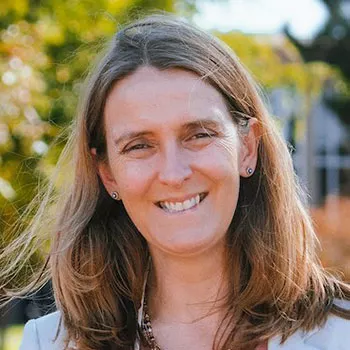
Sharon Dirckx
AuthorSharon Dirckx is a speaker and author whose work focuses on responding to the spiritual and faith-related questions that people ask today. She speaks and lectures across the UK and internationally, in workplaces, universities, schools, churches and conferences. Sharon’s passion is sharing with others how and why the person of Jesus Christ remains as relevant as ever to the pertinent questions of our time. She wrote the award-winning book entitled: Why?: Looking at God, evil and personal suffering, was the contributor to best-selling author, Lee Strobel’s book and documentary, The Case for Heaven (Zondervan 2021), and most recently wrote Broken Planet, scientifically answering questions about natural disasters. Dirckx has a Ph.D. in brain imaging from the University of Cambridge.