



Back to series


CHAPTER 8
Persevering in Kingdom Prayer
Ask, and it will be given to you; seek, and you will find;
knock, and it will be opened to you.
Matthew 7:7
Jesus teaches us not only to pray but to persevere in prayer. We can find many examples of persevering in prayer in the Bible, in church history, and in the present day. I know of one woman who prayed for more than thirty years for the salvation of her husband—and in a time of great need, the man finally reached out to Jesus and asked Him to become his Lord and Savior. Stories such as this one point us to the fact that Jesus calls believers to follow His command to persevere in prayer.
Jesus made earnest prayer and communion with the Father a vital part of His own life and ministry. They are just as vital for everyone who wants to be a faithful and fruitful disciple of Jesus.
God Wants to Answer Our Prayers
Jesus encourages us to pray by assuring us that our Father in heaven loves us and wants to answer our prayers (Matt. 7:11; John 16:23–24; see also 1 John 5:14–15). He wants us to discover, as Martin Luther and many others have, that “prayer is not a matter of overcoming God’s reluctance but laying hold of his willingness.”1 Knowing that He will both hear and answer us gives us a powerful incentive to pray.
Discovering how lavish and breathtaking God’s promises are gives us another incentive. Once we grasp how much God wants to bless us through prayer, we will begin to pray with stronger faith and see answers that both amaze us and glorify Him.
As we have seen, the Disciples’ Prayer is the centerpiece of Jesus’ teaching on prayer, providing the foundation and framework for our prayer lives. But having a pattern for prayers is one thing; believing that God will answer our prayers is another.
Many of us have found ourselves in seasons in which we recite a list of routine requests only to realize that our prayers have become stale—we go through the motions but expect little to come of it. Such tepid praying disillusions and demotivates us and can damage our faith.
For a vital and effective prayer life, we need confidence that God loves us, listens to us, and will answer our prayers. Prayer then becomes a delight instead of a duty. As we see His answers, our trust in Him grows stronger. We come to know Him better and love Him more, and we increase in our zeal to serve Him and spread His kingdom.
Jesus’ second major teaching on prayer in the Sermon on the Mount can help us in this area. Here is what He says:
Ask, and it will be given to you; seek, and you will find; knock, and it will be opened to you. For everyone who asks receives, and the one who seeks finds, and to the one who knocks it will be opened. Or which one of you, if his son asks him for bread, will give him a stone? Or if he asks for a fish, will give him a serpent? If you then, who are evil, know how to give good gifts to your children, how much more will your Father who is in heaven give good things to those who ask him! (Matt. 7:7–11).
With these striking words, set in the warm glow of family life, Jesus teaches us that our Father in heaven delights much more in granting good requests to His children than a loving earthly father enjoys giving good things to his sons or daughters. Receiving God’s answers makes a powerful impact on us and provides one reason why Jesus so strongly urges us to pray.

In these verses, Jesus simply and clearly insists that persistent, believing prayer will be answered. He exhorts believers to ask, seek, and knock in prayer to their Father in heaven. The verbs are imperatives, which means they are commands to be obeyed, not suggestions to be considered. They also appear in the present tense in Greek (likely indicating continuous action, as we saw above), meaning we should regularly ask, seek, and knock at God’s door with our requests. Some Bible translations therefore render these words as “keep on asking, keep on seeking, keep on knocking” (see, for instance, the New Living Translation).
Moreover, John Stott has suggested that these three verbs may represent an “ascending scale of urgency.”2 Whether Jesus intended this increasing urgency or not, it certainly reflects the experience of many believers. Jesus goes on to assure us that God will answer everyone who prays in this way for something within His will (John 14:13–14; 15:7). Therefore, we should pray with expectation that He will answer.
A remarkable example of urgent, persevering prayer dates from 1800 and is still bearing fruit today. Ann Hamilton, a godly Scottish woman, prayed faithfully and earnestly for her family’s salvation. “On her deathbed she was troubled in spirit,” wrote her biographer,
but then suddenly her face became radiant and she said, “I’ve got the promise.” The promise she referred to was Isaiah 59:21: “‘And as for me, this is my covenant with them,’ says the Lord: ‘My Spirit that is upon you, and my words that I have put in your mouth, shall not depart out of your mouth, or out of the mouth of your offspring, or out of the mouth of your children’s offspring,’ says the Lord, ‘from this time forth and forevermore.’”3
Generation after generation, Hamilton’s descendants have known Christ, and many of them have served in vocational ministry. My pastor is one of them; he once told me that in his branch of the Hamilton family line, there were twenty-one men and women who were currently committed followers of Christ. Fifteen of them are in full-time ministry as pastors, missionaries, or parachurch workers in various orthodox Christian denominations.
God’s love for us is the basis for such a strong command and lavish promise. As a gracious and good Father, by nature He gives good things to His children. They are not rewards for good works we have done. They are more like a divine hug, saying, “I love you. You can trust me.” The more we experience this, the better we come to know and love Him and the deeper our trust and intimacy grow. The more instances of such answered prayer that we can look back on, the more our hearts will feel lifted and strengthened for present and future challenges.
What Good Things Will God Give Us?
How can we experience more of the Father’s answers to our prayers? It will help to understand what Jesus means when He says our heavenly Father will give us “good things.” Does He mean good things in the form of meeting all our wants and desires? Or good things according to His definition of good and His knowledge of what is best for us at any given time?
Surely the latter—which cautions us against the worldly, self-seeking directions our prayers can sometimes take. As James 4:3 says, “You ask and do not receive, because you ask wrongly, to spend it on your passions.”
We saw earlier, for example, that Jesus taught us to pray for our daily bread (necessities). A few verses later, He promised, “Seek first the kingdom of God and his righteousness, and all these things will be added to you” (Matt. 6:33). In the context of the Sermon on the Mount, what are “these things”?
Jesus has just discussed our anxieties about what we eat, drink, and wear (6:31)—in other words, our basic needs. If we meet the condition of seeking first God’s kingdom and righteousness, we can confidently expect that God will answer our prayers for basic necessities. Does this mean that He has no interest in providing any of our wants and desires? It depends.
Because God is gracious, He gives us things that we do not deserve and have no right to expect. In instances where our wants and desires align with His will and purpose—things that will do us good and bring Him glory—we can expect Him to grant them. When they do not, He will do what any good earthly father would do and say “no.” Often He gives us something better than we asked for, something that we would have asked for had we known the best thing for us.
Luke’s version of this prayer helps us at this point; he tells us which is the best of the good gifts God can give. It is the Holy Spirit (Luke 11:13). Prayer for the Spirit’s fullness in our lives should be our highest priority each day.
In practical terms, then, one key to seeing more of our prayers granted is simply to pray for alignment with God’s will, that He will bring our desires and requests into agreement with His will. Our aim is to pray God-centered prayers, ones that seek God’s purposes and glory rather than our own.
Learning to pray God-centered prayers has had a major effect on my prayer life and on the prayer lives of many people I have known over the years. The more often we pray according to God’s will, the more often we see God’s answers. A number of times, Jesus gives us strong invitations and extravagant promises to encourage us to pray this way: “Whatever you ask in my name,” He said, “this I will do, that the Father may be glorified in the Son. If you ask me anything in my name, I will do it” (John 14:13–14). At first glance, this looks like a promise for anything and everything we may want, carte blanche, and prosperity-gospel preachers misapply it this way. But when we remember that, in the Bible, a person’s name represents his or her character, it becomes clear that Jesus means “anything” that is in agreement with who He is and all that He stands for—things He would endorse. Such prayer glorifies God.
Jesus reaffirms this understanding a few verses later when He says, “If you abide in me, and my words abide in you, ask whatever you wish, and it will be done for you” (John 15:7). If we enjoy unhindered fellowship with Jesus, and His words shape our thinking and requests, our prayers will conform to His will—and He will grant them.
The apostle John reinforces this idea when he tells his congregation, “This is the confidence that we have toward him, that if we ask anything according to his will he hears us. And if we know that he hears us in whatever we ask, we know that we have the requests that we have asked of him” (1 John 5:14–15). This gentle but direct reminder tells us that our prayer does not persuade God to do our will. Rather, we are to align our prayer with His will. Then He will answer.

Jesus modeled this approach as He prayed about His impending arrest and crucifixion, saying “not as I will, but as you will” (Matt. 26:39). When we learn to subordinate our will to God’s will as a basic part of our Christian life, we put ourselves in position to see our prayers answered. God simply will not grant prayers that do not agree with His will, no matter how much we pray or how many people we recruit to join us in prayer. The sooner we recognize this, the faster we will mature in prayer … and the more often our prayers will receive an affirmative answer!
Putting This into Practice
How do we put this into practice? If we want to pray according to God’s will—that is, to ask Him to do what He already wants to do—we need to understand His will regarding the matters that concern us. We come to such an understanding through reading, studying, and meditating on God’s Word, the Bible, in dependence on the Holy Spirit, who helps us to see the Lord’s intention and how it applies to our issue.
A special focus on the teachings of Jesus also will help us better grasp how to “pray in His name,” which does not mean simply tacking the phrase on the end of our prayer. We must learn to pray for things consistent with His character and will—things He Himself approves of and endorses as He intercedes for us at the throne of grace.
As we discover God’s promises in Scripture, understand them in context, and meet any conditions that He may require, we can ask Him with confidence to fulfill them in our lives and in the situations that concern us.
In some cases, we may know God’s will in general, but not its application to a specific situation. For example, how do we pray for a sick person or for someone who doesn’t yet know Christ? Here we need a special sensitivity to the Holy Spirit’s guidance, for God clearly does not heal every sick person or save every lost person, nor did Jesus so do in His earthly ministry. Scripture contains many wonderful, exciting, extravagant promises, and we should aim to familiarize ourselves with them and ask the Spirit to show us how and when to pray them in specific situations.
More generally, what good things might God be pleased to give us? Both the Disciples’ Prayer and its companion passage here in Matthew 7:7–11 give us a sound starting place since they give us specific categories for focusing our prayer. When we pray each of these petitions, we pray God’s will. And if we enlarge our focus to include the entire Sermon on the Mount, with all its challenging teachings about how God wants us to live, we will find much more to pray about. We will discover still more when we expand our sights to the full scope of Scripture.
What about Delayed Answers to Prayer?
Persevering in faith gives us another key to answered prayer. We are to continue to believe God for the answer even when we see no sign of it on the horizon, for God’s timing is not necessarily our timing. Thus, we are to “be constant in prayer,” says Paul (Rom.12:12), and “continue steadfastly in prayer” (Col. 4:2). As Charles Spurgeon once said, “Faith is the foundation stone; prayer comes next. Prayer without faith would be an empty mockery; it would win nothing of God.”4 Faith is not merely optimism, wishing, or hoping, but a confident assurance that God is who He says He is—and that He will therefore do what He promises at the time He knows is best.
As Scripture says, faith is “being sure of what we hope for and certain of what we do not see … and without faith it is impossible to please him, because anyone who comes to him must believe that he exists and that he rewards those who earnestly seek him” (Heb. 11:1, 6 NIV 1984). God wants us to continue to grow stronger in faith, hope, and love. Like a muscle, faith grows stronger the more we exercise it.
This helps to explain why Jesus commands us to keep on asking, keep on seeking, keep on knocking in faith. Those of us in the Western world find this hard to do because secularization has created a climate in which it is difficult for us to believe in anything we cannot see or measure (or at least build a rational probability for). We want to see before we believe.
God, however, tells us to believe and then we will see. He instructs us to walk by faith, not by sight (2 Cor. 5:7). Perhaps many of us should pray for ourselves like a desperate father did as he sought help from Jesus: “I believe; help my unbelief” (Mark 9:24).
Many of us also struggle with impatience. So much about our culture conditions us to want instant gratification. The microwave, instant coffee, immediate credit approval, online orders that arrive the same day (or even the same hour), and so on are but a few examples. Conditioned to expect immediate action, we may pray about something once or twice and then give up if no answer quickly arrives. But God doesn’t operate on our timetable, nor does He necessarily do things as we expect. “My thoughts are not your thoughts,” He tells us, “neither are your ways my ways … . For as the heavens are higher than the earth, so are my ways higher than your ways and my thoughts than your thoughts” (Isa. 55:8–9). God knows the right time to answer our prayer, and He never answers late. He calls us to trust Him even if we don’t see answers when we want them. In those situations, we must “wait on God” in active faith, a hard thing for most of us.
And yet, as we wait on God, He uses our waiting to teach us patience and increase our faith. As Isaiah said, “From of old no one has heard or perceived by the ear, no eye has seen a God besides you, who acts for those who wait for him” (Isa. 64:4). In Scripture, this refrain echoes again and again: “Wait on the Lord!”
Abraham, the “man of faith” (Gal. 3:9), gives us an example of the kind of perseverance in faith that Jesus calls us to exercise and grow in. God promised Abraham a son, but Isaac didn’t show up until twenty-five years later. Abraham did not have an easy walk of faith. He made mistakes along the way (e.g., fathering Ishmael in a vain attempt to fulfill God’s promise on his own). But as Abraham persevered in faith, he grew stronger and eventually received the promise in God’s appointed time: “No unbelief made him waver concerning the promise of God, but he grew strong in his faith as he gave glory to God, fully convinced that God was able to do what he had promised” (Rom. 4:20–21).
Abraham’s example of continuing to trust God during the “wait of faith” provides us with a valuable lesson today. The wait of faith the time between when we pray and when God answers—can purify our motivation and deepen our trust as we continue to rely on God despite no sign of an answer.
Why does God sometimes take such a long time to answer certain prayers? The psalmists frequently asked this question (Ps. 13:1–2; 69:3; 89:46), and many believers through the centuries have echoed it. I ask it too. For more than forty years I have been praying for the salvation of one person, and nearly that long for another. But I am confident that God will answer, even if it happens after I die.
In many instances, we cannot discern why certain prayers are answered more quickly than others. We can say only that God has good reasons, whether we can fathom them or not. Our prayers for the salvation of unbelievers may be answered quickly, but usually it takes a long time. God does not violate a person’s freedom to choose, and as He draws people to Christ, He may orchestrate their life circumstances over a period of years to draw them to the point of willingly choosing Him. An oft-quoted story from the life of George Müller illustrates the importance of persevering in prayer for as long as it takes to get the answer. In 1844, George Müller began to pray for the conversion of five men. The first was saved after eighteen months, the second five years later, the third was converted six years after that, the fourth was saved just before Müller’s death, and the fifth came to Christ a few years later.5 And we must face the fact that in some cases, for reasons we cannot know, God may not save certain persons despite our prayers.
In other instances, prayers may receive no answer for long stretches because of the timing of God’s sovereign plans, as with Abraham. We see the same pattern in the lives of Zechariah and Elizabeth, who for decades prayed for a child, no doubt with deep sadness over their childlessness. Unknown to them, they would have to wait for God’s precise timing so that John the Baptist could serve as the forerunner of Jesus (Luke 1). In some situations, God must arrange the circumstances necessary for the prayer to be answered—for example, opening a currently filled job position, or bringing a house onto the market that has not yet gone up for sale, or bringing the right person into the picture for marriage. At times, answers to prayers for change in our personal lives may seem to come slowly because of some deep, inscrutable work God must do in us first.
Mary and Martha give another instructive example of a delayed answer to prayer. They were praying earnestly for their sick brother Lazarus and sent an urgent message to Jesus to come heal him. But Jesus deliberately delayed, and Lazarus died. We are told that “Jesus loved Martha and her sister [Mary] and Lazarus” (John 11:5). Why would He delay? Because by doing so, He would be able to raise Lazarus from the dead and thereby much bring greater glory to God than by simply healing him. In other words, Jesus delayed answering because He had a better plan, and that is sometimes true with us as well.
In certain circumstances, demonic opposition can cause delays to God’s answers to prayer, as with the Old Testament prophet Daniel. God granted His answer when Daniel prayed, but its manifestation was delayed for three weeks by the interference of a powerful demonic being (Dan. 10:1–14). Paul reports a similar demonic hindrance in his ministry plans (1 Thess. 2:18). In these situations, we can appreciate even more why Jesus tells us to keep asking, keep seeking, and keep knocking. Receiving the answer occurs as we continue to pray with faith. Like a marathon runner, we must not quit before reaching the finish line.
In some cases, the deep communion with God that grows as we persevere in waiting, pondering, questioning, and wrestling with God in prayer becomes as much or more of a blessing than the answer itself, when it finally comes.
Delays for other reasons can also occur, including, for example, the harboring of intentional sin, as we saw in the previous chapter. In the book of Isaiah, God says, “Behold, the Lord’s hand is not shortened, that it cannot save, or his ear dull, that it cannot hear; but your iniquities have made a separation between you and your God, and your sins have hidden his face from you so that he does not hear” (59:1–2). Similarly, the psalmist writes, “Come and hear, all you who fear God, and I will tell what he has done for my soul. I cried to him with my mouth, and high praise was on my tongue. If I had cherished iniquity in my heart, the Lord would not have listened. But truly God has listened; he has attended to the voice of my prayer” (Ps. 66:16–19). We therefore must be sure to confess and repent of any known sins, especially any grudges or unforgiveness. This includes any sins we continue to practice and/or excuse by telling ourselves that “God understands my weakness.” God does understand our weakness. But His response is not to overlook or excuse our sin; rather, He gives us His Holy Spirit, who empowers us to overcome sin.
Another potential problem is half-heartedness or lack of earnestness. Or, God may want to teach us other important lessons to help grow our faith while we await His answer.
When we must persevere in prayer over a long and drawn-out period, can we ask God about the delay? Yes, but He may or may not give us answers. God has no obligation to explain Himself to us. Still, it’s appropriate to seek to know why an answer has taken such a long time, especially when doing so renews our attention to Him and enables us to further discern His wisdom and ways.
Paul prayed three times for deliverance from a “thorn … in the flesh” that he found difficult to bear. God said “no.” But the Lord also explained that He had designed the apostle’s suffering for a higher purpose, to protect him from pride (2 Cor. 12:7–9).
When to Reexamine Our Requests
When we must deal with an especially long delay, we may want to reexamine our prayer to determine whether we have properly grounded it in God’s Word and will. It may be that the request needs to be brought into full conformity with His will. Or that our motivation has some defect that requires correction, as James said: “You ask and do not receive, because you ask wrongly, to spend it on your passions” (James 4:3).
With the best of intentions, we may be praying for something that God has no intention of granting: for example, the healing of someone whose sickness is God’s appointed way for them to die (see the case of Elisha in 2 Kings 13:14–20) or salvation for a lost person whom God knows will resist the gospel to his last breath. The counsel of a pastor or mature believer who has walked with God for a long time and has a solid grounding in the Bible can help us as we seek to discern possible reasons for long delays in prayer.
What about “Unanswered” Prayer?
Referring to certain of our prayers as “unanswered” is not quite right. It is more accurate to describe them as prayers that were answered, but not in the way we wished or expected. God sometimes says “no” to our petitions, as we just saw with Paul and his thorn in the flesh. C. S. Lewis explains, “Prayer is request. The essence of request, as distinct from compulsion, is that it may or may not be granted. And if an infinitely wise Being listens to the requests of finite and foolish creatures, of course He will sometimes grant and sometimes refuse them.”6 Lewis also wrote that, in hindsight, he could at times see the benefit of hearing “no”: “I must often be glad that certain past prayers of my own were not granted.”7
Those who have walked with God over many years will echo the same thing. Missionary Amy Carmichael says it well: “Do not forget that the answer to many prayers is ‘Wait,’ or sometimes, ‘No, not that, but something else, which when you see Me, you will know was a far better thing.’”8
God knows what is best for us. And when He answers “no,” however difficult it may feel, we must trust that it comes from His wisdom and love and that there is a higher purpose. We just saw such a situation with Paul’s thorn in the flesh. And we see it with Jesus Himself, who prayed three times to escape the cross—but His loving Father denied the request (Matt. 26:39–44). Where would we be if God had granted that request?

Finally, it can sometimes help to do a postmortem on unanswered prayers with the aim of growing in faith and perseverance. If we build up a record of many unanswered prayers and have no idea why they remain unanswered, this can gradually undermine our faith and our prayer life. Seeking God through prayerful reflection and the counsel of wise, godly people can assist in this process. Perhaps the apparent lack of answer and the mandate to persist is an indication that God intends to use our prayer to change our own hearts and better align them with His will.
What If You Don’t Feel Like Praying?
From time to time, all believers have the experience of not feeling like praying. When this happens, it is important to resist the natural temptation to stop praying. Evangelist, scholar, and author R. A. Torrey speaks for many when he says:
Oftentimes when we come to God in prayer, we do not feel like praying. What shall one do in such a case? cease praying until he does feel like it? Not at all. When we feel least like praying is the time when we most need to pray. We should wait quietly before God and tell Him how cold and prayerless our hearts are, and look up to Him and trust Him and expect Him to send the Holy Spirit to warm our hearts and draw them out in prayer. It will not be long before the glow of the Spirit’s presence will fill our hearts, and we will begin to pray with freedom, directness, earnestness and power. Many of the most blessed seasons of prayer I have ever known have begun with a feeling of utter deadness and prayerlessness; but in my helplessness and coldness I have cast myself upon God, and looked to Him to send His Holy Spirit to teach me to pray, and He has done it.9
Torrey’s teaching is a good reminder that if we find ourselves frustrated or stuck, the answer is not to stop praying. Rather, we should recognize that God is with us and keep praying. Even if our prayer is just, “Lord, help me pray.”
Pray with Faith
Prayer is a wonderful privilege from our Father in heaven, and all disciples should seriously pursue a stronger, more faith-filled prayer life. I encourage you to do a study of the topic of prayer in the Bible and also recommend that you read at least one or two respected books on prayer. A classic, this one focusing more on growing in faith, is George Müller: Delighted in God by Roger Steer.
Most of all, though, pray. We learn to pray by praying. And prayer really is our lifeline to the Creator of the universe.
Questions to Ponder
- How confident are you that God is willing to answer your prayers?
- Why is faith so foundational to a disciple’s prayer experience?
- How does our view of God influence our expectation that He will grant our requests?
- Several passages of Scripture make unwavering promises about God’s intention to grant our prayer requests (John 14:12–14; 15:7; 1 John 5:14–15). In light of these Scriptures, how would you explain the relationship between God’s will and His granting us what we ask for?
- Describe Jesus’ teaching that perseverance is a necessary part of our prayer life. What are some discouragements or encouragements to persevering in prayer?
Wesley L. Duewel, Mighty Prevailing Prayer: Experiencing the Power of Answered Prayer
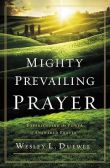 Wesley Duewel has provided exactly what we need: a biblically sound exposition of prevailing prayer and practical suggestions for ways to prevail in prayer.
Kenneth Boa, Handbook to Prayer: Praying Scriptures Back to God
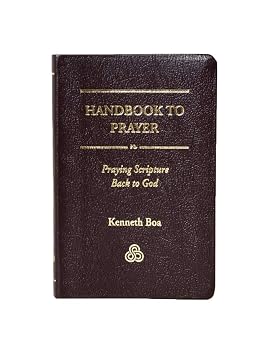 This prayer tool will guide you through the process of praying Scripture back to God.
Thomas A. Tarrants
Thomas A. Tarrants is President Emeritus of the C.S. Lewis Institute. After serving twelve years as president and nine years as vice President, he retired from his position as Vice President for Ministry and Director, Washington Area Fellows Program, with CSLI in June 2019. He holds a Master's of Divinity Degree, as well as a Doctor of Ministry Degree in Christian Spirituality. Tom is an ordained minister in the Evangelical Church Alliance and a member of the Evangelical Theological Society. Tom is the author of Consumed by Hate, Redeemed by Love, published by Thomas Nelson Publishers and Following Jesus Christ. He spends his time writing, mentoring, consulting and traveling.
