



Back to series


CHAPTER 7
Praying Kingdom Prayers
Pray then like this.
Matthew 6:9
After reading the Sermon on the Mount in full, with its call to obedience, followed by the call to wholehearted commitment, many people feel overwhelmed. “How can I possibly live such a life?” they ask. “I know how weak I am. How could I possibly obey the words of Jesus?”
Here’s the answer: God gives us everything we need to live in His kingdom: “His divine power has granted to us all things that pertain to life and godliness” (2 Pet. 1:3). The next five chapters explore some of the vital means of growth in godliness.
One of the most important of those resources we receive from God is prayer. God answers prayer! Throughout the Bible, God encourages His people to pray. Jesus does the same. And Jesus leads by example: the Gospels show us that He was constantly in prayer. Even as the Son of God, led and empowered by the Holy Spirit, Jesus knew the necessity of prayer for daily communion with His Father in heaven. As He grew up, He was taught to pray as one of the three pillars of Jewish piety (alongside almsgiving and fasting). Through prayer, Jesus daily received the wisdom, guidance, and strength He needed to do the Father’s will.
If Jesus prayed, then how much more should you and I! Yet most believers have never tapped into the full power of prayer.
Six Essential Aspects of Prayer
Because Jesus knew the vital place of prayer in our relationship with God, He taught us how to pray. We commonly call the centerpiece of this instruction “the Lord’s Prayer,” but that term misleads a bit. Perhaps we should call it instead “the Disciples’ Prayer,” because Jesus gave it to His disciples as an essential resource to shape their prayer lives.
This prayer has held such a prominent place in many church liturgies for so long that, unfortunately, congregants often pray it by rote in less than thirty seconds with little, if any, reflection. But if we learn to pray this remarkable prayer in all its depth and richness, it can revolutionize our prayer lives. Rather than praying “empty phrases” (Matt. 6:7), we can enter into communion with our Father, who “knows what you need before you ask him” (v. 8). Let’s briefly explore this well known prayer and some of its practical applications.
We find this prayer in both Matthew 6:9–13 and Luke 11:1–4 (with minor differences of wording; the versions may have been given on separate occasions). Here let’s focus on the fuller version in Matthew, where the prayer forms an important part of Jesus’ basic teaching about discipleship.
By more fully appreciating each of the six petitions that comprise this prayer, we can strengthen the foundations of our prayer life. This pattern isn’t the only way to pray, of course, as we can clearly see from the prayers of Jesus, Paul, the psalmists, and others in the Bible. But it is the cornerstone, which explains why believers from earliest times have deeply valued it. Church fathers such as Tertullian (c. 155–220), Origen (185–254), and Cyprian (c. 210–258) each wrote whole books on it,1 as many others have done since.
Pitfalls to Avoid
At the outset, we should note a couple of cautions Jesus gives us about our prayer lives.
The first concerns hypocrisy: praying to be seen and noticed by others. This was a huge problem among the Pharisees in Jesus’ day (as it is in our own). When praying in the presence of others, we must guard against the temptation to think of those with whom we pray as an audience before whom we can display our “spirituality.” So, Jesus says, “When you pray, go into your room and shut the door and pray to your Father who is in secret” (6:5). Such private prayer (which may include the Lord’s/Disciples’ Prayer) eliminates a human audience and allows greater honesty and intimacy with the Father. On the other hand, public prayer, and especially repeating the Lord’s/Disciples’ Prayer, which is communal (as indicated by plural pronouns such as “our,” “us,” “we”), requires us to be alert to the motives of our heart and avoid trying to impress others.
Jesus’ second caution is our tendency to pray in a mechanical or an ostentatious fashion, which characterized the pagans, who “heap up empty phrases” because “they think that they will be heard for their many words” (6:7). This isn’t necessarily a rejection of long prayers or even repeated prayers: there are some things we pray for every day, such as bread. Jesus cautions us not against praying for daily necessities, but against a kind of mechanical repetition, day in and day out, that degenerates into mere pious performance. How easy we find it to pray in rote fashion, as though our requests were items on a checklist! Jesus urges us to avoid these common snares.
Jesus also reminds us that we do not pray to inform God of something He does not already know. Jesus said, “Your Father knows what you need before you ask him” (6:8). God knows, and He cares.
This raises a puzzling question: If God is a loving Father and is all-powerful, all-knowing, and fully aware of what we need, then why doesn’t He just give it to us without requiring us to pray for it? John Calvin answered that God-ordained prayer is “not so much for His own sake as for ours.”2 C. S. Lewis took it a step further by quoting the Christian mathematician and philosopher Blaise Pascal: “God instituted prayer in order to lend His creatures the dignity of causality.”3 God has designed His creation in such a way that our prayers, when offered in agreement with His will and in faith, can make a real difference in human affairs—enabling us to join Him in His work in the world. Other possibilities for why God requires us to pray include drawing us closer to Him; helping us remain dependent on Him as the source of all our blessings and provider of our needs; building up our faith as we see Him answer specific requests; and increasing our love and gratitude toward Him for His goodness to us. Very likely, all of these apply at one time or another. Whatever the case, we know that God asks us to pray, to make requests of Him, and to expect Him to answer.
Many people seem unaware that if we fail to pray, we can actually miss out on things God would otherwise be happy to give us. As James said, “You do not have, because you do not ask” (James 4:2). Many Christian leaders have echoed this point over the centuries. We might turn again to John Calvin, who said, “To us nothing is promised to be expected from the Lord, which we are not also bidden to ask of Him in prayers … and He is inactive, as if forgetting us, when He sees us idle and mute.”4 And John Wesley said, “God will do nothing except in answer to prayer”5 an overstatement, perhaps, but not too far from what Calvin said.
A Pattern for Prayer
Notice that Jesus said, “Pray then like this” rather than “pray this.” The word “like” alerts us that the Disciples’ Prayer is a pattern to guide our praying. Its six petitions combine to give us a model for how to pray.
The fact that the Greek word for “pray” appears here as a present imperative verb (a tense that indicates a command for continuous action) communicates that we are called to use this prayer regularly. We might loosely translate the phrase as “Habitually pray like this.” Doing so can lead us into many adventures, for as we discover the breadth and depth of this pattern-prayer, we can discern many subcategories under each petition.

About four centuries ago, poet and theologian Jeremy Taylor observed, “The Lord’s Prayer is short and mysterious, and like the treasuries of the Spirit, full of wisdom and latent senses: it is not improper to draw forth those excellencies which are intended and signified by every petition, that by so excellent an authority we may know what it is lawful to beg of God.”6
When we pray, then, let us meditate on each petition and pray for any concerns the Spirit brings to mind—an important consideration, because sometimes “we do not know what to pray for as we ought” (Rom. 8:26). We need the Spirit to prompt and guide us in naming specific requests, alongside His regular ministry of praying for us.
Finally, we should note that the prayer in Matthew 6 divides quite naturally into two sections. God, His glory, and His kingdom come first (vv. 9–10), while we and our needs come second (vv. 11–13). This order reflects the priorities that should guide us—not only in our prayers, but in all of life. Faithful and effective disciples are God-centered, kingdom-focused people who entrust their lives to God.
Petition 1: Our Father in Heaven…
The Fatherhood of God is the crucial starting point in prayer. J. I. Packer rightly says that we can sum up the whole of New Testament religion if we describe it as knowing God “as one’s holy Father.”7
Packer suggests that if we want to judge how well a person understands Christianity, we should consider how much the individual values “the thought of being God’s child, and having God as his Father. If this is not the thought that prompts and controls his worship and prayers,” Packer says:
it means that he does not understand Christianity very well at all. … “Father” is the Christian name for God. Our understanding of Christianity cannot be better than our grasp of adoption.8
Our Father
Before praying the words “Our Father,” whether privately in our room or publicly in church or a small group, we do well to reflect on God as our Father. We pray as part of God’s family, not as isolated individuals or orphans. He is our Father, and we are His dearly loved children. This helps to clarify our relationship to God and its implications for how we pray. As C. S. Lewis wisely observed, “The prayer preceding all prayers is, ‘May it be the real I who speaks. May it be the real Thou that I speak to.’”9
What we believe about “the real Thou” is an all-important question, because our image of God shapes all our perceptions, feelings, and attitudes toward Him. As we prepare to pray, therefore, we must remind ourselves that our God is a holy, loving Father. He tenderly cares for us, always seeks our good, and delights to hear from us. He is good, loving, merciful, gracious, wise, powerful, and pure (Exod. 34:6; Jer. 32:17; Hab. 1:13a). Nothing is too difficult for Him (Jer. 32:27; Isa. 40:21–31; Matt. 19:26) as He shepherds His sheep throughout their lives (Psalm 23).
If we often ponder how God in grace and love took the initiative to provide atonement for our sins and reconcile us to Himself; how He gave us new life and adopted us into His family (Rom. 8:15); how we are now His beloved children (Eph. 5:1; 1 John 3:1); how He truly delights in us (Ps. 147.11; Zeph. 3:17); and how intimacy with Him is our spiritual birthright (Ps. 149:4; Eph. 1:3–14)—our hearts will soar and our love for Him will grow. Pondering these realities gives us firm footing to approach Him with confidence, assured that He looks upon us with a smile, not a frown, and delights to hear our prayers through the merits, mediation, and intercession of Jesus His Son, our Great High Priest (Prov. 15:8: Matt. 7:11).
All of this prepares us to “enter his gates with thanksgiving and his courts with praise” (Ps. 100:4). These preparations can help orient our hearts and lift them up to God. Then, as preacher and teacher Andrew Murray advises, “Just place yourself before him, and look up into his face; think of his love, his wonderful, tender, pitying love.”10
Pondering the Father’s love for us at the outset of prayer helps to give us assurance that God will hear and answer us. If we think of Him as anything less than a loving Father, our ability to believe and trust Him will shrink, weakening our prayer life. As Murray also said, “The knowledge of the Fatherhood of God, the revelation of His infinite Fatherliness in our hearts; the faith in the infinite love that gives us His Son and Spirit to make us children, is indeed the secret of prayer in spirit and truth.”11 And it should move our hearts to pray, “Help me love you with all my heart and be a good son (or daughter). May I please you today and bring you glory!”
Sadly, many believers struggle to have a right view of God, sometimes because they had problems with their earthly father. The image we have of our earthly father—normally, the first male authority figure in our lives—can significantly influence the image we have of our heavenly Father, the ultimate authority figure. If we had a loving, patient, kind, compassionate, and reliable earthly father who cared for and took an interest in us, we gain a helpful analogy, a lens through which it becomes easier to see those qualities in our heavenly Father. On the other hand, if our father was cold, distant, harsh, judgmental, authoritarian, critical, unreliable, self-centered, too busy for us, or absent, we will likely suffer emotionally from a negative father-image and will unconsciously transfer this image onto God. This error will keep us from seeing Him as He really is and thereby hinder our trust in and intimacy with Him. I have seen this problem quite often in the process of helping believers to grow as disciples of Jesus. It also was a problem in my own life for many years, although now, by God’s grace, it seems largely resolved.
On the other hand, some people have an innate sense that their negative ideas about God do not represent His reality. This recognition draws them to seek the truth about His fatherly love. The best place to turn for our image of God is to Scripture. Our life experiences will certainly shape our ideals concerning what a father is and does. But God has provided us a rich image of His Fatherhood in the pages of His Word. Psalm 103 is a good example, among many others.
Whether we must peel away a negative image of fatherhood or can build upon a positive one, thankfully, God transforms our view by the renewal of our minds through truth (Rom. 12:2). The Spirit uses our prayerful meditation on the Scriptures to show us the true character of the Father and of Jesus and to produce this important change in us. A wise, mature pastor or a godly Christian counselor or friend may also help us to work through questions or challenges in this area. Of course, attending a loving church that faithfully preaches and teaches the Bible and bears witness to God the Father’s love is essential.
… in Heaven
The phrase “in heaven” further orients us as we call to mind God’s transcendence and sovereignty. It reminds us to approach Him with humility and reverence. Although God is exalted far above all earthly and human realities, He is also somehow present with us and cares for us in our weakness and frailty: “For thus says the One who is high and lifted up, who inhabits eternity, whose name is Holy: ‘I dwell in the high and holy place, and also with him who is of a contrite and lowly spirit, to revive the spirit of the lowly, and to revive the heart of the contrite’” (Isa. 57:15). God resists the proud and knows them from afar, but He welcomes and delights in those with a contrite and humble heart (Ps. 138:6; Prov. 3:34; James 4:6).
… Hallowed Be Your Name
In biblical thought, there is often a close connection between a person’s name and his or her character. God’s name is essentially the same as His person. Thus, when we pray for His name to be “hallowed,” or set apart as holy, we are asking that He display His holiness and glory more fully in the world and that He be honored, revered, and held in awe.
One significant way God answers this request is through the lives of His people. As men and women love God, seek to faithfully follow Jesus, and live holy lives, they bring glory to Him. They bring light to the world’s darkness. We therefore pray that our lives will hallow His name.

God also loves to get glory through His church in both its global and its local expressions. There are some wonderful congregations that make God’s character a visible reality. But in places where sinful beliefs and behaviors shape the church more than do those of God’s kingdom, we often see God’s name defamed, scorned, and trivialized, thereby reinforcing unbelief. We therefore need to pray earnestly for God to revive and reform His church, both wherever we live and around the world. We should work toward that end in the ways He makes plain to us. As we pray, the Holy Spirit will teach us how we may glorify Him.
Petition 2: Your Kingdom Come
When we ask for God’s kingdom to come, we look ahead to that great, glorious day of consummation when, after defeating the devil and all who oppose His rule, God will reign supreme as King in the lives of His people and over His entire creation. But as we have seen, that day comes in stages.
A new stage in the advance of God’s kingdom began with the arrival of Jesus, the Messiah, God’s own Son. His advent signaled that the present evil age had begun to pass away and the age to come had commenced. Through faith and trust in Jesus, lost people began to enter God’s kingdom, come under His reign, and make more and more disciples throughout the world. These disciples gathered into communities (local churches) as public and visible colonies of God’s kingdom.
Today, we are rapidly moving toward the final stage in redemption history, the glorious day of consummation when Jesus will return and unite with His bride, the church. At a time known to God alone, He will send Jesus back to earth in power and great glory with His holy angels—to defeat the devil and his minions, raise the dead, preside at the final judgment, and bring this present evil age to an end (Rev. 19:11–20:6). Then Jesus shall turn over the kingdom to the Father and shall reign forever as King over His people in the new heavens and new earth (1 Cor. 15:24–28; Rev. 11:15; 21:1–4). It should thrill our hearts to frequently reflect on this reality while we are “waiting for our blessed hope, the appearing of the glory of our great God and Savior Jesus Christ” (Titus 2:13). So praying “Your kingdom come” involves far more than many of us commonly suppose!
God’s rule and reign in our personal lives becomes living and active when we give ourselves wholeheartedly to Him and His purposes through Jesus. Our cry becomes, “May Your kingdom, Your rule and reign, come in me!” This cry may include similar petitions for our family, friends, and neighbors.
We also pray for the triumph of God’s kingdom through the powerful preaching of the gospel—the good news about Jesus throughout the world, such as via the ministries of pastors, missionaries, and Christian workers. We pray for believers to share the gospel with unbelievers and to abound in God-honoring works of love and compassion for the poor, the needy, and those who suffer. We pray for the defeat of the devil and of all his schemes against God’s people and kingdom, including heresies, false teaching, doctrinal error, divisions, false religions, and hostile philosophies. We ask for all this and more when we pray, “Your kingdom come.” The Spirit will guide us in the particulars.
Petition 3: Your Will Be Done, on Earth as It Is in Heaven
This petition sums up the previous two, asking that the life of heaven, where our Father’s name is honored and revered and His will is done, will come in all its fullness to the earth. And it asks that, until then, His will shall increasingly be done in our lives on earth. As C. S. Lewis said, “Thy will be done—by me—now.”12 That means complete submission to God expressed in wholehearted love for God, sacrificial servant love for others, and moral purity.
Petition 4: Give Us This Day Our Daily Bread
With this request, the focus shifts from God’s glory to our essential needs as His children. Because God loves and cares for us, He wants to provide what is needed to sustain our lives and encourages us to ask for it.
Over the many years that Israel wandered in the wilderness (for the full story, read Exodus through Deuteronomy), God showed His love and faithfulness by supernaturally providing food day by day (except on the day before the sabbath, when He provided a double portion [Exod. 16:22]). This is the historical background of our request for daily bread, which speaks of what we need to sustain our life each day—food, clothing, shelter, and more.
Nonessentials and luxuries are not in view here, though our gracious and generous God sometimes gives us far more than the bare essentials. In kingdom life today, Jesus assures His disciples that as they trust the Father, who knows all their needs, and seek first His kingdom and His righteousness, He will provide for them (Matt. 6:31–33). This promise applies as much to us now as it did to His disciples in the first century. Believers throughout history have testified to how God has daily supplied their bread, sometimes in extraordinary ways.
God can still provide for His people in miraculous ways if He chooses, so we should be open to the possibility. However, this is not His usual way of providing for His children. Rather, in most cases, He gives us honest work that enables us to buy our daily bread. This petition, then, is an acknowledgement that everything we have ultimately comes from God. It is by His hand that we are fed.
Petition 5: Forgive Us Our Debts
When Jesus says “forgive our debts,” He means our spiritual liabilities or sins (see Matt. 6:14–15). Our sins offend God and disrupt our fellowship with Him. We must deal properly with them to restore our fellowship with Him. We should therefore confess our specific sins as soon as we become aware of them, and certainly no later than by the end of the day. A prayerful review of our day is a valuable practice and can help us remember anything we need to confess (as well as any blessings for which to thank God).
Unconfessed sin can hinder God’s answers to our prayers (Ps. 66:16–19; Isa. 59:1–2). Earlier generations sometimes called prompt confession “keeping a short account with God.” Our confession must be completely honest and forthright, with no rationalizing or blame-shifting and with a firm intention of forsaking the sin. Because of our natural tendency to deceive ourselves, we will sometimes need to ask God to search our hearts and shine His light on our offenses, both known and unknown. Psalm 139:23–24 helps us pray in this way.
Our offenses may include sins of commission (the wrong things we do) as well as sins of omission (the good things we leave undone). It is also important to ask God to help us hate sin, love righteousness, and walk in holiness. To this end, the great missionary William Carey and his Serampore brotherhood13 called prayer essential for a healthy spiritual life, saying that “Prayer—secret, fervent, believing prayer—lies at the root of all personal godliness.”14
We do not (and cannot) earn the Father’s forgiveness of our sins; rather, His forgiveness is a gift that flows from His abounding grace. He delights to grant it whenever we seek it with repentant hearts. Such repentance produces the fruit of joy and heartfelt gratitude.
… As We Also Have Forgiven Our Debtors
In principle, all believers agree on the importance of forgiveness. But as C. S. Lewis observed, “Everyone thinks forgiveness is a lovely idea until he has something to forgive.”15 God’s people continually need forgiveness for their own sins, and failure to extend it to others has wrecked many lives, relationships, ministries, and churches. Yet how often do believers minimize and ignore it, thus dimming the light of Christ in their lives by their refusal to forgive?
God’s grace, which He has so lavishly poured out upon us, changes our hearts and obligates us to graciously forgive those who sin against us. In fact, God conditions His forgiveness of our sins on our forgiving others. But don’t think quid pro quo here. Instead, it’s more like this: as we have received so much undeserved forgiveness from God, how could we presume to refuse to forgive our neighbor’s offenses against us? Regardless of how grievous those sins may seem, we must forgive.
True forgiveness is not a feeling; it is a choice, an act of our will to pardon one who has sinned against us, to cancel the moral debt they owe us and forsake anger, resentment, bitterness and the desire for revenge. As we do so, feelings will follow—if not immediately, then eventually. Quoting Lewis again, “To be a Christian means to forgive the inexcusable because God has forgiven the inexcusable in you.” May it be hard and take time? Yes. May we sometimes need to reaffirm it again and again? Yes. But however difficult it may be, we must forgive.
Jesus emphasized this because He knew that others will offend us, sin against us, and injure us many times and in many ways over the course of our lives. We will need to forgive repeatedly. If we want to live in communion with God, we cannot withhold forgiveness, carry grudges, or bear animosity against those who have hurt or offended us. Refusal to forgive from the heart is not an option for any follower of Jesus (as He makes clear in Matthew 6:14–15 and states even more strongly in 18:32–35). If we refuse, Jesus says, God will withhold forgiveness of our sins until such time as we do forgive (Matt. 6:14–15; Mark 11:25). In his
classic work The Weight of Glory, C. S. Lewis explains:
We believe that God forgives us our sins; but also that He will not do so unless we forgive other people their sins against us. There is no doubt about the second part of this statement. It is in the Lord’s Prayer, it was emphatically stated by our Lord. If you don’t forgive you will not be forgiven. No exceptions to it. He doesn’t say that we are to forgive other people’s sins, provided they are not too frightful, or provided there are extenuating circumstances, or anything of that sort. We are to forgive them all, however spiteful, however mean, however often they are repeated. If we don’t, we shall be forgiven none of our own.16
Noted preacher Charles Spurgeon said, “Unless you have forgiven others, you read your own death warrant when you repeat the Lord’s prayer.”17 Persistent refusal to forgive raises questions about whether we have received God’s grace in the first place. If you are struggling to forgive, Martin Luther’s advice is helpful: “Anyone who feels unable to forgive, let him ask for grace so that he can forgive.”18 (For more on Jesus’ teaching on forgiveness, see Chapter 9.)
Petition 6: Lead Us Not into Temptation
The word “temptation” in Matthew 6:13 is a translation of the Greek peirasmos, which can mean temptation, test, or trial, depending on the context. Some scholars have suggested that it is probably better to translate it in this passage as “test.”19 Since the Bible tells us that God is morally pure, hates sin, and “tempts no one” (James 1:13), this petition cannot be a request that He refrain from tempting us to sin. Is it, then, a request to be spared from testing or trial? No, because the Bible also tells us to “count it all joy” when we face trials that test our faith (see James 1:2–3). God uses trials to reveal our character or commitment and to help us grow in faith, virtue, and a deeper knowledge of Himself.
So then, how should we understand this petition? We stand on solid ground when we understand this request as asking God to spare us from tests or trials greater than we can bear. As Professor Donald Hagner puts it, “The disciple thus prays not to be led into such a situation, i.e., not to be led into a testing in which his or her faith will not be able to survive.”20
What one can endure, another cannot—and only God know each person’s limits.
. . . But Deliver Us from Evil
When we pray for God to “deliver us from evil,” do we mean from the corruption of this present evil world? Or from the evil one, the devil, the chief architect of evil in the world, who tempts people with the aim of corrupting and destroying them? The Greek word here for “evil,” poneros, can be either neuter (“it”) or masculine (“he”) in its grammatical form and therefore can be translated either “evil” (ESV) or “the evil one” (NIV). Perhaps Jesus intended both. “The difference between Satan and evil is small in the present petition: to pray to be free from one is to pray to be free from the other.”21

Thus, we do well to pray for freedom and deliverance from any specific influences of the world, the flesh, or the devil. This unholy trinity will oppose us as long as we live on earth, but we do not have to fall down in defeat. As we will see in more detail later, the Holy Spirit will enable and empower us to overcome evil. We are also assured that when temptation comes, God will not allow it to go beyond what we can resist but will provide a way of escape so we can endure it (1 Cor. 10:13). For more on this topic, see the companion volume to this book, Abiding in Jesus Christ: A Guide to Maturity in Authentic Discipleship.
It Stands the Test of Time
The Disciples’ Prayer has stood the test of time, and its treasures have blessed countless believers. When we explore its depth, breadth, and riches, and devote ourselves to making it our own, we enter into deeper communion with God and develop greater spiritual strength for the life of discipleship.
Questions to Ponder
- Why is faith-filled prayer so essential to life in the kingdom of God?
- Name two potential problems related to prayer that Jesus warned against in the context of what we are calling “the Disciples’ Prayer” (see Matt. 6:5–7). Why do you suppose these two problems seem so prevalent?
- How do you respond to the thought of God as your Father? Is that a comforting idea or a troubling one? Why, and how can gaining a more accurate view of God’s character help you?
- Since, as Jesus taught, we do not pray to inform God about various situations, then why do we pray?
- Make a list of the six petitions of the Disciples’ Prayer and briefly describe the focus of each petition. Which one stirs your mind and imagination most? Why?
- Many of Christ’s disciples have used Jesus’ model prayer in Matthew 6 as a framework for developing a prayer life that focuses on the priorities of the kingdom of God. Describe your own experience with using the Disciples’ Prayer as a guide for your practice of prayer.
Timothy Keller, Prayer: Experiencing Awe and Intimacy With God
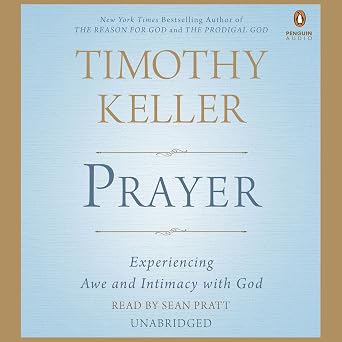 In Prayer, renowned pastor Timothy Keller delves into the many facets of this everyday act that prayer is the most powerful way to experience God.
J.I. Packer, Praying the Lord’s Prayer
 In his book Praying the Lord's Prayer, an excerpt from Growing in Christ, J. I. Packer presents a powerful truth: prayer is a natural activity between the Heavenly Father and his children.
Thomas A. Tarrants
Thomas A. Tarrants is President Emeritus of the C.S. Lewis Institute. After serving twelve years as president and nine years as vice President, he retired from his position as Vice President for Ministry and Director, Washington Area Fellows Program, with CSLI in June 2019. He holds a Master's of Divinity Degree, as well as a Doctor of Ministry Degree in Christian Spirituality. Tom is an ordained minister in the Evangelical Church Alliance and a member of the Evangelical Theological Society. Tom is the author of Consumed by Hate, Redeemed by Love, published by Thomas Nelson Publishers and Following Jesus Christ. He spends his time writing, mentoring, consulting and traveling.
