



Back to series


Listen or Download the Audio Sermon
Psalm 73: Envy of the Wicked
An exposition of Psalm 73. Dr. Bruce Waltke explains how believers can learn from the psalm, in which the psalmist’s faith is severely tested but then renews his relationship with God.
This is a Legacy Audio recording drawn from a collection of free audio resources over the last 30+ years featuring themes which are still relevant today. Due to the archival nature of the recordings, some of the audio content may not be up to today's digital standards, but nonetheless, the content is still applicable.
Psalm 73: A Faith Sorely Tested but Finally Victorious
Psalm 73 seems to me to be a step down from where we’ve been, but perhaps meets us where we are as well. So let us read through the psalm, and then, by God’s grace, I’ll seek to exposit it. It’s the Psalm of Asaph. Surely God is good to Israel, to those who are pure in heart. But as for me, my feet had almost slipped. I had nearly lost my foothold, for I envied the arrogant when I saw the prosperity of the wicked. They have no struggles. Their bodies are healthy and strong. They are free from the burdens common to man. They are not plagued by human ills. Therefore pride is their necklace. They clothe themselves with violence. From their calloused hearts comes iniquity. The evil conceits of their minds know no limits. They scoff and speak with malice. In their arrogance they threaten oppression. Their mouths lay claim to heaven and their tongues take possession of the earth.
Therefore their people turn to them and drink up waters in abundance. I must confess I do not know what that verse means. I’ve wrestled with it and I don’t know what it means. They say, “How can God know? Does the Most High have knowledge?” This is what the wicked are like. Always carefree, they increase in wealth. Surely in vain have I kept my heart pure; in vain have I washed my hands in innocence. All day long I have been plagued; I have been punished every morning. If I had said, “I will speak thus,” I would have betrayed such as are your children. When I tried to understand all this, it was oppressive to me till I entered the sanctuary of God. Then I understood their final destiny. Surely you placed them on slippery ground; you cast them down to ruin.
How suddenly are they destroyed, completely swept away by terrors, as a dream when one awakes. So when you arise, O Lord, you will despise them as fantasies. When my heart was grieved and my spirit embittered, I was senseless and ignorant. I was a brute beast before you. Yet I am always with you. You hold me by my right hand; you guide me with your counsel, and afterward you will take me into glory. Whom have I in heaven but you? And being with you, I desire nothing on earth. My flesh and my heart may fail, but God is the strength of my heart and my portion forever. Those who are far from you will perish; you destroy all who are unfaithful to you. But as for me, it is good to be near God. I have made the Sovereign Lord my refuge; I will tell of all your deeds.
Psalm 73 is a touching confession of a faith sorely tested, but finally victorious. Although none of us admits it, all of us on occasion have thought of jettisoning our faith—just walking away from God, Scriptures, prayer, the church, all that is holy. I suspect all of us have been tempted to jettison our faith. I suspect the universality of that experience accounts for the popularity of the hymn we sing: “Prone to wander, Lord, I feel it, prone to leave the God I love.” I was arrested one time by a paragraph in Sheldon Vanauken’s classic love story, A Severe Mercy. And in that love story, as he watched his wife lie dying of cancer, he said, “I thought about forgetting God.”
The Author and the Ladder of Faith
Our psalm is the more remarkable in this confession because of its author. It’s a psalm of Asaph. Asaph was very familiar with spiritual things. In 1 Chronicles 15, when David instituted the liturgy (remember I read last night 1 Chronicles 16; the account really begins in chapter 15), when David instituted the liturgy—this libretto to accompany the Mosaic worship—he asked the Levites to appoint from their brothers chief singers. And of their brothers, one they selected was Asaph. And when David chose the chief musician, probably the first director of music that we read about in the Psalms, he selected Asaph. He was the one in charge of worship. And he says, “I came within a millimeter of losing my faith, just walking away from God.”
Martyn Lloyd-Jones, in a superb commentary on this psalm entitled Faith on Trial, likens the psalm to a ladder of faith. And it’s a tremendous commentary, and I commend it to your reading. The psalm falls into two halves. In the first 14 verses he shows us the rungs of the ladder by which he stepped down and away from God. And there are three. In the second half of the psalm, verses 15-28, he shows us the spiritual rungs of the ladder by which he climbed back up into a higher and higher relationship with God, until by the end of the psalm we’re walking on the highest plateau of spirituality, pretty near in the Old Testament.
The First Rung Down: Keyhole Theology
Let us look then at the rungs of the ladder by which he stepped down and away from God. Logically and chronologically, his first step down and away from God is given to us in verse 3 and the B-verset. He says, “when I saw the prosperity of the wicked.” The word translated “prosperity” here is the Hebrew word shalom, the one Hebrew word most people know—shalom. And shalom means, to put it in the vernacular, having it all together, what the world calls success. The beautiful people—shalom. They were in harmony, it seemed, with themselves, with others and everything, and they had prosperity. His first step down and away from God is when he began to take his view of life from what he was seeing—as someone has put it, a keyhole theology. Just looking through a keyhole and just judging life by that narrow frame of reference from what he was seeing. And what he saw diametrically contradicted Holy Scripture.
There are two principal sources of ethics in Scripture ethical instruction. One is the book of Deuteronomy and the other one is the book of Proverbs. Both of them clearly teach that if you walk according to their ethical standards, you will have prosperity. And if you violate it, instead of having peace, you will have chaos. And instead of blessing there will be curses. For example, in Deuteronomy chapter 28, in this treaty with Israel, Moses spells out the conditions of blessing, enrichment, and the conditions of curse or impoverishment. 28 without reading the whole chapter, the positively of the blessing: 28:1“If you fully obey the Lord your God and carefully follow all his commands I give you today, the Lord your God will set you high above all the nations on earth. All these blessings will come upon you and accompany you if you obey the Lord your God. You will be blessed in the city and blessed in the country. The fruit of your womb will be blessed, the crops of your land, the young of your livestock, the calves of your herds, the lambs of your flocks. Your basket and your kneading trough will be blessed. You will be blessed when you come in and blessed when you go out,” and so forth.
Jumping down to verse 15 for the other side of it: “However, if you do not obey the Lord your God and do not carefully follow all his commands and decrees I am giving you today, all these curses will come upon you and overtake you. You will be cursed in the city and cursed in the country. Your basket and your kneading trough will be cursed. The fruit of your womb will be cursed, the crops of your land and the calves of your herds and the lambs of your flocks. You will be cursed when you come in and cursed when you go out.” That you will be rewarded and requited as you keep God’s ethical standards is the clear teaching. Likewise, in Proverbs 3:2 we have a similar statement. This is just sampling the material we looked at last year.
Proverbs 3:1 “My son, do not forget my teaching, but keep my commands in your heart, for they will prolong your life many years and bring you prosperity.” Hebrew word shalom. But as Asaph looks at life, it’s a morally topsy-turvy world. And it seems to him those who walk according to Scripture are afflicted and those who do not prosper. He describes the prosperity of the wicked in verses 4-12, where he has a summary statement. But he describes their situation in verses four and five. They’re undisciplined, unchastened. He says, “They have no struggles.” The Greek here has “there are no ropes leading them to death.” They do not die prematurely. They have no struggles. Their bodies are healthy and strong like the bulls of Bashan that put the Christ to the cross. They are free from the burdens common to man. They are not plagued by human ills.
Undisciplined, uncorrected in their depravity, giving full vent to it with no correction. They behave ungodly. Therefore pride is their necklace. They clothe themselves with violence. From their callous hearts comes iniquity. The evil conceits of their minds know no limits. They would be totally unconcerned of what we’re concerned about, of intimacy and relationship. They have no regard for such conversation. They scoff and speak with malice. In their anger, arrogance, they threaten oppression. And they are ungodly. Their mouths lay claim to heaven and their tongues take possession of the earth. And as I say, I am not sure what verse 10 means: “Therefore their people turn to them and drink up waters in abundance.” But the wicked say, “How can God know? Does the Most High have knowledge?” This is what the wicked are like always carefree.
They increase in wealth. By contrast: “Surely in vain have I kept my heart pure; in vain have I washed my hands in innocence. All day long I have been plagued; I have been punished every morning.” His first step down and away from God is when he began to take his view of life not from the whole view of Scripture, but from the keyhole theology of a partial view of seeing the prosperity of the wicked. What did we learn a month ago? Our entertainers are making… I frankly like Bill Cosby. I’m glad he makes 84 million. I get more disturbed about Madonna making $55 million a year. But you look at the entertainers and so forth, and you say it’s a topsy-turvy world. Our first step down and away from God is when we develop our Weltanschauung and our worldview from what we’re seeing, for it’s morally reversed.
The Second Rung Down: Making Prosperity Our Highest Good
His second step down and away from God is when he begins to make prosperity his value—success, as we put it. Verse 3a: “For I envied the arrogant.” It is not wrong to be perplexed in the pilgrim walk. It is normal to be perplexed. We could infer that from Isaiah chapter 55 and verse 8, where God says through Isaiah, “My ways are not your ways, my thoughts are not your thoughts. As the heavens are higher than the earth, so are my thoughts higher than your thoughts and my ways than your ways.” I do not expect to have logical explanations in life because God is God. He is so much higher and greater than my ways. He surprises me with blessings I did not anticipate. It sometimes disappoints me when I might have expected one along the way. It’s perplexity.
Paul’s very specific in 2 Corinthians 4:8. He gives expression to his perplexity. 2 Corinthians 4:8, speaking on behalf of the apostolic community: “We are hard pressed on every side, but not crushed; perplexed, but not in despair; persecuted, but not abandoned; struck down, but not destroyed.” I say it is normal to be perplexed, but what is wrong is to envy the prosperity of the wicked. That is to say, not only to have the worldview of taking our worldview from what we see, but making prosperity our summum bonum, making it our desideratum, making it our value system. But to envy the arrogant and the wicked and their prosperity is to violate the first commandment: “You shall have no other gods before me.” And now we’re making our prosperity and our material possessions and all that we call for selfish reasons good.
We substitute the creation for the Creator. It’s not only a violation of the first commandment; it’s a violation of the tenth commandment: “You shall not covet.” And I think Asaph is doing that here, coveting more material well-being. He fell into the trap as I have fallen into the trap that Satan set for the Christ. When Christ was out in the wilderness after the Spirit had driven him out in the wilderness, Satan said, “If you are the Son of God…”—remember Jesus had hungered 40 days and 40 nights—“If you are the Son of God, change these stones into bread.” I must confess, when I was younger, I didn’t even know that was a temptation. What’s wrong? When you’re hungry and it’s in your grasp and in your power to turn stones into bread and to feed yourself, it’s irrational not to.
It seemed to me. As you’re well aware, the temptation was changing stones in God’s will for bread outside of His will. And that’s a temptation we all have because usually we have opportunity along the way in our own strength to change stones in God’s will for bread outside of God’s will. You see, it was the Spirit who led him into that wilderness. It was the Spirit who put him in the wilderness. And they were stones in God’s will. And Satan was tempting him to exercise his own autonomy, his own independence, his own self-will and feed himself and not live by every word that proceeds from the mouth of God, as Jesus rebuked him.
I really don’t make judgment here. I just observe something. When I was a seminarian, there was my classmate who was a very, very gifted speaker and he was full of spirit. And when he prayed, the whole class felt as though we had been lifted into the very presence of God. It seemed to me he had the brightest ministry. The church desperately needed him. In his senior year he married a very wealthy girl. His father-in-law, president of a company, large company, not a believer, offered him a vice presidency in the company. He wrestled with it, thinking he would also be a chaplain. But eventually he took the position. I only observe today: there is no ministry, I suspect. I do not judge really. Possibly he changed stones in God’s will for bread outside of His will. And that’s a temptation we all have. He envied the arrogant. He wanted the bread outside of God’s will a basic lack of faith and brokenness.
The Third Rung Down: Nearly Losing Foothold
His third step down the ladder. I think we can identify with his keyhole theology of taking our view from what we’re seeing and then making that material well-being our summum bonum, and then finally having his own form. As Tom was saying in our discussion group, just going out after it. Verse 3a, verse 2: “But as for me, my feet had almost slipped; I had nearly lost my foothold.” I nearly reversed my direction on the path of faith and I went whole hog. I almost went whole hog in the other direction. “Let’s have easiness if… let’s just go with it all the way.” Had he done that, he would have stepped off the ladder of faith entirely. These then are the three rungs by which our psalmist confesses he stepped down and away from God.
The First Rung Up: Refusing the Materialistic Philosophy
We now look at the second half of the psalm. And we see the rungs by which he stops climbing down and begins climbing up. Verses 15 and 16: “If I had said, ‘I will speak thus,’ I would have betrayed such as are your children. When I tried to understand all this, it was oppressive to me.” His first step back toward God is really a very negative step. In effect, it just stops him from going any further, stops him in his tracks. Namely, what I see in verses 15 and 16 is he could not live with a materialistic, with an American philosophy of life. “I can’t live with it.” He betrays his dissatisfaction in two ways. First of all, I really can’t teach it.
There’s something wrong with it. I can’t propagate it. “If I had said, ‘I will speak thus,’ I would have betrayed such as are your children.” And there’s something else in Asaph crying out for truth. He’s looking for another reality. Verse 16: “When I tried to understand all this, it was oppressive to me.” He’s in an attention in his soul. He can’t live with this philosophy of life. There’s something wrong with the philosophy of life that can put food on a table but not fellowship around it. There’s something wrong with the philosophy of life that can put fur on a woman’s back and rings on her fingers, but not the love she really wants. There’s something wrong with the philosophy of life that can give us houses, but not homes. And in America today, we have ever bigger houses but fragmented homes. There’s something wrong with the American way and the American dream. It fragments us. It destroys. You really can’t live with the American philosophy of life. It does not satisfy.
The Second Rung Up: Entering the Sanctuary
The second step back is in verse 17. As this is where I found Martyn Lloyd-Jones most helpful. He came to a place where God could minister to him instead of just withdrawing in his crisis, in his hurt, in his perplexity. He came to a point. He came to the temple, the means of God’s grace, where God could minister to him. I think that’s why a retreat is so important. I find God ministering to me and convicting me of the lack in my life. And we need to do that—repair to the places of grace in the midst of the crisis.
I know another experience. I just shared this with you when I was talking about Harvard. Harvard was the two most difficult years of my life. I was tested emotionally, tested mentally, tested spiritually. I know every reason not to believe the Bible. I was taught every reason not to. All the contradictions. I know the whole liberal scheme. And I was tempted just to walk away from the whole thing. But God, in His grace, wouldn’t let it. And I would draw alone at night with my Lord, and I would say, “Oh Lord, help me to see beyond the sacred page. Help me to see You.” And you know, “Blessed are they that hunger and thirst after righteousness, for they will be filled.” And God always met me and matured my faith in the crisis—“till I entered the sanctuary of God.”
The Third Rung Up: Encountering God and Understanding Destiny
His third step up the ladder was first of all, it’s a negative, feeble step. “I can’t live with the other philosophy”—sort of like Francis Schaeffer’s approach to apologetics. He did come to a means of grace. And the third step up is God encountered him—“till I entered the sanctuary of God. Then I understood their final destiny.” I must confess that for years this psalm frustrated me. He moved too quickly for me at this point. He goes into the sanctuary, and all of a sudden he understands everything. Now, I don’t know about you, but I go to church and I come out more confused half the time. And all of a sudden he’s understanding everything. And I’m saying to him, “Asaph, you let me down at this point. You’re too laconic. I need a verse in here. What happened? Because I want that.
I need something else to make your leap here.” And the psalm frustrated. I knew he’s a great poet and style must match some substance. But I couldn’t get style and substance together. But I suddenly realized it is great poetry. There’s a definite reason why he is laconic and why he is mysterious at this point and leaves us wondering at this point. Perhaps because I do know something about Hebrew, I can be helpful here with the word “understand.” There are two words for knowing. The words for knowing in Hebrew are always personal knowledge. They don’t have this Aristotelian cleavage between the object and the subject.
You do know. And the word to know is personal knowledge. If you want to say, make the cleavage, you say “I know that” in Hebrew; you can make the statement and you can have that kind of cleavage in here. But if you say “I know him,” “I know her,” there’s intimacy by that expression. “Understand” is also personal knowledge—intimacy, relational. It is there, but the difference is: “understand” entails the use of the senses. Asaph saw something, Asaph heard something, and through those senses he came to understand. That’s entailed in this word, the Hebrew word bin. What did he see? What did he hear? Now, at this point, Asaph is like you and me. He could not really go into the devir he could not go into the sanctuary. Only the high priest can do that.
The only way he goes into it to see is the same way you and I go into it to see—through imagination. There’s the revelation. It tells us what’s there. And by imagination, reading and imagination, you enter into the Holy of Holies, the replica of heaven itself. And the whole way we enter into heaven is by imagination. In fact, to me, faith is imagination—so that in place of all my sins, I imagine the cross of Christ that cleanses me from sins at the center of my being. In any case, by imagination, he enters into the Mikdash El, the sanctuary of God, the holiness of God. And there he saw all the symbols of the Gospel. There was the Ten Commandments in the golden chest, the gold suggesting the heavenly origin. They are immutable; they are irrevocable.
They are binding upon all men. And whoever doesn’t keep them is under God’s judgment. There is God’s transcendent moral will, immutable, irrevocable, by which all will be judged. And that is part of the gospel, says Paul—it is God’s absolute standing over it. It is the mercy seat. There is the earnest blood. There is the very mediating point. There is the cleansing. It’s at that point, in a way, that the infinite meets the finite, that the perfect meets the imperfect, that the holy meets the unholy and bridges the gap. All of that must be a picture, because there is only one mediator between God and man, the man Christ Jesus. And that whole temple, especially focused on that mercy seat, is a picture of the one Mediator, Jesus Christ. I say there is the Gospel at its heart.
There is the law, there is the cleansing blood. There is the work of Christ, and over it are the cherubim, speaking of God’s irresistible sovereignty that will ever protect His holiness. And carved on the cedar walls laminated with gold are rosettes and lilies and all sorts of flowers and date palm trees, all of which speaks of God’s everlastingness. There is the gospel in symbol: eternity, law, holiness, but blood that makes the relationship possible between God and man. He also heard something at the temple. I think he would have heard the promise to Adam and Eve in the garden—that there was a seed of the woman who would crush Satan. But in the process, to destroy Satan, he himself must be bruised.
His heel will be crushed, for redemption does not come cheaply without the cross. But Christ will win, and that’s the promise. Christ is victor, who through His humility and brokenness and cross will conquer Satan. He would have celebrated the Exodus. Pharaoh had decreed that the covenantal children should be drowned in the river. But as it turned out, the covenantal children walked through the sea. And Pharaoh and Pharaoh’s son and his pictures drowned in the sea—an earnest of all of history that God would keep His church. We today would think about the Christ.
They hung Him on a cross to expose Him as an empty pretender. But as it turned out, Jesus said, “I will build my church.” And He also said the temple will fall and that Rome will fall. And they fell, and the church is here. And as we sung and saw this morning, His resurrection is celebrated universally—all nations, all strata of society, for all time. And we have history. He saw it; he heard it. But here’s why it is laconic and mysterious. It’s a mystery when you see beyond it, when you hear beyond it and it becomes personal—that you don’t manipulate, that we don’t control. That is the work of the Spirit. It happens in a moment and it becomes real and we cannot manipulate it. It’s the Spirit of God. Hence it is laconic and mystery.
We cannot manipulate God’s sovereignty. It’s very similar to Isaiah chapter 6. God said to Isaiah, “Go and tell this people: ‘Be ever hearing, but never understanding; be ever seeing, but never perceiving. Make the heart of this people callous; make their ears dull and close their eyes. Otherwise they might see with their eyes and hear with their ears…’” so they have no spirit of repentance. But anyone who cries out, “O Lord, I’m hungry, help me to see,” He will open that blind eye like blind Bartimaeus. Whoever wants salvation can have it. But it’s the grace of God when you want it.
The Fourth Rung Up: Becoming a Prophet Who Sees Clearly
The third step up the ladder, I say, is God encountered him in the sanctuary. The fourth step up the ladder is he becomes a prophet. He says in verse 17: “Then I understood their final destiny.” He joined the rare ranks of men of whom Matthew Arnold spoke, who see life whole. And they see it clear—and this is what David has been trying to tell us—because he saw God. He saw the whole thing clear and whole. He’s like Job at the end of his life. He says he saw a creation all his life. But one day God spoke to him out of a whirlwind. Suddenly creation spoke. He said, “I’ve heard of you with the hearing of the ear, but now my eye has seen you. Wherefore I repent in dust and ashes.” He saw himself clearly in the light of God.
He’s like that scene in Isaiah when he sees the Lord, holy, high and lifted up, untouched and undisturbed over all creation. And His robe filling the temple, as Dr. Houston shared with me, suffocating all forms of hubris and arrogance—man stepping outside of his rank as a creature, the Greek hubris of usurping the position of God. Now God’s robe fills it, and there are the seraphim. And they cry, “Holy, holy, holy.” They cover their faces. They have no glory in His presence. They cover their feet. They are aware of their creatureliness, yet they have two wings to do His bidding. And when Isaiah saw all that, he said, “Woe is me! I am a ruined man, for I am a man of unclean lips, and I live among a people of unclean lips.” So also Asaph.
He saw the gospel, the greatness of God, and he sees the titanic arrogance of man usurping the position of God. And he knows it cannot endure. It’s like a soap bubble that must just burst at any moment. Verses 18–20: “Surely you place them on slippery ground; you cast them down to ruin. How suddenly are they destroyed, completely swept away by terrors—as a dream when one awakes. So when you arise, O Lord, you will despise them as fantasies.” He not only sees the world under damnation and horrible judgment for its arrogance, for its insensitivity to God, for usurping the place of God, but he also sees himself outside the temple.
“When my heart was grieved and my spirit embittered, I was senseless and ignorant. I was a brute beast before you.” When I thought that way, as I was thinking outside the temple, I lost even my humanity. I became an animal, like a bull. I sat in the field this morning simply reproducing itself, titillating its appetites, gratifying its drives and senses, as Freud would have it. Nothing more. Just an animal, unaware of the transcendent, with no moral values, just gratifying drives and appetites. Then he sees himself inside the temple as the elect. “Yet I am always with you. You hold me by my right hand; you guide me with your counsel, and afterward you will take me into glory.” And here, obviously, he must be looking to a future, a glory that outlasts death, because he’s saying they don’t die prematurely, and the righteous do die prematurely, suffering for the kingdom of God.
He must be looking beyond the black gorge of death to the bright tableland of heaven. And this imagery comes straight out of the ancient Near East, where the gods would take the king by the hand and lead him to a throne of glory. And the king here is looking beyond into ultimate glory. “Yet I am always with you—You who have opened my eyes to see. You have spoken to my heart. You who do not lie and deceive. I am always with you. You hold me by my right hand. You guide me with your counsel. And afterward you will take me into glory.” He became a prophet. He saw the world for what it was. He saw what he was outside the temple. And he gets an insight into whom he is inside the temple—as a king, child of God.
The Fifth Rung Up: God as Our Sole and All-Sufficient Good
And now as he reflects upon it, he comes to the fifth step up the ladder. He finds in God to be his sole and all-sufficient good. God has me and I have God. What more do I need? And everything is into perspective now. “Whom have I in heaven but you? And being with you, I desire nothing on earth.” How far he has come out of relationship with God. At this point: “I desire nothing on earth.” Utter reaper. At this point, as I reflected on that, why do we want to go to heaven? And I think we want to go to heaven to see loved ones, to comfort one another with those words. Is it to escape the bitterness that each heart knows uniquely? And we all have our own sorrows and bitterness uniquely? I think so. I think it’s good. But I’ll put it this way and I’ll put it extremely: If Jesus is not in heaven, I really don’t care about going to heaven. It is Jesus that makes heaven heaven.
It’s His loveliness, it’s His truth, it’s His grace, it’s all that my heart yearns for. If He’s not there, we have nothing. It’s Jesus that makes heaven heaven. And He has us and we have Him. Had I a balance up here and everything that we call success, but no Christ, no God. And over here I just had Christ—and all of His beauty and loveliness and truth and salvation and justice and everything the heart yearns for. This is nothing. This is everything. And when I see that balance, what does all this amount to on the Spirit? “Whom have I in heaven but you? And being with you, I desire nothing on earth. Yes, my flesh and my heart may fail, but on a deeper level, God is the strength of my heart. He’s my portion forever.” And he lives transcendently in the heavenlies now with a new orientation. He’s a heavenly creature indeed.
The Sixth Rung Up: The Final Decision
The sixth step is a final decision. “Those who are far from you will perish; you destroy all who are unfaithful to you. But as for me, it is good to be near God. I have made the Sovereign Lord my refuge; I will tell of all your deeds.” His decision is: I will make the Sovereign Lord my refuge alone, and I will celebrate not what I have achieved—I will tell of all Your deeds of salvation. By God’s grace I want to know more of that, that I might celebrate Him more in my life.
Shall we pray? Father, thank You for the encouragement, the correction—all Your Word is. And oh Lord, I know I speak for all of us: we want to know You in all Your beauty and fullness. We want to know, draw near to You and make You our refuge. Secure in Jesus’ name. Amen.
Bruce Waltke
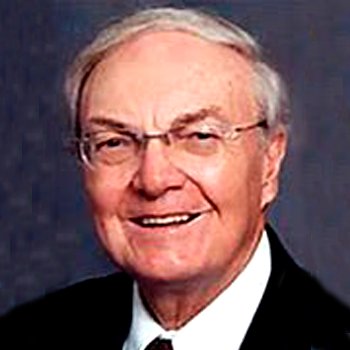
ProfessorBruce Waltke, Professor, is an American Reformed evangelical professor of Old Testament and Hebrew. He received an A.B. from Houghton College, a Th.M. and Th.D. from Dallas Theological Seminary, and a Ph.D. from Harvard University. Waltke's books include Intermediate Hebrew Grammar, Introduction to Biblical Hebrew Syntax, Finding the Will of God: A Pagan Notion?, Creation and Chaos, and commentaries on Proverbs, Micah, and Genesis. He was co-editor for the Theological Wordbook of the Old Testament, and he was the Old Testament editor for the Expositor's Bible Commentary series, the New Geneva Study Bible, and the Spirit of the Reformation Study Bible. He wrote An Old Testament Theology: An Exegetical, Canonical, and Thematic Approach, (ECPA Christian Book Award) in 2008.
 COPYRIGHT: This publication is published by C.S. Lewis Institute; 8001 Braddock Road, Suite 301; Springfield, VA 22151. Portions of the publication may be reproduced for noncommercial, local church or ministry use without prior permission. Electronic copies of the PDF files may be duplicated and transmitted via e-mail for personal and church use. Articles may not be modified without prior written permission of the Institute. For questions, contact the Institute: 703.914.5602 or email us.
-
Recent Podcasts

Making Disciples Jesus’ Way: A Few at a Time
by Aimee Riegert, Greg Ogden on October 30, 2026Learn to make disciples Jesus’ way through small...Read More
-
From New Age Seeker to Encountering Jesus – Robert Hotchkin’s Story
by Robert Hotchkin on October 23, 2026
-
After Theory by Terry Eagleton
by Jerry Root, Aimee Riegert on October 16, 2026
-
Recent Publications

What Is a Worldview and Why Is It Important?
by Christopher L. Reese on November 1, 2026When we seek to develop a Christian worldview,...Read More
-
Is It Really That Important to Pay Attention to Others?
by Thiago M. Silva on October 1, 2026
-
Should My Children Have Robot Friends?
by Cameron McAllister on September 1, 2026
0
All Booked
0.00
All Booked
0.00
All Booked
29802
Heart and Mind Discipleship Live Online Small Group
https://www.cslewisinstitute.org/?event=heart-and-mind-discipleship-live-online-small-group-las-vegas-nairobi-philippines&event_date=2026-11-06®=1
https://www.paypal.com/cgi-bin/webscr
2026-11-06
Next coming event
Days
Hours
Minutes
Seconds
Heart and Mind Discipleship Live Online Small Group
On November 6, 2026 at 8:00 pmGrow Your Faith with a New Online Course:
Speakers

Bruce Waltke
Professor
Team Members
Bruce Waltke
ProfessorBruce Waltke, Professor, is an American Reformed evangelical professor of Old Testament and Hebrew. He received an A.B. from Houghton College, a Th.M. and Th.D. from Dallas Theological Seminary, and a Ph.D. from Harvard University. Waltke's books include Intermediate Hebrew Grammar, Introduction to Biblical Hebrew Syntax, Finding the Will of God: A Pagan Notion?, Creation and Chaos, and commentaries on Proverbs, Micah, and Genesis. He was co-editor for the Theological Wordbook of the Old Testament, and he was the Old Testament editor for the Expositor's Bible Commentary series, the New Geneva Study Bible, and the Spirit of the Reformation Study Bible. He wrote An Old Testament Theology: An Exegetical, Canonical, and Thematic Approach, (ECPA Christian Book Award) in 2008.