Back to series
Subscribe
Listen or Download the Podcast
Episode 4: The Four Gospels: Trustworthy, Forged, or Corrupted?
Dr. Peter Williams joins us to discuss various objections to the trustworthiness of the gospels, including the possibility of fabrication of the gospel accounts by later writers, the presence of apparent contradictions within the gospels themselves, and the alleged corruption of the original accounts by oral transmission and thousands of years of copying and translation. Dr. Williams has been leading Tyndale House, an international Bible research community in Cambridge, England, since 2007. He received his MA, MPhil, and PhD from the University of Cambridge, studying ancient languages related to the Bible and was formerly a Senior Lecturer in New Testament at the University of Aberdeen. He is an Affiliated Lecturer at the University of Cambridge and a member of the Translation Oversight Committee of the English Standard Version. His book Can We Trust the Gospels? (Crossway, 2018) has been published in 15 languages. His latest book is The Surprising Genius of Jesus (Crossway, 2023).
Resources for Further Study:
- Tyndale House
- Can We Trust the Gospels? by Peter Williams
- The Surprising Genius of Jesus by Peter Williams
Subscribe


 Our Newest Podcast
The Questioning Belief podcast explores objections to Christianity through in-depth discussions with experts. Drawing from her background as a former atheist and her experience in apologetics, Dr. Kathleen Milani invites you to explore thoughtful responses to serious questions about faith. Learn more.
 Connect with Kathleen
Explore written reflections from Dr. Kathleen Milani and get in touch with her through her Substack, The Reformed Gadfly.
Transcript
Kathleen Milani: Welcome to Questioning Belief. I'm your host, Dr. Milani, former atheist turned Christian. Let's dive into Christianity together and see whether it withstands our toughest objections. So, our objection today is as follows: that the Bible is a book written by humans which recounts at best true historical events and at worst fabricated ones. Even if it was inspired by God, it's written by many different people who introduce their own biases and mistakes to the original account, as evidenced by many contradictory details, as in the Gospel accounts of the empty tomb, for example.
The Bible was further corrupted by years of copying and translation, and thousands of years later, our modern copies cannot be trusted to convey the entirety of their original message. So, to talk about that hefty objection, we have Dr. Peter Williams here. Dr. Williams has been leading Tyndale House, an international Bible research community in Cambridge, England, since 2012. He received his MA, MPhil, and PhD from the University of Cambridge, studying ancient languages related to the Bible, and was formerly a senior lecturer in New Testament at the University of Aberdeen. He's an affiliated lecturer at the University of Cambridge and a member of the Translation Oversight Committee of the English Standard Version, or ESV. His book Can We Trust the Gospels? is what we'll be discussing today, but he also has a latest book out in 2023 called The Surprising Genius of Jesus. Thank you so much, Dr. Williams, for being here.
Peter Williams: Great to be with you.
Kathleen Milani: Thank you. So, let's talk first about what it means to trust the Gospels. I'd like to ask you this from a scholarly perspective and a faith-based perspective. It seems like from your book, there are two main components to trusting the Gospels. First, demonstrating their accurate recordings of true historical events and figures, and then demonstrating that the Gospels we read today are faithful representations of the original texts. So, what are the benchmarks for trustworthiness that scholars like yourself set? And what does trust mean in this context?
Peter Williams: Yeah, so what I'm thinking about in trust is like everyday trust. And I think what we need to do is have a critical look at the academy, which of course the academy does critical looks at things, and recognize that sometimes the standards it sets are not fully attached to real life. So, there are obvious advantages to trust. If you play a team sport, you need to trust the other people in the team to be effective. All sorts of things in an office environment enable you to work well if there's trust. If you think that someone might steal your laptop every time you go out of the room, it's going to slow you down a lot. And so, what I'm looking at really is: is it rational to trust the Gospels? And that's a different question from; can I prove to the satisfaction of a history department that the Gospels are historical? And that I think is a different standard because a history department can function very, very well but is doing something a little bit more abstract from real life. It's actually trying to create something very, very solid based on skepticism, based on not just taking a single account as valid. That's different from the way normal life, economics, society works.
So yes, there's a time to be skeptical, but it's not all the time. And so that's where I just want to point out, in a sense, the artificiality of history as it's done as an academic discipline. That is not to say it's bad, I think it's a useful thing to do. But there's certainly more penalty if you believe something is not true than if you don't believe something that is true. As in, the incentive structure, the reward system within a history department is asymmetrical.
Kathleen Milani: Yeah.
Peter Williams: And that's different from real life where things tend to be a little bit more balanced in terms of incentive structures.
Kathleen Milani: So oftentimes people will bring up other historical figures from the same time as Jesus or other texts written about approximately the same time as the Gospels and sort of evaluate, you know, how can we apply these standards to the Gospels the same way as we apply it to a non-religious text or non-religious figure? Is there anybody that you've done that with or you think is a good example of that and who we might use to compare to the Gospels or to Jesus himself?
Peter Williams: Well, I mean, I think there you could use anyone and the records about Jesus do better. That is, if we just go to the most famous person, namely Tiberius, the Roman emperor at the time of most of Jesus' ministry. We have about four accounts of his life. The gap between Tiberius and these accounts is bigger than for the four Gospels. And although, yes, you have other things written about Tiberius because you have coins, you have inscriptions, things that you don't have for Jesus. If you take something like the last week of Jesus's ministry, the Passion Week, it's one of the most detailed weeks that you would find of any figure in ancient history. So, you can have serious discussions about whether Jesus died on a Friday, what sort of time, all the layout of it—people can even get down to trying to trace hours.
And that's not the sort of luxury that you have with lots of other figures. You also have Jesus' speech presented as speech—like a talk, a dialogue, public, private, responses to events, him asking questions, different genres, him posing tough questions, him telling parables—all these different ways that you can look at his speech that just gives you massive material to analyse in a way that I don't think you get with a lot of other figures. So, I do think that we are in a position of luxury. With Jesus in terms of the amount of material that we have. And so, if it weren't for the sort of stupendous claims that go with Jesus and the miraculous, I don't think people would have a problem with the amount of material or the proximity that it is to Jesus.
Kathleen Milani: So, if someone says, well, we have a lot of material about what Jesus has said in his life, especially this last week, but it was written by biased sources—they have a vested interest in proving the divinity of Christ. What do you say to these people? And what does bias really mean in historical writing? Can we ever really be free of it?
Peter Williams: Well, I don't think you should try and be free of bias. I mean, let's say someone accuses you of something terrible. Well, yes, you have a bias, if you like, to clear your name. I mean, someone accuses you, say, in the office of something and you are emotionally involved. That doesn't mean that everything you say from that point is especially suspect.
Kathleen Milani: Sure.
Peter Williams: So, I think we need to distinguish between “I have a passion for something” and “I am distorting something” because you could dismiss everyone in every conflict situation on the planet for being biased when they’re just being passionate. So, show me the way they twist truth, and you've shown me unreliability. But simply saying, no, this person is a passionate supporter of this particular side, this particular issue, this particular thing they're campaigning for—that is not in itself something that should be used in any way to disqualify what they say. And so, this idea that somehow people should not be emotionally involved, they should be emotionally detached, is insane because emotions are one of the things that help you remember. So you think of times when, you know, let's say you had a very romantic conversation, a key turning point in a relationship—positive, negative, or your deathbed moments, funeral moments.
Kathleen Milani: Yes.
Peter Williams: These are times when we remember things in a super way. We can remember the exact words someone said. And so, when people say in this sort of modernist construction in the academy that we need for good scholarship to cut out emotion, you think, why would you cut out something that helps you remember anything? That's insane. So, I just think that's, in a sense, a hangover from a particular way of thinking about things. And what we've got to say is, of course, we need to be calm enough to evaluate something. So, there's a time—let's say you've got a medical doctor performing a very important piece of surgery. They need to be calm enough to be able to do that. But that's different from saying that they don't care which way it goes.
Kathleen Milani: I think the point about the emotions helping with memory is a very interesting one, and I think even clinically, anybody who knows anything about post-traumatic stress disorder—that's sort of a very extreme example of that—these memories recur even long after the fact and in a way that's almost like they were actually happening again. But I think also someone who's concerned about the bias of the Gospel writers might perhaps be more interested in the words of non-Christian historians. And so, in your book you discuss three non-Christian sources who mention Jesus or discuss the practices of early Christians.
Peter Williams: Right.
Kathleen Milani: You have Pliny the Younger, Tacitus, and Flavius Josephus. So, who were these three men?
Peter Williams: Yes, well, Tacitus is often rated as about the top Roman historian. I mean, he's got his cynical, quite cutting style, quite brief, but he's thought to be reliable. And he talks about this great fire in Rome in the year 64, which people were blaming on the emperor Nero. And he talks about how Nero blamed the Christians. And that's an interesting thing because he talks about how the name Christian began in Judea—there was a Christus, a Christ—and this all happened in the time of Pontius Pilate. That enables you to locate the beginnings of Christianity to the time of Pontius Pilate, so when he oversaw Judea between 26 and 36 AD. And, it enables us to see how far and fast Christianity had spread. So already there's a massive number of Christians in Rome by the year 64 and that's an interesting thing.
Kathleen Milani: So, I want to ask you about Josephus' writing. He mentions Jesus in two books of Antiquities of the Jews.
Peter Williams: Yeah.
Kathleen Milani: One contains a mention of the brother of Jesus, James, and then the other has the famous Testimonium passage, which is thought to be partially authentic meaning it's original to him, but it also contains adjustments from later Christian scribes.
Peter Williams: Yeah.
Kathleen Milani: So, I think the fear with a lot of non-believers especially is that Christian scribes couldn't be trusted to reproduce an original text.
Peter Williams: Yeah, so I mean, in my book I deal with the briefer passage from Josephus, which people don't doubt authenticity. What I'd say about Christian scribes is let's remember: Christian scribes passed on all the pagan literature. So, all that classical Greek and Latin literature we have—because Christian scribes copied it. So, if you have this problem that we know Christian scribes will just throw away all classical literature—all your Socrates, we’ll all your Plato, all your Xenophon, all your Homer—but hang on. This is an interesting thing because Christianity is a culture that basically preserved the culture before it. And that's quite an interesting thing because the Romans didn't preserve Etruscan literature, you know, the people who were before them. So, I think it is quite something that Christians did that. But I'll also say that there is going to be some important research coming out this year on the other passage of Josephus. So, oh sorry, this next year in 2026.
Kathleen Milani: Okay.
Peter Williams: So, you can watch out for Oxford University Press and an important book that's forthcoming. I don't know if it's yet been announced, so I can't say much more about that, but just watch this space. I would just say, Yeah, the idea that Christians just can't be trusted as scribes doesn't make sense because scribes are generally just reliable copyists in all sorts of cultures. You can do Chinese scribes, Arabic scribes, Greek scribes, Latin scribes. They're all basically handing stuff down. That's their job. And just like delivery trucks generally deliver to the right destination, scribes generally deliver the text they copy. Of course they can change it, but even if one scribe somewhere changes it, unless all the other scribes in all the other places do the same thing, then it doesn't corrupt the text.
And with the Greek New Testament, we have a massive documentation of thousands of manuscripts and therefore they are locatable. There are lots of different monasteries and different cities where they all belong. And the New Testament is translated not just in Greek but also into Latin, Coptic, Syriac, Gothic, later Anglo-Saxon, Armenian, Arabic, Church Slavonic—all sorts of languages. And so, if you are to change something in any language, it's not going to show up changing all the other languages. So, we would know exactly what happened, who'd done it and where—roughly, not necessarily exactly where they were, but you have a rough idea. And so that shows us with something like John's Gospel, that it is incredibly well transmitted. There's one verse passage, bridging from chapter 7 through to 8, which is not in the earliest manuscripts. And in a sense, we know what went on there because there's less like a smoking gun. If anyone tampers with the text, it can't be a secret. There will be a pattern which will show up because we'll start seeing that some manuscripts have this passage and lots don't. And so that's significant. So, it basically shows us in a sort of control sample way that other passages have not been tampered with like that.
Kathleen Milani: So, I'd like to ask you a little bit more about the methodology behind doing that in between the cross-comparison.
Peter Williams: Yeah.
Kathleen Milani: So, is that the main method of determining whether a manuscript has been altered or is authentic—cross-comparison between different versions of the manuscript? What if you have only one?
Peter Williams: Yeah, so often with classical literature we only have one manuscript. And I've in fact been involved in discovery of one manuscript of an astronomer called Hipparchus and it was very nice and we recovered his writing that was rubbed out using multispectral imaging. And what we could see is you could work out from the style that it must be Greek of a particular period, you work out from the precise star measurements it mentions when that period must be—all those sorts of things fit. So, if we're dealing with a first-century Jewish writer, we expect this person to know about first-century Jewish things, to speak in a particular way. And someone 200 years later is not easily going to be able to imitate that. Certainly not 1,300 years later. I think most of us would struggle to write a proper 13th-century English sentence. You know, I mean, as in—and certainly to sustain it over a paragraph. You might manage a sort of short sentence, but the exact way that they would speak to each other is just subtly different from the way that we do—slightly different vocabulary, sometimes slightly different spelling, different ways of addressing people. And that can feel rather different. And in fact, even on a 100-year period, we can feel that. So, the way that we are talking to each other now is quite different from how people 100 years ago would be speaking to each other—and they wouldn't be using this tech. So, all those sorts of things help people locate things. The idea that people could just forge things is, you know, it's not so easily done and certainly not able to be done over nine hours' worth of text, which is what you have in the Gospels. I mean, that's just—that you know yeah. If someone wants to make an argument that one short phrase in one of the Gospels has been added later, I'd want to say, well, what's their evidence for that? But also, that's quite different from claiming that the whole of Matthew's Gospel was written a lot later. And that just doesn't make any sense. Matthew's Gospel knows first-century Judaism. It knows Judaism from before the fall of Jerusalem in the year 70 when the Romans come in. It's concerned with the sort of practices that people have that make sense as the context it's written in.
Kathleen Milani: I've heard talk that artificial intelligence is being used to help translate the Bible nowadays into different languages. And so, you know, saying you and I as individuals would have difficulty, for example, approximating a 13th-century novel, artificial intelligence with machine learning might be able to learn of a text from a certain period and fabricate a new one based on those patterns and vocabulary. And so, is that something that's starting to enter your field at all?
Peter Williams: Certainly. You know, I've been making various AI queries over the last 24 hours and just, you know, incredibly impressed by what's been coming back to me. I think that I sometimes think of it as being like a doggy that needs to be trained.
Kathleen Milani: Yes.
Peter Williams: So as in there are modes of speaking, particular groups of texts that need to be trained to work with. And the issue in ancient humanities is often there may be just a group of only 50 texts of this kind or 20 texts of that kind. And so, it must be sort of trained on each of those. But yes, I mean, certainly it's going to be revolutionary in terms of what it can do. I think there's going to be plenty of room for human involvement because I think you always must check.
Kathleen Milani: Yes.
Peter Williams: You know, it's one of those things that can save us work as well as create some work. But certainly, I've got a reasonably positive view of what it will be able to do.
Kathleen Milani: Yes, cautious optimism. That's what I have in my field as well. I'd love to dive now into the four Gospels themselves and to discuss the date and the authorship a little bit. So, who were the authors of the four Gospels and is their identity widely agreed upon in the scholarly community?
Peter Williams: Yeah, so I'd say that I mean this is not revolutionary—the authors of the four Gospels are Matthew, Mark, Luke and John. And I would say that the Gospels come with names and not with dates, so everyone seems to be obsessed by the question of what's the Gospels are. That's something that's less knowable, but they must be obviously within the lifetimes of these people. So, Matthew and John are disciples of Jesus, and they are Hebrew names. Mark and Luke are Latin names and are not disciples of Jesus. And I just think it's an interesting thing if we start with Mark and Luke. Who would put those names on Gospels if they weren't by those people? So, Mark and Luke are only famous because of their Gospels—or Luke at least in the case of Luke and then the book of Acts. So, there's no motivation for people to stick those names on if they are not genuine. So, I take them to be by Mark, who is said to be Peter's interpreter. So, he's one step away from a disciple of Jesus. And he may have encountered Jesus directly himself. And Luke, who is a researching doctor, and he's been a practicing doctor before he's hanging out with the Apostle Paul in the 50s, approximately, AD of the first century. So that gives you some parameters for when those people are going to be writing. Matthew and John, both have longer sections of text for Jesus than even Luke. So, Matthew 5 through to 7 is all Jesus' speech. John 13 through to 17, all Jesus' speech. So, the longest speeches are by people who were eyewitnesses.
There are signs in those Gospels that they really did know what they were talking about—that they were familiar with the culture at the time. And there are patterns of speech that show genius. And it's one thing I've made a point about the genius of Jesus in Matthew. You have this saying, “Do unto others what you'd have them do to you?” The Golden Rule—that's remarkable. I mean, that's incredibly original. And even “love your enemies.” Up to this point in human history, no one has ever been reported to say, love your enemies. It's a very, very radical idea. Almost paradoxical if you think about what an enemy is. That's a clever saying, and that's over in Matthew. As well as “judge not that you be not judged” and other such things. Over in John—and only in John—you have “the truth will set you free.” So, who comes up with these two sayings? Is it that Matthew comes up with clever intellectual property and then credits it to Jesus? John comes up with clever intellectual property and then he also credits it to Jesus? Or is it perhaps that there is one person who comes up with this intellectual property, namely Jesus, and the two people have recorded it. And that's a far simpler hypothesis. Now I'm not talking about proof here. I'm talking about what would enable you to trust something. Likewise with stories. Luke gives you incredible stories like the story of the prodigal son or the story of the good Samaritan. Who comes up with those stories? Is it a different person from the person who comes up with the story of the unforgiving servant in Matthew, which is also a powerful story. The simplest hypothesis is surely to say that Jesus comes up with both.
Kathleen Milani: And it's a very similar character of Jesus that you see across the different Gospels. I have a question on that later of the Synoptic Gospels versus John, but I want to ask you first about the authors.
Peter Williams: Sure.
Kathleen Milani: I've heard the objection many times to the authorship of John that the three other Gospel writers seem like fairly learned men, but then you have John the Galilean fisherman, who presumably spoke Aramaic, and I've heard the objection, you know, how would he know how to write in Greek? How do we make sense of his authorship, especially in the light of the low literacy rates in ancient Judea?
Peter Williams: Yeah, OK, so let's start with language. So, he's John or Johannes, as we know his name—Johannes—and he's got a brother called Jacobos. Now, those are both Hebrew names with Greek endings as they are in the Greek Gospels. Now, are those so—are they names that have been made more Greek? In the writing, what were they called? Was he called Yohanan, the proper Hebrew form, or was he actually bilingual? Well, he worked on the Sea of Galilee as a fisherman. It's about four to five miles wide, and there are Greek-speaking fishermen over the other side, but also, he's business partner, according to the Gospels, with Peter and his brother Andreas—Andrew, a Greek name. So, and... Andrew comes from Bethsaida, that could be Greek speaking. So, the idea that they can't possibly know any Greek—you think, well, hang on, one of his business mates has got a Greek name. Are you so sure that they don't know any Greek? And anyway, people who do trade tend to know languages that they need to do that. So, I just think it's an armchair objection. It's one of those things where people can say, oh, that person couldn't possibly know such a language. I mean, you travel around and you meet someone and then you find out they know a language you wouldn't expect them to know. Oh, you know that. Why is it you know that? Well, because my mother was such and such and suddenly it all makes sense. So, I just think that it's almost like a prejudice that people have that this person couldn't possibly know this sort of thing. And it shouldn't be treated as a very serious objection. So, what it comes from is this idea that these were all peasants. Well, hang on. Do you have any idea how much it costs to own a boat? Boats are not cheap things. So don't tell me these are not peasant classes, they are manual workers, they are working with an established business.
Kathleen Milani: Yes, and that's good to know that they are, you know, business owners and that they also have those trade networks where they encounter people who speak different languages. I'd like to go back to the authorship of Gospels, not necessarily to nail down a particular date, but we've all heard those different hypotheses—two-source, four-source hypotheses—about the hypothetical source material for each Gospel and the orders of authorship. How important are those in our case for historical reliability of the Gospels? Can we make the same case with all those different theories?
Peter Williams: I think yes, we can make the same case because there are so many different sorts of material in the Gospels. We have material only in Luke, material only in Matthew, things that overlap between the two, things that we have in two Gospels—Matthew and Mark, Mark and Luke—things that, there are unique agreements between John and each of the three. So you can test those in many different ways and you can see the signs of reliability throughout.
Kathleen Milani: So, I'd love to talk about the differences between John and the Synoptic Gospels now—Matthew, Mark and Luke. So, you've mentioned that the Gospel of John, for example, doesn't contain the narrative parables and contains many “I am” statements such as “I am the way, the truth and the life.” So how do we reconcile this discrepancy in representing Jesus's manner of speaking?
Peter Williams: So, I think firstly, we need to remember the Gospels are only nine hours long. And about half of that is narrative. So, we're just dealing with very short representations of the speech of Jesus and that Mark hardly has Jesus speaking at all. So, Mark 4, 7 and 13—not much else. So, the idea that because something is not in the one and a bit hour of teaching that Matthew or Luke has, Therefore Jesus never said it, doesn't seem to be very strong. Moreover, when Jesus says, “I am the light of the world” in John, remember he's also said, “You are the light of the world” over in Matthew, and surely, he's not going to say his disciples are the light of the world unless he's saying that they're somehow reflecting his own light. When he says in John's Gospel, “I am the bread of life,” He says in the Synoptic Gospels at the Last Supper, “Take, eat; this is my body” and you must eat it to live. So, there is some sense in which the very idea behind “I am the bread of life” is reflected in the other Gospels. So, I'd want to say the sorts of ideas you have in the “I am” sayings are found elsewhere. So, I think all we've got is that John has chosen to highlight a particular sort of thing which Jesus said on occasion and make that more of a theme.
You can find hints of the same elsewhere. So, in all the Gospels, Jesus is asking lots of questions. There's a sort of regular feature of the way he speaks. Even in John, where you don't have parables, he still is talking about being the good shepherd. He's using the same sort of imagery that he's used over in Matthew 18 and Luke 15 of the shepherd. So, I think that—and I mean, in one sense, he's portraying himself as the Good Shepherd in those Gospels as well. So, I think the ideas are there. Look at the phrase “the Son of Man”—that's used in all four Gospels on Jesus's lips as a self-designation and is used in some of the same ways. So, what I think is striking is not that John is different from the other three, it's that the three are so similar. So, if we give any sort of analogy with Socrates—so we read about Socrates in Plato and in Xenophon. We might say that the distance between Plato and Xenophon as they record Socrates is about the same as we have between say John and Luke recording Jesus. But I mean it's hard to judge the distance but what typically you find when you look at two ancient biographies of the same person is the sort of distance we have between John and one of the other Gospels.
So, the striking thing is not the distance between the Gospels—between John and the others—but the proximity between Matthew, Mark and Luke. That's the thing that we should be focusing on and saying, you know, what's going on there? Well, I think that reflects to some extent the fact that there is a crystallized teaching tradition early on. There's, if you like, a syllabus which the early church has, and that's what forms that sort of sense of these are particular stories on the cycle that we're going to have. You know there are many things that one could say about Jesus, but you have to sort of burn them down, and this is what we're going to focus on. I think that's the interesting thing. And the other thing is that there is something optimal about the four Gospels. If you imagine you had two Gospels like each other and two other Gospels like each other’s, call one Big A and Little A and the other Big B and Little B. At that point you'd say you only had two sources because Little A copied from Big A, Little B copied from Big B, so you don't really have very much. Whereas what we have is at least six different sorts of material between the Gospels. Where you've got things only in Luke, only in Matthew, things in the triple tradition—Matthew, Mark, Luke—things in the double tradition—Matthew and Luke—you've got John, and then you've got these minor agreements, which are so striking as well, where you find Mary and Martha are only in Luke and John, or you find that at the tomb, Jesus says only in Matthew and John, “Go and tell my brothers,” which is a really interesting thing. So, you find these sorts of subtle agreements, small agreements between different Gospels. That gives you just an abundance of material to deal with. I think arguably, although I've never worked this out as a sort of mathematical formula, we've got an optimum amount of testimony to look at given the length of the text, which is very manageable.
Kathleen Milani: So, I was going to ask you next then about those specific contradictions and the empty tomb accounts is one of those that they differ in—which women were at the tomb, location and number of angels, whether the stone was already rolled away. And so, would you sort of apply the same explanation there: there are four different accounts from different vantage points?
Peter Williams: Yeah, so I mean, I think if we start by adding the text together, then we have a minimum of six women at the tomb. So, you have, you know, two Mary’s, Joanna and Salome, and the other women talked about in Luke. So, you know, you easily get to six. And do the women all stick together in a huddle? Are they allowed to see things separately? Do they all bundle into the tomb together? Do some stand outside? You know—and you start, the moment you start looking at the practicalities of this, you realize, of course, it's possible for one woman to see, you know, more than another woman and so on. And but when you look at John's Gospel, clearly, it's presenting you as something that's incomplete because it has just Mary Magdalene going to the tomb, but then she comes back and tells the disciples, “We don't know where they laid him.” And you think, ah, so it's telling you there's more going on than in this narrative. Then a couple of disciples run off to the tomb, then unannounced, Mary is back at the tomb.
So, John's Gospel doesn't bother to tell you how she gets back to the tomb but clearly is saying there's more going on than we're telling you. And so that's where you realize that these are précis—they're summaries. So, you can't get many more different accounts than Matthew and John say. Matthew and John are very different because you think, well, you read Matthew—angel comes, you know, scares the guards stiff, they all fall, you know, sits on the stone, along come the women, and the angel, one of them, you know, addresses them. Now somehow the guards by this point have scarpered off and into town. That's quite a different account from what you get in John where you've got this Mary Magdalene going and then the men—but it's also incredibly similar and that is again you get this point where the big story that Jesus rose again, that's there. The men or angels in shining clothes at the middle level, that's working. And then you get these tiny little details like, “Go and tell my brothers, “Which Jesus says to the women, but also in contact with that, it says how they clung on to him in Matthew. And in John, it's “Do not touch me.”
Kathleen Milani: Yes.
Peter Williams: Well, hang on, there's like a subtle level of agreement. And so, I can see it all makes sense. They have this moving from registering that the tomb is empty before they go on to lesson number two which is that you can meet Jesus—because if you met Jesus first the danger is you would never take any notice of the empty tomb, you'd just be gazing at him and the empty tomb is utterly insignificant. But both have that perfect teaching method where first the tomb tour and then you get to see Jesus. And this is the way if anyone were, you know, constructing a theme park or anything like that—this is the way you must do it. You must build up in the way you construct the visitor experience. I mean you just must do it because otherwise people don't take any notice of the early stuff. And so that's the same basic structure running through and I don't think there are any defeater contradictions in this so that they're just—there's compatibility. I would say there's précis in Matthew so there's massive summarizing. Matthew is the Gospel writer who tells you of the story of the man being let through the roof and being forgiven without ever talking about the bit going through the roof. So, Mark and Luke tell you he was let down through the roof and then Jesus said, “Your sins are forgiven.” Jesus just has, he got there and Jesus said, “Your sins are forgiven.” That's what Matthew has. So, in a sense, that's radical shortening of a story. And so I think it's fine for him to cut short the question of how many times the women ran to the tomb. Clearly has them running, clearly, they meet Jesus slightly away from the tomb, and then they tell disciples. That all happens.
Kathleen Milani: I'm going to ask you about one more contradiction that I've heard mentioned many times by skeptics, and this is more of a less of a big-picture contradiction. Judas's death. So, Matthew 27, it says, then he went and hanged himself. And then in Acts, it says, falling headlong, he burst open in the middle and all his bowels gushed out. And how do we make sense of these small contradictions in details?
Peter Williams: Yeah. So, I would say, firstly, those are completely compatible. There's a funny thing—is people in the early church didn't see this as in any way a problem. So, it's become a problem in a subtle way. And I only realized this after I had done a debate with Bart Ehrman and this very subject came up—the English word headlong has changed in meaning. So, we now tend to understand its meaning headfirst.
Kathleen Milani: Yes.
Peter Williams: Right. OK. Headlong actually means prone. It's flat on your face in what this word means. So that's already just a sort of really subtle difference in the English where we may perceive that we've got to have his head pointing directly downwards, where the Greek never says that at any point in Acts. But what you do have in Acts is clearly an incomplete story because you're told that he falls, but what's he falls from? It doesn't tell you he falls from anything. But hang on, you know that to hang, you need to have height. So, I would see these as very compatible. But I'd simply add them—you know, the rope can snap at some stage, he gushes out what would make your entrails gush out. Well, maybe if you'd been puffed up in the process of what happens in your hanging in a hot climate or whatever. These sorts of things can happen. Acts clearly don’t tell you the whole story. There must be something more going on. So that's the way I would look at it. There are other layers I could unpick. For instance, one of them is Matthew reporting and the other is Luke reporting what Peter said. Which is a different thing from Luke reporting what Luke is saying. But I'm not wanting to put any weight on that, but I'm just saying, this is way distant from a defeater contradiction. And it's interesting to me that people will bring this up again. It's the one I hear the most as I go around speaking places—the number one contradiction. You think, really?
Kathleen Milani: That's very interesting. I would have expected it to be the top objection. I have a follow-up question about the headlong translation. So oftentimes when we're sitting and listening to a sermon, the pastor will say, well, and in the English Standard Version, the word says this, but really when they say love, they mean philia or they mean your brotherhood or something else. And they say, well, if you knew the true original meaning, that'll change the meaning of the whole passage. And so, I just think of, you know, I've heard the Eastern Orthodox say that, for example, Saint Augustine—he had a very good understanding of Latin, but not so much of Greek. And so, you know, he perhaps in some views has an incorrect version of original sin and certain theology. And so how do you make sense of that as a translator and how much of an issue really is that?
Peter Williams: Yeah, so I don't think it's too much of an issue. I mean, I think there obviously can be misunderstandings—cultural misunderstandings, linguistic misunderstandings. But the sort of trade networks that work across our globe presuppose that basically communication normally works. So that's why we're happy to speak to each other and so on. And yes, of course there can be miscommunication, but it's less prevailing than the communication. So, you and I even today may have slightly different understandings of what we said but there's more in common with our understanding than there is You know which is not. So, I just think that that's where people shouldn't worry about that too much because the meaning of the Bible shouldn't depend on the meaning of any individual word within it. You know, what I find is I travel to many places, meet people who've been reading the same set of books and come to a lot of the same views. That's not to downplay the differences there are between Christians. But I just want to make sure that we're spotting the really big thing, which is the amount of unity that there is.
Kathleen Milani: Yes.
Peter Williams: Overall, I think it's useful for preachers not to mention the Greek. And the reason why is because A, they can get it wrong, and B, most people they're talking to in a monoglot society where people only speak one language don't really know how language works. And so, when they're explaining something, the other person will misunderstand it. A lot of people think that a word is a bit like a suitcase and it takes its meaning everywhere, rather than it’s something that just activates meaning in places. So, I think that's the way I would think of A word—that it may not carry any meaning from one place to another. So, there's no, when we talk about a scripture text and a text message, well, they're both written, but there isn't much in common with them. And I just think there are all sorts of, let's say when someone is mugged, that doesn't have any correspondence with the word mug you drink you know, take a drink from.
Kathleen Milani: Yeah, I'm sure.
Peter Williams: So, I just think that there are words like that which things don't carry across—you know, glass ceiling, drinking glass or whatever it is. These are unrelated and so there is a bit of a danger when people do word studies that they think of scriptural words in Greek and Hebrew as sort of special words that somehow infect all the other occurrences in the entire Bible with the meaning they have in a particular instance. And I just think, no, I don't go with that. The Bible is very special, but it is written in ordinary language.
Kathleen Milani: That's very helpful. And that's, you know, what God would intend as well. So, I'd like to discuss in your books, you have several ways to investigate whether the Gospel authors were familiar with the events, place and time that they were writing about.
Peter Williams: Yeah.
Kathleen Milani: So, you mentioned things like geography, personal names, botanical species. Which are some of the most compelling findings for you that tether the Gospels to this appropriate location, time and culture?
Peter Williams: Well, I mean, one of the most obvious things is just that they know geography because this is not a trivial thing. Travel in the ancient world was not so easy. So, people could travel quite a bit, but travel associated with danger often gets robbed. It's not something you do for leisure like we do. So, there's very, very little leisure travel in the ancient world. And that's simply because it's a whole lot less certain and imagine you travel you get ill on something like that. So, people don't really tend to know localities as much. And the moment you see that the Gospel writers actually really do know the geography of the land of Jesus—that's a significant thing because either it means they come from there or they've had really detailed conversations with people that come there, and in which they actually cared about whether this place was this village or another village. Those are the sorts of possibilities you have. And then you can find out they also know about the sorts of jobs people have. So, they have tax collectors in the right place. They have fishermen in the right place. They have soldiers in the right place. They have scribes in the right place. They have Pharisees in the right sort of place. And you think, OK, so they're sort of able to build up a real picture of society—that's an interesting thing. When Jesus tells a story of a man going down from Jerusalem to Jericho, it gives you the incline on the road—yes, that Jericho's the lowest city on planet, and that he's going there from Jerusalem, it gives you then he falls amongst robbers—robbers—and that happens to be a winding road where there were lots of thieves, and that's talked about historically, and also, he then has
A priest and a Levite going down that road. Well, we happen today from archaeological records there were lots of priests living in Jericho—not Jerusalem—in Jericho at the end of that road? No—priests lived in Jerusalem and went down to Jericho? Wait—no, records show priests in Jericho. Wait—no, the point is they worked in Jerusalem, but many lived in Jericho? Wait—the archaeology shows priestly courses in Jericho. But the point is the road is correct. Anyway, all of that is just like showing cultural knowledge. And Jesus' story of the Good Samaritan is just about a minute long. It's a short story. And yet it's just in passing showing bits of cultural knowledge. That's not trivial. And if you say, well, OK, but someone put that in to make it sound authentic and like from the land. What you're forgetting is that loads of people wrote later things—religious things like apocryphal Gospels. If you like fan fiction—Christian fan fiction—after Christianity seemed to be popular, and they didn't bother putting any authentic signs of authenticity in. They really were not bothered about the land. And anyway,
The story of the Good Samaritan is a genius story. So, for you to say someone put details onto that, in addition to making it sound authentic because they were worried that the genius of the story wouldn't carry it through—you start thinking, wow, you are going down such a complicated route. You don't need to do that. So, I think that for me, a lot of the problems with skepticism is just overly complex. So, the best argument for me for the reliability of the Gospels is just the person of Jesus Christ. I think almost impossible to invent as a fictional character. And the sheer simplicity of saying the testimony about him is true—that yes, he is the savior of the world. And it will explain all of these data compared with the sort of complexity of trying to explain that away.
Kathleen Milani: The genius of Jesus was something that made a difference to me. So, I converted to Christianity in adulthood, and I read Works of Love by Kierkegaard, which I know his theology is not perfect by any means, but he pointed out “love your neighbor as yourself” and how radical that was and how that would not have come from man. So, you mentioned the Apocrypha. So, is that how scholars have told the difference between apocryphal books of the Bible and the true Gospels? Is that by looking at those geographical and all those details that you mentioned?
Peter Williams: Well, firstly, I'd say, I mean, we could take the world's number one Bible skeptic, namely Bart Ehrman, and he would say that, look, the four Gospels are earlier than all the rest by a long way, and give you more access to the life of Jesus than anyone else.
Kathleen Milani: Yes.
Peter Williams: And yeah, he's card-carrying skeptic. So, I would take it just to be a generally agreed thing that that's the case. There are some points of view I have to say basically in North America where that's debated, and some people say hey the Gospel of Thomas or something like that is something which is almost on a par with these other four. Generally I think that's not widely held because it does seem to be that the Gospel of Thomas is dependent on the full Gospels and I would take all of these apocryphal Gospels effectively to be dependent, and then they also—something like the Gospel of Thomas, which you can easily read online, doesn't say it should be put in the Bible, because it begins by saying these are the secret sayings which the living Jesus spoke and which Didymus Thomas wrote down. What it's trying to say is Jesus only gave the real scoop to one disciple—the secret scoop—and that was to Thomas. So what it's really saying is Get out of the way, you other Gospels.
Kathleen Milani: Yes.
Peter Williams: I'm the real thing. And that is a very similar opening to the Gospel of Judas, which again is not by Judas, which is again saying, hey, Jesus only told the real scoop to Judas. So you've got to distinguish between those and what you've got in the four Gospels, which are just a very different thing. They are so much more Jewish. Because Christianity began in the cradle of Judaism, they are earlier, they're better attested, and we can say that the four Gospels were not imposed by some powerful group—they're in fact used by the Christians by the late second century across areas from France to southern Egypt to Syria. So that means there's no central power at that stage. There's no super Christian city that can tell everyone to fall in line. And the reason why all of those different places are using the four Gospels is because they just have the credentials by a long way. I could say more, but I'll leave it there.
Kathleen Milani: I'd like to ask you about the Jewish nature of the Gospels.
Peter Williams: Yeah.
Kathleen Milani: What does that mean? Is that referring to the parables, the names? What does that mean when you say that?
Peter Williams: Well, I mean, certainly we start with parables. The early Christians don't seem to have told many parables like they didn't—second, third, fourth century church fathers. They don't tell parables. So, there is something in the second century called the Shepherd of Hermas—is not quite like Jesus's parables. So, parables were a particularly rabbinic thing. And so, Jesus is speaking that sort of way. He's also engaging with Judaism on questions like Sabbath-keeping—the whole debate about Sabbath-keeping, that's not important outside Judaism, or whether you how you wash your hands, what makes you clean when Jesus says, you know, it's what comes from within that makes you unclean. This is whole entering into a debate. Now, The Pharisees, the Sadducees—only sort of figures are key within Judaism of the time. Judaism has this massive disruption in the year 70 when the Romans destroyed Jerusalem. And it seems that what we're getting in the Gospels is what's called Second Temple Judaism—that sort of early Judaism. But yes, it also—the way Jesus turns a phrase, some of them can be Jewish when he talks about something like unrighteous mammon or the children of light. These are phrases that come up in the Dead Sea Scrolls so we can see yes that's clearly a Jewish way of speaking when you talk about the Son of Man or you talk about the kingdom of God.
Kathleen Milani: Okay.
Peter Williams: The kingdom of heaven even—yeah that's very, I mean talking about heaven as a substitute for God, that's a huge piece of Jewish phraseology. So, this is happening right throughout, but then you can also look at, yes, the names that they have for all the characters fit within Judaism for all the Jewish characters. That works. I mean, Simon is the most popular name for a Jewish male and Mary the most popular for a female, and they are the most popular names in the Gospels. And you know that applies to the land of Jesus, but not, for instance, to Egypt. Egyptian Jews had different names. So again, that works. It's locally correct.
Kathleen Milani: Okay, that's very helpful. So, we've discussed the content of the Gospels now, but let's talk about their transmission throughout history.
Peter Williams: Yeah.
Kathleen Milani: So, the first, I think the first bit of the oral historical tradition to transmit the so what were the Jewish oral historical traditions at the time and why should they be trusted to carry a message untainted?
Peter Williams: Yeah, so I do think that oral historical traditions can be quite a confusing phrase because sometimes what people are meaning when they talk about oral traditions are the sort of Yugoslav folk tales which were told over many generations and how people have studied this or how Homer was passed down orally or something like this. My granny is 97. Okay. So yesterday and you know, I'm able to find out stuff from really a long time ago. And is it all wrong tradition? Well, yeah, it comes from her mouth, but how many steps is it—it's basically one step. And so, what I think we're getting in the Gospels is basically one-step information. You're either getting it from an eyewitness like John or Matthew, or you're getting it one step removed, but verified. So, it's not a long process. And I think that's got to be considered. And let's say Jesus has 120 students, call them disciples. Their job is to learn things he says. That is their basic one job. And they pass that on.
So, Jesus teaches them to memorize the Beatitudes. He teaches them to memorize a story. And then they pass that on. I mean, like, can that not be a reliable process? And is it reasonable to have a sort of a priori approach where let's look at oral tradition generally and what goes on and how reliable or unreliable that is. I mean, again, that's like trying to work out how old my granny is by using actuarial numbers from how likely someone's to be rather than the actualities of how old she is. And so, I think that's where we want to espouse a sort of approach and say, look, obviously we believe that things can be well handed down orally or badly handed down orally. Same for writing. Someone can forge something from yesterday or they can hand it on truthfully. That in itself isn't going to tell us whether it's reliable or not. Let's then apply tests to the material and what we see is I think signs of trustworthiness. It's not the same again as proving to the history department that this is true, but I think what you can show is that throughout the Gospels, we have these signs that they know what they're doing. They're not falsifying. They would have had all sorts of opportunities to clear up differences. They don't—they just, I mean, the fact that we just have in the Gospels four different accounts, no one's tried to fit them all together. Well, that's already nice. I mean that's no one's done the cleaning before it got to us. That's just a great position to be in. And I think that in itself is a trustworthy position. It's an open-book position.
Kathleen Milani: So, you mentioned that that wouldn't necessarily satisfy proof for a history department. If we have these multiple sources talking about Jesus' life, what more would a history department demand?
Peter Williams: Well, I mean, firstly, I think at a history department level, you can get to some things like you know that Jesus existed, that he was executed by the Romans and so on.
Kathleen Milani: Yeah.
Peter Williams: Those sorts of things and that he taught, I mean, that we might go further. And some people have built up these minimal facts theory way of doing it. You build up these, you know, he had 12 disciples. What does that show? Does that show you that he was probably thought of himself as a leader of Israel, like they had 12 tribes. And I used to teach a course on the historical Jesus in the University of Aberdeen. And I'd use that sort of method of, you know, what can you do? Because I mean, there's this odd thing that he seems to go to Jerusalem, even though it's obvious that it will be dangerous. So that's very interesting. I think that what I want to say is that history department way of dealing with things isn't very useful, let's say, if you're dealing with, say, an abuse victim—just the sort of level of skepticism you're bringing to that victim would not be the helpful thing in that sort of situation.
So, I just think it's applying a method that's been built for other purposes. So, let's just remember the way the academy is constructed socially, it's got its own reward system. Academics are very cautious people. They don't risk their money like entrepreneurs. They don't risk their life like soldiers. They, you know, deal with ideas overall, which tend, at least in the short term, to be less threatening. And we shouldn't therefore map that too much onto real life. I think it's a real—if think I'm glad that history departments exist. I'm glad they do what they do. But I think that is just we just need to recognize the unreality of that. And no historian is going to be able to accept that Jesus rose from the dead as something that they can talk about in history department terms. They may privately believe it, but then it would just be a private belief, because that's the way the system has now been set up. It's the way it's evolved in terms of universities following on from modernist culture, the Enlightenment, and so on. And you know that's the way it is. That's OK.
Kathleen Milani: Okay, so now we have, we've had the oral tradition, now we have the first manuscript. So how many manuscripts throughout history do we have available today of the Gospels and how complete are they?
Peter Williams: Yeah. So, we don't know. And we can't know, because it's, I suppose it's a bit like asking, you know, how many pieces of clothing do you have? Well, maybe there's a finite number, but are you including like a pair of socks? Is that two or one? And so, what you end up with is something that's not really telling you anything very meaningful. So what we can say is there's a register of manuscripts called the Kurzgefasste Liste—it's German, that's the title—and it's out of the Institute for New Testament Textual Research in Münster. And they will list manuscripts under some basic categories: papyri, majuscule or uncial manuscripts, generally on leather, then they will have small letter writing minuscules from the 9th century onwards and then they will have lectionary ones where they only have selections of the Bible which are for church reading. Then of course you have commentary manuscripts and of course sometimes someone will be writing a commentary but they're quoting loads of bits of the Bible in it. Now if one manuscript is copied from another manuscript and we know which one is the descendant and which one is the parent.
Kathleen Milani: Okay.
Peter Williams: A lot of people would say, well, you don't need to look at the descendant because you're only interested in the parent. So that's where sometimes what happens with manuscripts is when they are a known descendant, they get struck off the list. So many manuscripts being discovered and they are being also struck off lists.
Kathleen Milani: Okay.
Peter Williams: But you know if you say above 5,800, that's reasonable, but that doesn't mean it's 5,800 for any passage. So, if you look at the Gospels, you'll be generally looking at about 2,000 or maybe slightly less, slightly fewer. With the epistles, it's going to be in the hundreds. With Revelation, it might be 300, but that's just in Greek. Then you've got Latin manuscripts and there are more of those. And the fact that you've got with the New Testament, let's take the Gospels—you have in John's Gospel, not only the manuscripts of John in Greek, but you also have seven different versions in Coptic, the Egyptian language. Now they don't all survive completely, you've got two different versions in Syriac, you've got a Christian Palestinian version, Christian Palestinian Aramaic, you've got Latin—Old Latin and the Vulgate, you've got the Gothic, you've got all sorts of things. Now not all of those survive completely, that's the other thing. Then you've got church fathers quoting things, so you can look at someone quoting John's Gospel, sometimes quoting whole chunks of John's Gospel. So that's great. It all adds up. But what it means is there's just an abundance of material. And you couldn't read it all in a lifetime. I mean I chair the International Greek New Testament Project. We've been working on John's Gospel since the mid-1940s and still not finished with all the manuscript material there—and that's even though having dozens and cumulatively, you know, over 200 people working on that.
Kathleen Milani: So, what do you do as part of these projects? Are you checking the manuscripts to make sure that they are copied and translated correctly or?
Peter Williams: That's what other people are doing. So, they triple-check the, what you generally have is two people, each transcribe a manuscript, and they might have some differences.
Kathleen Milani: Okay.
Peter Williams: So, then you reconcile the differences, and you say, which one should you do that? And then of course, there's the question now about what to do with AI. So, I've had a PhD student working on that. How good is optical character recognition? How good is that at transcribing medieval, joined-up Greek? And the answer is it's getting better. So, but hopefully that's going to happen. Will that speed up the work? Yes, but there's always more to do.
Kathleen Milani: Yes, yes, absolutely. So can you tell us a little bit about the scribes' practice of copying back in the early church days.
Peter Williams: Yeah. So, I mean, you have scribes and they are professional scribes and they're paid and writing material costs. So, you've got two main writing materials, namely leather and papyrus. Papyrus comes from Egypt. So, if you're outside Egypt, there's a certain import cost to that. But it's not necessarily super expensive, but leather—now you might split a leather skin in two, but it's still, you think about the number of animals you're going to need to copy a completely New Testament. I mean, you're talking about many animals. And so, then you're thinking about, well, what's the price of a New Testament? So, and the answer is it's very high. So, you don't just forge something for no reason, and even if you did forge a manuscript, that wouldn't produce descendants of that manuscript unless you can persuade other people to
Kathleen Milani: Yes.
Peter Williams: Do it. I mean, it's a bit like starting a new crypto coin—you must get loads of other people to buy into this otherwise it's not going to work. How would you persuade loads of people to copy your manuscript for it to have an effect. So, I think that's where you realize that the idea of large-scale deliberate falsification becomes quite problematic. It's like we have the tech now to do large-scale deliberate falsification of video, but not necessarily the budget. And so that's why generally, we are still trusting video, even though we know it's falsifiable. But most videos that we look at online are not allowed to be reported and not falsified, although we allow that some are. And that's an interesting thing because I don't think our situation is very different from their situation back then. So we will be, yeah, despite all the camera tricks.
Kathleen Milani: So, let's say someone is listening to this, and they assent to the fact that the Gospels is perhaps even the Bible or a reliable historical document. But then they see that Christians call Scripture infallible, literally translating to incapable of error. Scripture calls itself God-breathed in 2 Timothy. What does this mean and how does this differ from what your book talks about, if at all?
Peter Williams: Yeah, so I mean, I don't talk about infallibility in the book “Can We Trust the Gospels? but I'm happy with the idea. What I want to say is you've got to work out where the idea comes from. So, the idea comes from God speaks and God is true. And therefore, whatever he says is always true. Now let me just explain how we get to that. In a sense, it's different between a sort of bottom-up reasoning and a top-down reasoning that I'd want to say that if you've got positive evidence that God exists and that He has sent Jesus as His Son into the world to communicate, that in a sense gives you another angle where you can come at these things. And it's reasonable to say there's a coherent package and within that coherent package, these things are true. There's certainly nothing which defeats that—you could have contradictions that are so severe that you wouldn't be able to reconcile them. You know, if it said that Jesus was only born once and he was born in Bethlehem in Judea and in Alexandria in Egypt. Well, you know, it starts becoming rather impossible to hold together. There's nothing of that level of problem in the Bible. People are generally looking at smaller things, which just are more like historical puzzles.
I'd also want to say it's interesting to me today what counts as a problem. So, a lot of secular thinkers are happy with the idea that the universe somehow came into existence from nothing. And they don't feel that that defeats their idea. They're happy with the idea that life came from some non-life and that consciousness came from non-consciousness. They're happy with the idea that there's a sort of absolute morality, even though they're not quite sure on grounding that—sometimes those things that they're happy to say are bad. So, there are things where people, in a sense, accept things they can't explain, and yet somehow, they want a level of evidence for Christianity they don't ask of their own beliefs, and I think that's just the inconsistency that I'd like to point out. And I'd say for me the compelling argument for Christianity is one of coherence, one of beauty, It fits together around the person of Jesus. It's a comprehensive account. And in that context, there is the idea that God speaks truth in God's given scripture. That's different from saying every scribe when they copy never has a slip of the pen, never makes a mistake. It's different from saying that the characters in the narrative in the Bible always say the right thing. It's different from saying that everything in the narrative is always simple. No, some of these things are not simple. I mean, Ezekiel is written to be complicated deliberately, you know. So, you've got to know that and then you're not thrown by it.
Kathleen Milani: Most people that I've spoken to, even secular scholars, do acknowledge Jesus as a real person and do attest to at least some historical accuracy of the account of his life and everything like that. But the gap for them between recognizing the Gospels as perhaps a genuine document and belief seem to be around miracles. And do you find that as well?
Peter Williams: Yes, so I think that is the case because what people are doing is judging miracles from within a sort of secular viewpoint. And so, if you like—to use the Sherlock Holmes quotation—you know once you've eliminated the impossible and whatever's left however improbable must be the truth. And so given secularism or materialism—let's say it's materialism—physical materialism—then miracles are impossible. Therefore, however unlikely the scenario we have for early Christianity has to be better than believing the miracles. Now, I would say that's a wrong take on miracles, because miracles for Christians are not random things that are like Pixies getting in your test tubes in science terms—they are actual signal-pattern-making mechanisms. So, they are semiotic, if you like—they point to something and they make a signal pattern around Jesus.
So, part of the thing you want to do is recognize the signal as opposed to the noise. So, what we say is that Jesus comes into the world as the word of God, as God's communication to humans. And he does miracles—always reported to do miracles—but also, he comes from this amazing people group, the Jews, to an amazing royal line but born in Bethlehem, where there's a prophecy saying he was going to be born or someone's going to be born who's going to lead his people. He dies an amazing death in terms of the injustice of it and in terms of doing it on behalf of other people. He is said to rise from the dead. But all of that happens within the context of a set of literature that's already been formed. That is the book of Genesis existed way before Jesus came along. It's got its opening scene at a tree, a couple of humans taking a fruit, death and sin coming into the world, and there being some awful problem that needs cleaning up. And then all of the subsequent literature of the Jewish Bible is just emphasizing the depth of that problem, you know,
Whether it's the book of Exodus with its laws or the book of Leviticus with its you're all unclean the whole time—and all of that is just emphasizing. And so, when you get to the person of Jesus you suddenly realize oh this all forms a signal pattern around Jesus and it's not I'm having to say I've got a lovely pattern of science and now let me accept a silly miracle that spoils that something paranormal. I've got the normal, then I had the paranormal. No, no, no. We're saying firstly, the message will explain why you even have science because it explains why the universe is rationally intelligible.
Because guess what? We have a rationally intelligible God, the speaking God. That makes sense. Whereas if I just believe in, let's say, evolution has just optimized so I survive then why should I trust my brain—it's just optimized to tell me things that will help me survive. So, all that stuff you realize there's a better story that's the whole point and that's where Jesus comes in. So, it's not a bit—I think often what people are doing is sitting within their worldview. They're looking at the miracles and just saying, that doesn't bolt onto my worldview. No, of course it doesn't. It's not meant to. What you do—you know, look at your worldview and then come all the way over and have a proper tour around the Christian view and the way miracles work within that. And you'll find it's got a whole lot more going for it.
Kathleen Milani: I think you've given us some real food for thought and I think it's a good call for those who are listening to have some sort of humility and self-awareness about what your own worldview is and what your own presuppositions are that you're coming into this sort of discussion with. And everyone carries different presuppositions—just because you are not a religious person certainly does not mean that you are immune from that at all. So, with that I'd like to close with a verse from 2 Timothy 3:16–17: All Scripture is breathed out by God and profitable for teaching, for reproof, for correction, and for training in righteousness, that the man of God may be complete, equipped for every good work. So, I pray that this talk suits you as you're listening to your next study of the Gospels. Thank you so much for listening to Questioning Belief. Thank you so much, Dr. Williams, for joining us.
Peter Williams: Thank you.
Kathleen Milani: If you'd like to learn more about Tyndale House and their research into the languages, history, and cultural context of the Bible, please visit TyndaleHouse.com and check out Dr. Williams' books Can We Trust the Gospels? and The Surprising Genius of Jesus. All right, thank you so much for listening.
 COPYRIGHT: This publication is published by C.S. Lewis Institute; 8001 Braddock Road, Suite 301; Springfield, VA 22151. Portions of the publication may be reproduced for noncommercial, local church or ministry use without prior permission. Electronic copies of the PDF files may be duplicated and transmitted via e-mail for personal and church use. Articles may not be modified without prior written permission of the Institute. For questions, contact the Institute: 703.914.5602 or email us.
-
Recent Podcasts
From New Age Seeker to Encountering Jesus – Robert Hotchkin’s Story
by Robert Hotchkin on October 23, 2026Raised in a loving but largely non-religious home,...Read More
-
After Theory by Terry Eagleton
by Jerry Root, Aimee Riegert on October 16, 2026
-
Almost Heretical – Deconstructing Christian Finds His Way Back – Nate Hanson’s Story
by Nate Hanson on October 9, 2026
-
Recent Publications

Is It Really That Important to Pay Attention to Others?
by Thiago M. Silva on October 1, 2026The Gospels paint a vivid picture of Jesus...Read More
-
Should My Children Have Robot Friends?
by Cameron McAllister on September 1, 2026
-
Stranded in Space, Grounded in Faith
by Barry Wilmore on August 12, 2026
0
All Booked
0.00
All Booked
0.00
All Booked
29802
Heart and Mind Discipleship Live Online Small Group
https://www.cslewisinstitute.org/?event=heart-and-mind-discipleship-live-online-small-group-las-vegas-nairobi-philippines&event_date=2026-11-06®=1
https://www.paypal.com/cgi-bin/webscr
2026-11-06
Next coming event
Days
Hours
Minutes
Seconds
Heart and Mind Discipleship Live Online Small Group
On November 6, 2026 at 8:00 pmSpeakers

Peter J. Williams
Professor
Kathleen Milani
Questioning Belief Podcast Host, CSLI
Team Members

Peter J. Williams
ProfessorPeter J. Williams is the Principal of Tyndale House, Cambridge and a Affiliated Lecturer at the University of Cambridge. He earned his M.A., M.Phil. and Ph.D. at Cambridge University studying ancient languages related to the Bible. Dr. Williams originally planned to become a Bible translator, but after seeing how many students of the Bible did not recognize its authority, Williams decided to change his professional direction and become an evangelical scholar in order to advance confessional scholarship. Dr. Williams is also Chair of the International Greek New Testament Project and a member of the Translation Committee of the English Standard Version of the Bible.

Team Members
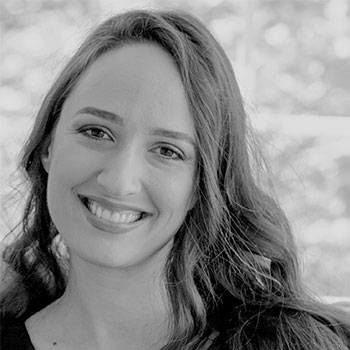
Kathleen Milani
Questioning Belief Podcast Host, CSLIKathleen Milani, Ph.D, is host of the Questioning Belief podcast. She is a leading Computational Biologist and specializes in cancer research. Kathleen completed her undergraduate studies in Biomedical Engineering at Columbia University, where her academic journey laid the foundation for her career as a scientist. She holds a PhD from Johns Hopkins University and is passionate about medical research. Kathleen is also a dedicated wife and mother to a one-year-old, balancing her professional achievements with the joys of family life.