Back to series


CHAPTER 1
Who Is God?
The LORD, the LORD, a God merciful and gracious, slow to anger, and abounding in steadfast love and faithfulness. Exodus 34:6
One might expect a book on discipleship to begin with Jesus after all, it’s His disciples that Christians claim to be. But rather than starting with Jesus and God’s kingdom, we will begin at a more basic place. We will first ask: Who is God? This will give us a framework for understanding God’s kingdom and the all-important ministry and mission of Jesus.
This is necessary because in much of the world today, a great inversion has occurred. In the West, for instance, the Enlightenment’s revolt against God has given us a new normal, one described long ago by a Greek philosopher named Protagoras: “Man is the measure of all things.”1 Or, as a recent writer has put it, for some, “People are big, and God is small.”2 Postmodernism has only made matters worse. And sadly, this attitude is not unique to the contemporary West; people of all cultures and from all regions of the globe exalt themselves over God. This skewed view of reality exerts a pervasive and powerful influence on our world. The church is not immune to this influence; many believers have unknowingly absorbed elements of it. Day in and day out, we rely much more on our own wit and wisdom than on God. As C. S. Lewis observed in The Problem of Pain, “We regard God as an airman regards his parachute; it’s there for emergencies but he hopes he will never have to use it.”3
The more we focus on ourselves, the less we attend to God. As a result, many no longer have even the most basic sense of who He is. Author George Orwell’s observation about his day does not seem far from the truth about our own: “We have now sunk to a depth at which restatement of the obvious is the first duty of intelligent men.”4 And even more so of intelligent believers.
The Root of the Problem
Not knowing the true God lies at the root of the problems that beset our personal lives, the church, and the culture indeed, the whole world. Thus, the greatest need of every believer (and nonbeliever) today is to recover and maintain a right view of God. We receive this right view from the teaching of Scripture illuminated by God’s Spirit.
Everything else flows from this. As the pastor and spiritual writer A. W. Tozer wisely said, “What comes into our minds when we think about God is the most important thing about us.” This is so, says Tozer, because “we tend by a secret law of the soul to move toward our mental image of God. This is true not only of the individual Christian, but of the company of Christians that composes the Church.”5
Distorted views of God influence today’s church in significant and tragic ways. What Richard Niebuhr observed in the 1930s about “a God without wrath, who brings a man without sin, into a Kingdom without judgment, through the ministrations of a Christ without a cross”6 has returned.
One example that’s popular in parts of the American church has been summarized as follows:
- A God exists who created and orders the world and watches over human life on earth.
- God wants people to be good, nice, and fair to each other, as taught in the Bible and by most world religions.
- The central goal of life is to be happy and to feel good about oneself.
- God does not need to be particularly involved in one’s life except when [one needs God] to resolve a problem.
- Good people go to heaven when they die.7
People who adhere to this worldview don’t recognize the non-Christian ideas it contains; they simply think of themselves as Christians. But they have imported a very particular view of God into Christianity, and it isn’t one that stands up to testing when we dive into God’s Word.
Such a reductionist and human-centered view of God feels very comfortable and easy to live with. It makes no real demands, entails no cost, and allows one to live as one pleases with no concern about sin or accountability to God (and therefore no serious concern about forgiveness and reconciliation with God). This recently invented “god” is certainly not the God of the Bible, and adopting this viewpoint has the deadly effect of keeping people from the true God and the salvation He offers in Jesus Christ. To be sure, this new god has risen to some fame in the so-called “marketplace of religion.” But the critical question is never what is fashionable. Rather, it is this: What is true? We must resist popular fashions, which regularly come and go, and anchor ourselves to the unchanging truths of God’s Word, the Bible, which endures forever (Isa. 40:8; Matt. 24:35; 1 Pet. 1:24–25).
The Bible portrays God as the benevolent Creator and sovereign Ruler of the universe, a good, loving, and holy Being who created the heavens and earth and rules over them as King. He is all-knowing, all-wise, all-powerful, and eternal, and His character does not change. Clothed in majesty and splendor, He is worshipped by a vast company of angels—an army of powerful supernatural beings who number in the millions and carry out the Lord of Heaven’s commands (Dan. 7:10, Rev. 5:11).

God created human beings in His own image to reflect His benevolent character and to be vice-regents—to share in governing—over His creation. But these first humans rebelled against Him, and their rebellion corrupted His kingdom (for the fuller story, see the first three chapters of the book of Genesis). As amazing as it may seem, God still loves His wayward creatures and offers them pardon and redemption if they will return to Him—unthinkable, except for the fact that God is gracious and deals with people on the basis of grace.
Through Jesus, His Son and Redeemer, God shows people kindness and favor that they do not deserve and could never earn. As more and more people enter God’s kingdom, His creation moves toward the return of Christ and a glorious restoration in the new heavens and new earth (see Isa. 65:17; Rev. 21:1). Like a four-part novel, Scripture’s account of humankind’s creation, fall, redemption, and restoration tells the story of God’s great work in this world and the world to come.
As we seek to better know this awe-inspiring God, we need humility, because He is infinite and we are finite; He is holy and we are unholy; and our sin hides Him from our sight. Yet, although we can never comprehend Him fully, we can indeed know Him personally and in ever-deeper ways, and that is what He desires.
To that end, we will look briefly in this chapter at two of God’s most fundamental attributes: His holiness and His love. I hope this glimpse will inspire you to seek a deeper understanding of His other attributes. You can do that both by studying Scripture and by reading good books on these topics. And I encourage you to do so prayerfully, for getting to know God means more than just learning things about Him. It is more than simply giving assent to a set of rational propositions, no matter how biblically sound they may be. It means seeking a true relationship with Him, the One who loves you and gave His Son for you (Eph. 5:2; Gal. 2:20).
Before going further, we need to pause and ask: How it is that we can know God in the first place? The answer is simple: human beings cannot know God at all unless He chooses to reveal Himself. “If God is to be known by man,” wrote biblical scholar R. T. France, “it will be on God’s terms, and in God’s chosen way. It is He who must take the initiative.”8 And when God takes the initiative, He does so in a personal way. France says it well: “The knowledge of God begins and ends in personal encounter with the living God. He does not send messages from outer space, but meets His people in a living, and sometimes disconcerting, relationship.”9 The knowledge God shares with us is not simply knowledge about Himself but knowledge of Himself.
Human beings today initially experience such a personal encounter with God when, through the gospel message found in His written Word, He opens our minds and hearts to His Son—Jesus, the Living Word. Jesus said it this way: “I am the way, and the truth, and the life. No one comes to the Father except through me” (John 14:6). Or, to say it in a slightly different way, we meet the Living Word through hearing God’s written Word, inwardly illuminated by the Holy Spirit. This encounter opens the door to a life of communion with God—Father, Son, and Holy Spirit—which deepens as we walk with Him in faith and obedience.
God’s written Word is the chief instrument through which the Spirit works in our lives. This written Word, sometimes called “Scripture” or the “Bible,” was produced by men God chose, enabled, and inspired to accurately communicate what He desired to reveal about His nature, character, plans, purposes, and actions. In spite of differences in background, education, status, personality, and temperament, these men all said what God wanted them to say. When we step back for a moment and consider that God is the Creator of heaven and earth and all they contain, and that He raised Jesus from the grave, it is not difficult to believe that He could do whatever was necessary to produce people who would write what He wished to be written. Therefore, we can confidently affirm that what Scripture says, God says. And whatever God says should undoubtedly be the supreme rule of our lives.
Jesus and His apostles confirmed the divine origin and central importance of God’s Word. Jesus regularly quoted the Scriptures and unequivocally held that they were the Word of God (Matt. 5:19) and could not be broken (John 10:35). He said that the words He spoke were given to Him by God (John 12:49), and He promised that after His departure the Holy Spirit would continue to teach His apostles and help them to remember all that He had taught them (John 14:24–26). Paul, for example, reminds Timothy that he came to know God through “the sacred writings, which are able to make you wise for salvation through faith in Jesus Christ. All Scripture is breathed out by God and profitable for teaching, for reproof, for correction, and for training in righteousness” (2 Tim. 3:15–16). And Peter tells us that “no prophecy of Scripture comes from someone’s own interpretation. For no prophecy was ever produced by the will of man, but men spoke from God as they were carried along by the Holy Spirit” (2 Pet. 1:20–21). Peter also recognized the writings of Paul as Holy Scripture (2 Pet. 3:15–16). All these testimonies and more provide support for our confidence in the complete truthfulness and full trustworthiness of the Scriptures; it is the essential foundation for our lives. And this confidence is affirmed to us inwardly by the Holy Spirit.
Even though God’s Word has been under relentless attack since the Garden of Eden, godly scholars continue to defend and demonstrate that it is completely trustworthy and deserving of full acceptance. Most important of all, as we will see ahead, is the fact that Jesus believed that Scripture is the Word of God. And as His followers we accept His verdict, for He cannot err. (For more, see some of the excellent resources that uphold the inspiration and authority of the Bible.10)
God Is Holy
Two stories from the life of Moses give us a helpful starting point for understanding the holiness of God. Moses, who wrote the first five books of the Bible (that is, Genesis to Deuteronomy), was the greatest prophet and leader in ancient Israel. But why begin with Moses and the Old Testament? Because before Christ came, God revealed Himself most intimately to Moses, for “the Lord used to speak to Moses face to face, as a man speaks with his friend” (Exod. 33:11). God’s dealings with Moses as recorded in Scripture still contain valuable lessons for us today (see Rom. 15:4).
Before looking at these stories in detail, it’s helpful to pause and consider that apart from general conclusions from observing nature, our own unaided efforts will not result in the discovery of anything true about God. Everything we know of Him, we know because He chose to reveal Himself to us (see R. T. France’s statement above).
Following Jesus Christ
One of the most striking moments in the Old Testament is when God chooses to reveal Himself to Moses as he stands before a burning bush. In the third chapter of Exodus, we read that one day, as Moses shepherded sheep in the desert, God changed his life. Moses was not seeking God, but God was seeking him. In an act of pure grace, God took the initiative and revealed Himself to Moses in an unexpected and extraordinary way. Moses saw a burning bush, unconsumed by flames, and approached it to investigate.
Out of the flames, God spoke: “Moses, Moses!” “Here I am,” Moses replied. “Do not come near,” God said. “Take your sandals off your feet, for the place on which you are standing is holy ground” (Exod. 3:4–5).
In this dramatic encounter, God immediately announced His holiness, lest Moses come too close. The Bible emphasizes God’s holiness as one of His key attributes and one of its central themes. The terrified Moses hid his eyes. God then commissioned Moses to deliver the Israelites from bondage in Egypt. The Lord would graciously take the initiative to rescue a people who did not deserve His help (as the unfolding story starkly demonstrates). This encounter begins a long journey in which Moses comes to know this holy God personally and ever more deeply.
What Is God’s Holiness?
“Holiness” is not a word that we often use outside the context of a church. What does it mean for God to be “holy”? In the Old Testament, the English word “holy” is a translation of the Hebrew word qadosh, which stresses separateness and also moral purity.
The holiness of God refers to His being “wholly other,” set apart and separated from the created order which He has made. God’s holiness also includes His absolute moral purity and perfection in every aspect of His being. When the seraphim declare “Holy, holy, holy is the Lord of hosts” (Isa. 6:3), they are emphasizing by their threefold repetition that God’s holiness is the essence of His being. Because of God’s holiness, even the ground becomes holy in His presence. This is why Moses had to remove his sandals before God (Exod. 3:5), a sign of respect and even worship. Places, physical objects, and people also become holy when they are devoted to God.
Moses’ encounter with God’s blazing holiness made a profound impact on him, one that would powerfully shape his life and produce a deep, lasting humility—so deep that we learn “the man Moses was very meek, more than all people who were on the face of the earth” (Num. 12:3). The impact of God’s holiness becomes clear when we hear Moses exclaim, “Who is like you, O Lord, among the gods? Who is like you, majestic in holiness, awesome in glorious deeds, doing wonders?” (Exod. 15:11).
Knowing God More Deeply
Moses’ encounter and growing relationship with God inspired in him (as it should in us) profound awe, reverence, and a deep desire to know God more intimately. No matter where you are with God, there is always more!
After Moses led the people of Israel out of Egypt, delivering them from lives of slavery and hard labor, God summoned him to Mount Sinai to receive the terms of God’s covenant with the Israelites. Here Moses prayed, “Please show me your glory” (Exod. 33:18). God’s response represents the high point in His self-revelation in the Old Testament. “I will make all my goodness pass before you and will proclaim before you my name … But,” God said, “you cannot see my face, for man shall not see me and live.” God therefore declared to Moses,

“I will cover you with my hand until I have passed by. Then I will take away my hand, and you shall see my back, but my face shall not be seen” (vv. 19–23). Because it pleased God to see Moses’ desire to know Him more intimately, He granted Moses’ prayer. Listen to how the Lord describes Himself:
The Lord passed before [Moses] and proclaimed, “The Lord, the Lord, a God merciful and gracious, slow to anger, and abounding in steadfast love and faithfulness, keeping steadfast love for thousands, forgiving iniquity and transgression and sin, but who will by no means clear the guilty, visiting the iniquity of the fathers on the children and the children’s children, to the third and the fourth generation.” (Exod. 34:6–7)
This deeper revelation of God’s attributes and disposition toward human beings shows that God’s holiness and love are inextricably bound up with one another. We see this in words such as “merciful, gracious, slow to anger,” “abounding in steadfast love and faithfulness,” “forgiving … sin.” Only after those words does He add that He “will by no means clear the guilty” (those who reject Him and continue in their rebellion and sin) but will visit “the iniquity of the fathers” on their children and grandchildren.
With these words to Moses, which were then written down for all God’s people to hear, God shows that His inmost being is holy love. For that reason, these words became the classic description of God in the Old Testament, reappearing over the centuries in several important passages (for example, in Num. 14:18; Neh. 9:17, 31; Ps. 86:15; 103:8; 145:8; Jonah 4:2; Joel 2:13). This is also how Jesus and the writers of the New Testament saw God and why they called people to love Him in response (Mark 12:28–34; Rom. 13:8–10; Gal. 5:6, 13–14; 1 John 4:7–12). It has provided a bedrock for God’s people over the centuries.
When we look more closely at how God described Himself to Moses, a beautiful picture emerges—one that can enrich our relationship with God. Hebrew scholar Douglas Stuart helps us discern the nuances of Exodus 34:6–7:
The first attribute of Yahweh listed is that he is a “compassionate” [ESV: “merciful”] God, meaning that he genuinely cares about humans and holds toward them a tender attitude of concern and mercy. Second, he called himself “gracious,” meaning that he does things for people they do not deserve and goes beyond what might be expected to grant truly kind favor toward people, favor of which they are not necessarily worthy.11
Grasping these two characteristics of God’s character is essential for appreciating the next two:
Third, he described himself as “slow to anger,” meaning that his patience with people’s less-than-satisfactory behavior and/or failures in any realm, including the moral, is very great. Fourth, he declared himself to be “abounding” (lit., great) in covenant “love.”12
Twice in verse 6, God’s “steadfast love” is highlighted. Stuart notes that the term used here in Hebrew, hesed, “connotes long-term, reliable loyalty of one member of a covenant relationship to another.”13 What does this mean for you and me, and indeed for all of God’s people throughout history? As Stuart puts it, “However fickle and unreliable humans may be in their relationship to God, he is nothing of the sort but can be counted on in every situation and at all times to be completely faithful to his promises for his people.” And, finally, Stuart points out: “Next [God] described himself as ‘[abounding in] truth,’ meaning that whatever he says is correct and reliable and may be trusted even to the extent of life and death issues, or indeed eternal life and death issues.”14 Keeping steadfast love for “thousands” could mean for thousands of persons, but here it’s more likely that it means thousands of generations. This statement assures us that God will not forsake His people as long as they do not abandon Him and give themselves over to evil that demands punishment.
God’s self-description as “forgiving iniquity and transgression and sin” (v. 7) emphasizes that His forgiveness encompasses the full range of human sin. Unfortunately, however, the distorted views many people have of God prompt them to reject Him. One popular justification for this rejection focuses on God’s wrath and judgment of sin. The idea of God expressing righteous indignation or sitting in righteous judgment offends the modern mind and causes some people to view God as an arbitrary, capricious, and vindictive tyrant. Our permissive, “nonjudgmental” culture finds it hard to grasp how God could be truly loving yet render judgment upon people for their sinful behavior “so long as they aren’t hurting anyone else.”
“Who does God think He is to judge me?” people ask. Or “How could a good God judge basically good people? Doesn’t God say He
wants me to forgive other people? So why can’t He just forgive all of us for any kind of sin we commit?”
Ignorance of the true nature of sin is part of the problem here. So, a brief description of sin may provide important perspective, for, as Romans 3:23 tells us, all of us have sinned. Well-respected author and theologian J. I. Packer defines sin like this:
Scripture diagnoses sin as a universal deformity of human nature, found at every point in every person. Both Testaments have names for it that display its ethical character as rebellion against God’s rule, missing the mark God set us to aim at, transgressing God’s law, disobeying God’s directives, offending God’s purity by defiling oneself, and incurring guilt before God the Judge.15
None of us can escape the fact of our sin. And sin is something that occurs in the context of our relationship with God. Packer goes on to say: “The root of sin is pride and enmity against God, the spirit seen in Adam’s first transgression; and sinful acts always have behind them thoughts, motives, and desires that one way or another express the willful opposition of the fallen heart to God’s claims on our lives.”16 So, the first appropriate response to those who challenge God’s right to judge them is to point out that God is the Creator and righteous Judge of all the earth and that everyone must one day give an account of their life to Him.
But even more importantly, we must always see God’s judgment against the backdrop of His holiness—His absolute moral purity and perfect justice, which requires punishment of unrepented sin. If God were to ignore moral evil, He would deny His very nature. God’s wrath against sin is not an arbitrary, capricious expression of bad temper such as humans often display. Rather, it is the reaction of a holy, loving God against persistent and outrageous moral evil in His world. And it expresses His determination to ensure that justice is ultimately done, that the scales are ultimately balanced, either in this life or at the final judgment.
Because God is holy love, we also must see His judgment in the light of His love. This highlights one of the central issues in the drama of human existence: human freedom. God loves His creatures and desires that they love Him in return. But He does not compel such love; it must be freely given. To make that possible, God gave human beings the power of moral choice, and with that power came the possibility to choose not only good but evil.
When people choose to sin and violate God’s laws, they offend Him. He responds first not with punishment, but with grace and mercy. He seeks to warn people and call them to repentance to turn back to Him as He did repeatedly with both Israel and Judah (2 Kings 17:6–23; 2 Chron. 36:15). He is patient and will use the gentlest means possible to bring people to repentance. However, if they ignore His repeated calls to repent and continue in deliberate, willful sin, God will let them have what they want—and with it, the consequences of their rebellion. C. S. Lewis puts it this way: “There are only two kinds of people in the end: those who say to God, ‘Thy will be done,’ and those to whom God says in the end, ‘Thy will be done.’ All that are in hell choose it.”17
God’s Holy Love
As we grapple with these issues, we must never let the reality of God’s holy judgment obscure the reality of God’s holy love. God is good and takes pleasure in blessing His creatures, not in punishing them. He is a God of grace, delighting to pour His undeserved kindness upon us when we deserve just the opposite.
Scripture assures us that “the Lord is good; his steadfast love [hesed] endures forever, and his faithfulness to all generations” (Ps.100:5). He does good to all: “[Your Father] makes his sun rise on the evil and on the good, and sends rain on the just and on the unjust” (Matt. 5:45). God would rather show mercy than bring judgment: “Have I any pleasure in the death of the wicked, declares the Lord God, and not rather that he should turn from his way and live?” (Ezek.18:23). But God must punish sin. From a human point of view, God’s love and His justice seem to be irreconcilably in conflict. But both exist in God without conflict and, in fact, reveal His glorious character.
A vital aspect of God’s glorious character that we must grasp is His fatherly love for His children (1 John 3:1). God’s love and grace moved Him to take the initiative, at high cost to Himself, to rescue us when we were helplessly lost in sin, condemned, and could do nothing to save ourselves. No amount of our own obedience, good works, or sacrifice could erase our sins or make us right with God. But because the life of the sinless Son of God had infinite value, His death for us could atone for the sins of all who turn to Him seeking forgiveness and reconciliation with God.
In His holy and fatherly love, God sent Jesus, His only Son, to take on human flesh, live a sinless life, and willingly offer Himself as a sacrifice to pay the debt of our sin and bring us into His family as adopted sons and daughters (John 3:16; 10:7–18; Gal. 4:5; Eph.1:5; 1 John 4:9–10). And so, God’s justice and His love meet in the cross of Christ, where God punishes sin and visits that justice not upon us but upon His Son. Only through God’s Son can we come to know God.

A supposedly true story about a Native American chief and a chicken thief has helped some people better grasp the atoning death of Jesus. During a long drought, an unknown member of a tribe began to steal chickens from others, putting the survival of the tribe at risk. The chief decreed that anyone caught stealing a chicken would be tied to a post and lashed twenty-five times. The thief was undeterred, and chickens continued to disappear. The chief then increased the punishment to fifty lashes, but still to no effect. Finally, the penalty was increased to one hundred lashes, a number no one could survive. Eventually, the thief was discovered the chief’s own mother.
The chief now faced an impossible dilemma. While he loved his mother deeply, he also had to enforce justice in the tribe. When the fateful day arrived, the chief’s mother was led to the whipping post, where her arms were tied around it securely. A strong brave with a whip stood ready to carry out the chief’s order. The eyes of all the tribe fixed on the chief as they waited for his signal to begin the lashing. But to the surprise of all, he removed his shirt, walked to the whipping post, placed his arms around his mother, and ordered the whipping to begin. He took upon himself the punishment his mother deserved, paying the full penalty she deserved. Then, he collapsed and died from the beating.18
This example gives us a picture of how God’s justice and His love for sinners are satisfied through the death of Jesus on the cross. (It is an imperfect analogy, of course, because the chief might not have made the penalty so great had he known his mother was the offender. But God knew the full extent of our sin and imposed its full penalty on Jesus.)
The Amazing Love of Jesus
“Whoever has seen me,” Jesus said, “has seen the Father” (John 14:9). Jesus perfectly reflected His Father’s nature: “merciful and gracious, slow to anger, and abounding in steadfast love and faithfulness” (Exod. 34:6).
God’s love and grace shine as a bright light in the darkness of this fallen world through the life, death, and resurrection of Jesus. He is the light of the world (John 8:12), full of grace and truth, the One who came into the world as God’s Suffering Servant—“not to be served but to serve, and to give his life as a ransom for many” (Mark 10:45).
Day after day, Jesus went forth to seek and save the lost (Luke 19:10). And as He went, He was merciful and compassionate to all who sought His help, healing the sick, restoring sight to the blind, feeding the hungry, comforting the brokenhearted, delivering the demonized, teaching life-changing truth, and offering hope for the world to come. He became known as “the friend of sinners,”19 reaching out in love to those rejected by proper society. Finally, for us and for our salvation, He took upon Himself the shame, humiliation, and excruciating pain of death on the cross to reconcile us to the Father and bring us into His family. Today, anyone who wants to know God personally can do so through Jesus, for He is “the way, and the truth, and the life.” He clearly says that “no one comes to the Father except through me” (John 14:6) and “whoever comes to me I will never cast out” (John 6:37). In all that Jesus said and did, we see the invisible God and His grace demonstrated concretely. With this overarching perspective in mind, we turn in the next chapter to the nature and character of Jesus Himself.
Questions to Ponder
- Name some examples of how a person’s view of God can affect his or her day-to-day experience. How do you typically think of God throughout the day?
- What difference does your view of God make for your prayer life? When you pray, which do you tend to be more aware of—God’s holiness or God’s love?
- Exodus 34:6–7 is a critical passage for understanding who God is because God defines Himself in this text. What did you learn about God from reflecting on Moses’ encounter with Him?
- How does the biblical view of love and holiness compare and contrast with the most common assumptions about love and holiness in your current cultural setting?
- What are some views of God that you formerly had but you have now rejected or reshaped in alignment with biblical teaching?
The Knowledge of the Holy
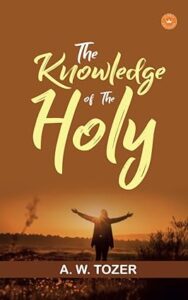
The Knowledge of the Holy A.W. Tozer's The Knowledge of the Holy is a profound exploration of God's attributes, inviting readers to a deeper understanding and appreciation of the divine.
Delighting In the Trinity: An Introduction to the Christian Faith

Delighting in the Trinity by Michael Reeves is a classic introduction to the heart of the Christian faith―our triune God. Drawing from centuries of church history up to the present, Reeves explores how the doctrine of the Trinity isn't just a theological concept but the foundation of our intimate relationship with God.
Thomas A. Tarrants
Thomas A. Tarrants is President Emeritus of the C.S. Lewis Institute. After serving twelve years as president and nine years as vice President, he retired from his position as Vice President for Ministry and Director, Washington Area Fellows Program, with CSLI in June 2019. He holds a Master's of Divinity Degree, as well as a Doctor of Ministry Degree in Christian Spirituality. Tom is an ordained minister in the Evangelical Church Alliance and a member of the Evangelical Theological Society. He spends his time writing, mentoring, consulting and traveling. His life story is told in Consumed by Hate, Redeemed by Love, published by Thomas Nelson Publishers.