

Back to series
Why Work?
DOROTHY SAYERS
I have already, on a previous occasion, spoken at some length on the subject of Work and Vocation. What I urged then was a thoroughgoing revolution in our whole attitude to work. I asked that it should be looked upon, not as a necessary drudgery to be undergone for the purpose of making money, but as a way of life in which the nature of man should find its proper exercise and delight and so fulfill itself to the glory of God. That it should, in fact, be thought of as a creative activity undertaken for the love of the work itself; and that man, made in God’s image, should make things, as God makes them, for the sake of doing well a thing that is well worth doing.
It may well seem to you – as it does to some of my acquaintances – that I have a sort of obsession about this business of the right attitude to work. But I do insist upon it, because it seems to me that what becomes of civilization after this war is going to depend enormously on our being able to effect this revolution in our ideas about work. Unless we do change our whole way of thought about work, I do not think we shall ever escape from the appalling squirrel cage of economic confusion in which we have been madly turning for the last three centuries or so, the cage in which we landed ourselves by acquiescing in a social system based upon Envy and Avarice. . .
Click here to read the full article (Read PDF).
Dorothy Sayers
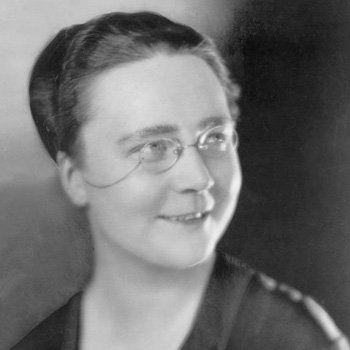
AuthorDorothy Sayers, Author, (1893–1957) was an English crime writer and poet. She was also a student of classical and modern languages. In 1915, she became one of the first women to get a degree from Oxford. She completed her MA in 1920. She is best known for her mysteries, a series of novels and short stories set between the First and Second World Wars. During later years, Sayers turned to religious writing which included The Mind of the Maker and Creed or Chaos. She wrote many educational and religious essays including The Lost Tools of Learning. Sayer’s philosophy about her life she expressed in these words: "The only Christian work is good work, well done".
Notice: This material is made available for limited use to participants of the C.S. Lewis Institute Fellows programs. Please do not reproduce any of the materials in the Fellows Resources other than for your personal use.
-
Recent Podcasts
Intellectual Property: Creativity and Ownership in Law and the Bible
by Kathleen Noller, James Edwards on April 17, 2026James R. Edwards discusses the impact of classical...Read More
-
Looking at Life Through Bifocals message
by Barbara Bradley Hagerty, Aimee Riegert on April 17, 2026
-
A Skeptic Reconsiders God – Chris Wright’s Story
by Jana Harmon, Chris Wright on April 10, 2026
-
Recent Publications
Celebrating Fifty Years of Heart and Mind Discipleship: A Brief History of the C.S. Lewis Institute
by J. Edward Glancy, Joel Woodruff on April 16, 2026The C.S. Lewis Institute (CSLI) was founded in...Read More
-
Why Do We Need Disagreement?
by Cameron McAllister on April 1, 2026
-
The Christian Vision of Meaning
by Cameron McAllister on March 15, 2026
1
All Booked
All Booked
All Booked
27979
GLOBAL EVENT: Finding Meaning In A Confused Culture with Cameron McAllister
https://www.cslewisinstitute.org/?event=global-event-finding-meaning-in-a-confused-culture&event_date=2026-05-08®=1
https://www.paypal.com/cgi-bin/webscr
2026-05-08
Next coming event
Days
Hours
Minutes
Seconds
GLOBAL EVENT: Finding Meaning In A Confused Culture with Cameron McAllister
On May 8, 2026 at 8:00 pmCategories
Speakers
Dorothy Sayers
Author
Team Members
Dorothy Sayers
AuthorDorothy Sayers, Author, (1893–1957) was an English crime writer and poet. She was also a student of classical and modern languages. In 1915, she became one of the first women to get a degree from Oxford. She completed her MA in 1920. She is best known for her mysteries, a series of novels and short stories set between the First and Second World Wars. During later years, Sayers turned to religious writing which included The Mind of the Maker and Creed or Chaos. She wrote many educational and religious essays including The Lost Tools of Learning. Sayer’s philosophy about her life she expressed in these words: "The only Christian work is good work, well done".