



Back to series



Cosmic Chemistry: Do God and Science Mix?
VOLUME 10 NUMBER 3 ISSUE OF BROADCAST TALKS (PDF)
BROADCAST TALKS presents ideas to cultivate Christ-like thinking and living. Each issue features a transcription of a talk presented at an event of The C.S. Lewis Institute.
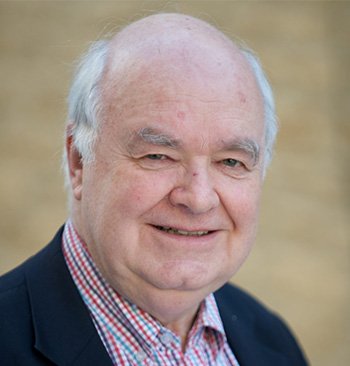
The following is adapted from an interview with John Lennox, conducted by Joel Woodruff, President of the C.S. Lewis Institute. It was broadcast on October 21, 2022, as a virtual event titled “Cosmic Chemistry: Do God and Science Mix?”, having been recorded in April 2022.
John, in your book Cosmic Chemistry: Do God and Science Mix?, you note that Aristotle is reputed to have said, “In order to succeed, we must ask the right questions.” So, when navigating the issue of God and science, what are some of the important questions you think we should be asking and why?
Aristotle was a very clever and wise man. I often say that I’m kind of an Aristotle. If we want to succeed, we should ask questions. And Aristotle’s contemporary, Socrates, was famous for asking questions. I think all of us want to know what is behind the universe. What is reality? Is there ultimate reality? Who am I, really, and how do I fit into the world? For me, being interested in science, I wanted to know, even from childhood, how much does science tell us about reality? Does it tell us everything or not? If it doesn’t tell us everything, as I very soon began to see it didn’t, how does it fit into that bigger picture? How does it, in short, help me form my worldview, my set of answers to the big questions?
I suppose the flip side of Aristotle is that all of us have a worldview. We all have a set of answers, whether they’re thought out or just forming, as to how we face the big matters of life and death and reality, the universe and God and so on. We can discover some of the best questions by asking children. Who am I? Where do I come from? Where am I going? Is there meaning to life? And so on.
These are important questions. It is interesting that children sometimes can get really to the core and to the essence of the questions we’re all asking. Before we jump into some of those questions, there are a few words or terms it would be helpful to define as we think about them. A couple of terms. One would be science—what is science?
The moment someone asks me that question, I am reminded of Augustine, who said, “We all know what time is until we’re asked to define it.” And science is difficult to define. It used to be that people would say that science is a dispassionate investigation of the natural world, where we use various methods, first of all, experimentation. We form a hypothesis, we then test it on what we can observe, and then we refine it, and we develop it into a theory, and further tests lead to further refinement. And all of those ideas are good. They’re associated with science. But getting a sharp definition is something that philosophers of science have given up a long time ago, and they’re more modest now.
They speak of ideas that are associated with science, like the ones I’ve mentioned. And I suppose we can split them into two. There’s what we call inductive science that we are familiar with from school, where we do experiments that are repeatable; we can ask people at any point in the world at any time to do them, and we’d get the same results.
But then there’s what we call abductive science. Abduction is not a familiar word. Inference, the best explanation, is possibly better. And we’re very familiar with it, especially if we like Agatha Christie and Inspector Morse, because forensic science is like that. You can’t repeat a murder to see what happens, but you can use inferences. Hercule Poirot looks at the situation, and he sees a murder has been committed, and he says, “Well, of course, if so and so did it, then we’d expect such and such to happen, and it did happen. But we’d also expect something else to happen which didn’t happen. On the other hand, if this second person did it, both of those things would have happened.” And so the evidence builds up, and you get what’s called an inference to the best explanation. We use that all the time in forensic science. We use it in history, and we use it in natural science because a large part, or at least a very interesting part of natural science has to do with unrepeatable past events like the origin of the universe, the origin of life, and so on.
So we use these two methods. Inductive, which has obviously higher authority than abductive. But we use both of them to establish things, and we hope in that case, to prove them beyond reasonable doubt. That really is inference, the best explanation.
That’s very helpful, to look at these two approaches to science. In Christian terms, we might talk about the idea of finding truth. From a naturalistic worldview, would people also use that word—truth? Maybe it leads to the question. What is truth?
If they don’t use the word truth, they should. Because, you see, there are very few natural scientists who are relativist or postmodern and saying there’s no such thing as truth, at least in science. That’s because the whole presupposition is that science is worth doing because there’s truth out there that can be accessed. Now, the great scientists will tell you that there’s no absolute certainty, but science is worth doing because we can access enough and be certain of it enough to make real progress. So it is felt that Newton accessed a great deal of truth, but he didn’t get quite as close to it as Einstein did, and so on. There is that presupposition on the part of the vast majority of scientists. As a friend of mine put it, people are relativists only in areas they don’t deem important. You will see that very easily; if you criticize a scientist and say, “Your results are not true,” you would see whether or not he believes in truth.
That’s a good test right there, isn’t it? You mentioned that even in forensic science we don’t always have absolute certainty. What role would you say the term faith . . . how does that bear on both science and religion, whether you’re a naturalist or a theist? What does the word faith mean in this discussion?
This is the most important question actually, and you’re hitting it at exactly the right point, because often people today, particularly on the influence of the men such as Dawkins and Hitchens feel that faith is a religious word, and it means believing where there’s no evidence. Now, that is false, twice false so to speak, because faith is an ordinary word, and it comes from a Latin word, fides, from which we get fidelity. And it conveys trust, confidence, evidence-based belief. So what I want to say is two things: First, science and faith in that sense are intimately bound up together. The scientist has a credo, things that she believes, and one of those things, the central thing perhaps, is that the universe is rationally intelligible. That is, we can understand it, at least in part, with the human mind.
And Albert Einstein once said he could not imagine a genuine scientist without that faith. He used the word faith. He was not talking about faith in God. He was talking about the faith that you need to do science at all. You need to believe, simply put, that science can be done. In other words, you need to believe that human reason can penetrate and understand what’s going on out there.
So that is the fundamental faith of scientists. For me, that’s a very important thing to observe. It doesn’t sit in contradiction with faith in God. In fact, I’m quite provocative in my book. I say faith in God and faith in science sit very comfortably together. But it’s faith in science and atheism that do not sit comfortably together.
I’m not a scientist, but I was a history major in college and always found it helpful to understand the history of thought around a particular issue. In reading some of the popular publications and scholarly works, it might appear that modern science rose to prominence out of a naturalistic worldview. Is that true? If not, what are the roots of modern science?
Interestingly, it isn’t true, although many people believe it. The roots of modern science . . . and history are hugely important; in fact, history is one of the supreme areas where abductive thinking is used. So we scientists often speak of historical science when we’re talking about the past. One of the things I learned very early on—and I learned it from C.S. Lewis—was the fact—and I quote him here—that “men became scientific because they expected Law in Nature, and they expected Law in Nature because they believed in a Legislator.” This is the very interesting observable fact, that if you start, say, with Galileo and move on to Kepler, Newton, James Clerk Maxwell, Faraday, and a large number of the pioneers of modern science, they all believed in God. That is no accident. It has been observed, studied, and there appears to be a very close connection between the biblical worldview that prevailed at that time, in the 16th and 17th centuries, particularly in Europe, and was the foundation.
The reason is fairly obvious. In fact, there are several reasons. First, belief in a rational, intelligent God as Creator legitimized doing science. Those who accepted the Bible could read on page 2 that God told the first humans to name the animals. Of course, the significance of that is obvious. Taxonomy is the basic scientific discipline, naming things. So there is God, encouraging biology to be done, a thing many people have missed. But the notion of intelligent Creator and doing science fit beautifully together.
Second, professor of science and religion in Oxford Peter Harrison, who is now back in Australia, a very distinguished historian of science, has developed a second thesis: alongside the biblical worldview of creation, the attitude of the Reformers claimed that, instead of applying fanciful, mystical theories to the biblical text and going to the text with their minds made up, they said, “What does this text say to us?” And that attitude came over into science, where people looked at the universe and said, look, we’re not going to make up our minds what it’s got to be like—as Aristotle, for example, suggested, that all perfection is circular, so the planets must move in circular orbits. No, we’ll go and look and see.
And Kepler was the man who made that breakthrough. He was trying desperately to fit the planets into circular orbits, and he was too good an observer to fudge it. In the end, he gave up and left the circles behind and looked to see what nature told him. Very rapidly he came to the conclusion that the planets moved in elliptical orbits, equally perfect, with the sun at one focus. This shows that that biblical worldview was crucial.
A third point, in fact, historically it was the second point, is that it was clear from the biblical record that the universe is contingent; that is, God could make it any way He liked. So if you want to find out, you just have to go and look. Again, that supported the observational, empirical, scientific inquiry.
It’s fascinating. I don’t think I’ve ever heard it put in that way, that even the approach to Scripture could have influenced the approach to studying the natural world—the idea that you could explore both from that biblical perspective. In thinking about it that way, how does theism impact one’s study of science today as a theist?
Often, when doing science, an atheist and a Christian will come to exactly the same conclusions, because a large proportion of particularly empirical science doesn’t involve worldview. For example, if you’re studying how the planets move, the issue of whether or not there’s a God behind the universe is not directly relevant. It’s when you come to the questions of origins that the God question comes up. That leads you into the more controversial aspects of the scientific inquiry, some of which I deal with in my book.
That gives me, as a theist, the justification I mentioned before, because the very fact I can do mathematics and that mathematics enables us to understand the universe is evidence to me that this is what I call a Word-based universe. And the fact that we can describe it in the sophisticated language of mathematics really resonates with that wonderful statement at the beginning of the Gospel of John, “In the beginning was the Word.” All things came to exist through the Word, which is what John says next. And the more simple language of Genesis: And God said, “Let there be light.” So that idea of a speaking intelligence, a creation through the word, resonates from two very big facts: One, that we can have scientific language at all and describe the universe in words, in various languages, including mathematics. And second, that, within biology, we discover that whatever else our nature tells us, the brilliant discovery of the genetic code shows us that words, the longest word we’ve ever discovered, is the human genome, with 3.4 billion letters in the right order. You might recall that when the decoding of it was announced by the president of the United States with Francis Collins, then the director of the Human Genome Project, this was said: “We see the language of God.” Francis Collins, who is a Christian, wrote a book with that title [The Language of God: A Scientist Presents Evidence for Belief]. So those connections resonate very strongly with me, whereas atheism doesn’t give us those kind of answers.
This whole idea that words can help us in discovering the world and this language-based study, the language of God—as a theist, it really is a wonderful pointer both to Scripture and the natural world and a great way to approach it. As for people who might be on the other side of the argument, a naturalist or materialist. Could you define—what is naturalism or materialism? How would they approach this argument? And what would you say the strengths or weaknesses of the naturalist or materialistic worldview are in relation to science?
Nature, again, is one of those things that’s not so easy to define. But generally speaking, a naturalist is someone who believes that what we informally understand as nature is all that exists. There’s no outside. There’s no transcendent dimension. Materialism is a narrower form of naturalism. Again, you’ll find that dictionaries of philosophy find it a little bit difficult to distinguish the two. And many scientists do not distinguish the two. But I would suggest that there are some naturalists that do not reduce mind to matter, though materialists will. Everything is just mass and energy. But what the two have in common is that they’re both atheist worldviews, so they are at the heart of humanism.
The whole debate is not a debate between science and God. It’s important to see that. A very simple example will show this. If you take the Nobel Prize for physics, the top prize in the world, and the various people who’ve won it . . . by the way, it’s very interesting. I discovered not so long ago that between 1900 and 2000, more than 65 percent of all Nobel Prize winners believed in God. That’s a surprising statistic.
But take two Nobel Prize winners. Peter Higgs in Scotland, a very pleasant atheist, predicted the existence of the Higgs boson particle. And one of your American physicists, William Phillips, famed for low-temperature physics, Nobel Prize. Science doesn’t divide those men. They’ve both won the top prize. But Bill Phillips is a believer, a Christian. Peter Higgs was an atheist. So it’s pretty obvious, just from that one example, that it’s not science against religion. What we’re talking about is the clash of worldviews. And you have put it well: It’s theism on the one hand and naturalism and materialism on the other hand. But the important thing to notice is there are scientists, even top scientists, Nobel Prize winners, on both sides.
And so that means, and I address this question in my new book Cosmic Chemistry, the real question to ask is which of those two worldviews sits best with science? Is it, as I would contend, theism, and as Newton and others I mentioned would contend? Or is it, as many atheists contend, atheism? I want to say you can settle that question only on the basis of evidence. I would emphasize again that most of science doesn’t raise this issue. If you’re talking about the heart, and you say, “What is the function of the left ventricle?” whether you believe in God or not is irrelevant at that point. And I certainly don’t use the Bible to teach algebra as a professor of mathematics.
But there are areas, particularly the big areas, where you’re talking about what we would call the metaphysical perspectives, the things that stand above the philosophical questions about science, what validates it, what validates the human mind, the rationality of the mind, studying it. That’s where the God question or the atheist question will come in straight away.
I think in some ways it’s shocking to hear that 65 percent of Nobel Prize winners in the sciences are believers or theists, because in the world today, at least from what a lot of the media portrays, you’d think that almost all scientists are atheists. It’s really good to get the proper perspective on that as well, because I think many people don’t know that.
That’s true, Joel. I think, though, it would be fair to say that, in the academy today, at that level, the number of atheists is very high. But against that it should be pointed out that, at the level of working scientists in the US, it’s very interesting because there was a survey done in 1914, first of all, and then just a few years ago, and one of the questions that was asked to working scientists, professional people, was, “Do you believe in a personal God?” Now, that’s a stronger question than, “Do you believe in God?” And in 1914, the Leuba survey, 42 percent said yes, they did. And by 1996, it had only moved by 2 percent, more than eighty years later. So the scientific community has very many more believers than most people think, as you say. In Oxford, there are several very distinguished heads of world-class scientific institutions who are very enthusiastic believers.
Well, I think you make a good point when it comes down to science. If I have a cardiologist checking out my heart, whether he’s a theist or an atheist, as long as he knows how to repair that heart and the science behind it, I’ll be happy, in that sense, that both could agree on how the heart works. Getting back to worldviews, some of the initial questions we discussed—the origins of the universe?, where do we come from?, how did we get here?—could you give a few examples from science that would, even from a forensic science perspective, give us a reasonable belief that there is an intelligent designer or Creator behind the universe, indicating that we’re not just here as a result of random molecules banging up against one another?
I would first cite physics, because it’s not so controversial. If you go to biology first, there’s a lot of controversy in the contemporary world, particularly in North America, about evolution and so on. But whatever evolution does or doesn’t do, it all depends on the fact that this universe appears to be what is called fine-tuned for life. That means that the fundamental constants of nature, these things that physicists talk about, have to fall into a very narrow range to have a universe on which carbon-based life is possible. The fine tuning is so clearly scientifically established that it demands an explanation. Of course, there’s a huge rush to give an explanation.
The late Stephen Hawking observed it, and he felt that he could solve it by coming up with the idea that the universe created itself from nothing. I’ve written a book about that, because I was just staggered at his statement. His statement goes like this: Because there is a law of gravity, the universe can and will create itself from nothing. I really have great respect for Hawking, a genius of a mathematician the late Stephen was. But the logic fled him when he made that statement. Because to say because there is a law like gravity, which is something, and then say the universe created itself from nothing is a flat contradiction in terms. But second, and even worse, logically the idea of something creating itself doesn’t make any sense at all. If I say that X creates Y, roughly speaking, it means if you got X, you might get Y; X would produce Y. But if I say that X creates itself, X, then I’m inclined to say that nonsense remains nonsense, even if very intelligent scientists talk it. What I find fascinating is the number of advanced cosmologists who retreat into this universe creating itself from nothing. It would appear that it’s—and forgive me if I’m wrong—but it seems to me a desperate flight into unreason to avoid the much simpler and more rational explanation that the fine tuning is the result of the universe having been created by an intelligence.
And there are some very leading physicists around, like my former teacher of quantum mechanics, professor Sir John Polkinghorne, who espoused this point of view. Therefore I would feel that that fine tuning, getting the universe just right . . . I can tell you a little story— I met in a debate a well-known atheist from Oxford who is a professor of philosophy. He invited me very kindly to address his students on the question of God and science. He warned me that the students were mostly atheists, and they would tear me apart. But he said, “I hope you will use the best argument there is for theism.” I said, “Well, I’d be delighted to use it if you tell me what you think it is.” And he said, fine tuning. He said, “If ever I were to become a Christian theist, it would be fine tuning that would be the thing that convinces me.”
But the interesting thing is, in the scientific world, very few people have questioned fine tuning. The late Victor Stenger was one of them. I had a confrontation with him on one occasion. But there’s a very brilliant Christian person who’s written, I think, the definitive book on it, Luke Barnes, an Australian cosmologist who is well worth reading. So I would start there.
If it comes to biology, I think that whatever we do or do not make of evolution—I discuss it a great deal in my book Cosmic Chemistry. (Since I wrote God’s Undertaker, out of which this book has arisen—it’s a complete rewrite—there have been huge developments in what’s called systems biology.) And what has been very interesting to me, as a nonbiologist, is to watch how the whole question of the adequacy of the Darwinian mechanisms of natural selection are being rapidly questioned and undermined—I mean to such an extent that the father of systems biology (whom I know in Oxford, professor Denis Noble, a genius, the first man to make a mathematical model of the beating heart) has publicly said that the neo-Darwinian synthesis does not need to be modified; it needs to be replaced.
And what they are coming up with is vast and mind-blowing levels of sophistication and complexity. The DNA is complex enough, as I mentioned earlier, but epigenetics shows many more levels of complexity. Although it’s not absolute proof—of course it isn’t—it sits in my mind as even stronger evidence of a mind behind the universe. One of my reasons for writing this book is to bring people up to date with what is going on, because it is very exciting what some of these scientists are saying now that they’re beginning to see that neo-Darwinism, it solved some simple problems. It told us a little bit about variation and why we look different and why different finches have different length beaks, but it doesn’t solve the ultimate problems.
And of course, whatever evolution does or doesn’t do, it doesn’t solve the central problem—the origin of life. Because of course life has to be there for evolution to get going. So evolution cannot explain it, which is again a point that has been missed for years; Richard Dawkins, he tended to obfuscate the two and say that Darwin’s mechanism was responsible, I quote, “for the existence and variation of all of life.” In the end, he had to retract that, and I’m glad he did.
It sounds like it all comes down to that question of what brought everything into existence and what is that origin. I remember, in classical philosophy we talked about the prime mover. I know that might not be the best way of looking at it, but there has to be something that always existed that created what we have today. It is interesting that you mentioned Hawking’s kind of irrational statement, that somehow this world came out of nothing because gravity is a law. It does seem as if theism offers a solution to that problem that certainly appears to be a better solution than what we’re getting from Hawking and some others.
When you think about the world today, it sounds as if there’s a lot happening in science and even in the discussion of evolution. I think most people, if you go to any university or public or private school, evolution is going to be taught as the standard approach to many things. And yet it seems there’s a groundswell of change going on in the scientific community. What do you see as opportunities for bringing about a change in the scientific community when looking at the origins of life? Are there things that might help people reconsider some of the ideas they’ve held so strongly for so long?
I see two main areas here, as I understand it. First, there’s systems biology and the so-called third wave of biology associated with Denis Noble in Oxford and James Shapiro in the States and other utterly brilliant people who are striking out anew. Many of them still believe that there’s a purely naturalistic solution, but as they study, they’re throwing up vast new levels of sophisticated complexity, and they’re coming much more toward the idea that in the living cell, top-down causation plays a huge role. Without going into detail, you see the ultimate top-down causation is God. It’s the old chicken and egg situation. Which comes first? People are realizing that, in that sense, you can’t explain. DNA in itself is inert. You’ve got to have a cell that produces it. So you have a hugely sophisticated thing, which is composed of microminiature nanofactories of mind-blowing complexity. It would seem that most, if not all of it, needs to be there before we can get going at all. That seems to me again to be an argument for a top-down intelligence at the highest level, that is a Creator God.
So that’s systems biology. Then the second area is origin of life studies. In 1973, two graduate students did an experiment, and they thought they’d solved the problem of the origin of life. They passed an electric discharge through a beaker that contained what they thought were the original chemicals on the surface of the earth, and they produced some of the amino acids. And the interesting thing about that experiment, which they did not know then and they couldn’t have known, is that it was one thing to get some amino acids, but the whole problem was getting them in the right order; order is determined essentially by the genetic code, and origin of life research has not exactly stagnated, but it hasn’t really advanced from there, even with some of the brightest people in the world working on it.
The problem is the chemistry. Now, you have over there, in the US, one of the world’s top if not the top authority, on nanochemistry, Professor James Tour of Rice University. I would strongly recommend anybody to look up Jim Tour’s work, because it’s fascinating. He points out that, from a scientific perspective, the chemistry just doesn’t work. He raises, of course, the big question—because he happens to be a Christian—but he’s a meticulous scientist, so he leaves it for people to decide: what does the evidence really look like? As I said, evolution can’t explain the origin of life. There are many scenarios that come up, but, again, it seems to me that the most elegant and satisfying is that there is a God behind it.
I know, because I’m used to it, that people come up and say, “You’re being intellectually lazy, just saying, ‘Well, God did it—that’s the solution.’” That’s a God-of-the-gaps argument. I want to say, be very careful. There are many gaps in science, what I call good gaps and bad gaps. The bad gaps are the ones that science will close. Let’s say, you think the gods are responsible for lightning; physics will close that gap. But, you see, it's a question.
For example, the linguistic structure of DNA and the epigenetics. I would much prefer an explanation that actually does some work of explaining. That is best explained by an intelligent input into a system. Now, my scientific friends tell me that it's a legitimate question to ask of any scientific thing. If we’ve got a black box here and we say, “Can there be scientific evidence that there's an intelligent input into this?” My colleagues tell me there can be, just as a signal from outer space could tell us that there was life out there, and scientists would believe it on the basis of linguistic tests. Exactly the same thing ought then to be true in their response to DNA. In other words, I'm not talking about an intelligence of the gaps.
Let me give you a simple illustration of this. Suppose I’m sitting in a theater. I see the word exit above a door, and we discuss that. Those are shapes. E-X-I-T, we call them. They are shapes that carry meaning. If I say to someone, “Look, what is the origin of that thing?” “Well,” they say, “it’s a sign. E-X-I-T is a Latin word; it talks about the place that you can get out of this building; it’s made of metal and plastic; electricity is flowing into it; and a lot of natural processes have gone into building it. There’s an intelligence behind it.” If I were to say, “Ah! That’s an intelligence of the gaps. You just can’t explain it, so you postulate an intelligence,” you would think I was crazy because the whole thing cries out for there to be an intelligence behind it. That’s exactly my response to the fine tuning of the universe. In that sense, the fine tuning in biology, the linguistic nature of DNA and epigenetic coding.
Wow. That’s a very helpful way of thinking about it and a great analogy. You’re known for having debated people like Richard Dawkins and Christopher Hitchens. In today’s world, what would be the best formats or ways to dialogue or communicate, share ideas, between theists and atheists or naturalists?
I like the way you put that, because the days of confrontational debate have died down. Although I’ve been prepared to do it on numerous occasions, I’ve discovered that even my atheist friends and colleagues don’t like it. A moderated discussion is much better. What I plead for is this: Of course, allow atheist scientists and philosophers to speak, but please give a platform to people like myself who suggest that there is an alternative.
The day I first debated Richard Dawkins, I think fifteen years ago now, in Birmingham, Alabama, going into this huge auditorium, absolutely packed, he said to me, “You know, I don’t debate.” And I said, “Well, I don’t either. I’ve never done one before.” And I said, “If it’s any news to you, I’m going in to try to show the audience that there’s a credible alternative to your atheism. And I have confidence that they are capable of making their own rational choice.” And he said, “I’ll buy that.” 
I think that’s the right attitude, Joel. The important thing is to do what I believe you are doing in the C.S. Lewis Institute, which is why I admire you so much for your work: creating a platform to show there are alternative views, as C.S. Lewis did brilliantly in his day and is still doing through his writings. That is the important thing—that those of us who are in the academy and are Christian believers learn to express what we believe in the public space. I know there are lots of problems with that. There’s the cancel culture . . .But it is important not to be silenced by the opposition, because universities are places where we ought to be exposed to different points of view. People ought to be taught how to think through an argument and make up their own minds. So I’m in the business of presenting evidence, not in trying to browbeat people into agreeing with me. That’s utterly pointless. It’s to present the evidence as I see it and leave it to them to make up their own minds.
That’s a very helpful approach. I think it’s maybe God’s approach. You see that He gives us all this revelation and evidence and then says, “You have a free will to make up your mind to follow Me or not.”
I think you’ve got it absolutely right. In that sense, I’m modeling myself on the attitude God shows to us all, which is one of the reasons I’m a convinced Christian—that Christ doesn’t burst in and force us, so to speak, on our knees at the point of an AK-47, but says, “Look, here’s the evidence. Take it or leave it.” And when people on Earth watched what He did, saw Him healing, saw Him help people back to sanity and life, and told Him to go away, He went away. He honored their choice because He loved them. And that, in my mind, is extremely impressive. It’s a whole mark of truth.
That’s a wonderful way to finish our discussion here today. I thank you so much, John, for being with us. We really appreciate your insights. I encourage anyone to pick up this book: Cosmic Chemistry: Do God and Science Mix? It’s been very helpful to me. I’m not a scientist, and yet I think he, like C.S. Lewis, takes difficult topics and puts them in language that even laypeople can figure out. So, John, I appreciate your work in doing that for us and giving us a way to respectfully communicate God’s truth and I trust help people to open up their minds to considering the theistic and ultimately the Christian worldview.
[Video of this interview is available at https://www.cslewisinstitute.org/cosmic-chemistry/. Additional information about the topic of this interview is included in John Lennox’s book Cosmic Chemistry: Do God and Science Mix? (2021).]
John Lennox
Dr. John C. Lennox is Professor of Mathematics (emeritus) at Oxford University and an internationally renowned speaker on the interface of science, philosophy, and religion. He regularly teaches at many academic institutions, is Senior Fellow with the Trinity Forum and has written a series of books exploring the relationship between science and Christianity. He holds a number of advanced degrees, including a PhD from Cambridge University. His acclaimed books include Cosmic Chemistry: Do God and Science Mix?; 2084: Artificial Intelligence and the Future of Humanity; and A Good Return: Biblical Principles for Work, Wealth, and Wisdom. John and his wife have three grown children and nine grandchildren.
 COPYRIGHT: This publication is published by C.S. Lewis Institute; 8001 Braddock Road, Suite 301; Springfield, VA 22151. Portions of the publication may be reproduced for noncommercial, local church or ministry use without prior permission. Electronic copies of the PDF files may be duplicated and transmitted via e-mail for personal and church use. Articles may not be modified without prior written permission of the Institute. For questions, contact the Institute: 703.914.5602 or email us.
-
Recent Podcasts
Almost Heretical – Deconstructing Christian Finds His Way Back – Nate Hanson’s Story
Influenced by voices like Francis Chan and immersed...Read More
- The Faith of Malcom Muggeridge
- The Scientific Evidence He Couldn’t Ignore: Dr. Brian Miller’s Journey
-
Recent Publications

Is It Really That Important to Pay Attention to Others?
The Gospels paint a vivid picture of Jesus...Read More
- Should My Children Have Robot Friends?
- Stranded in Space, Grounded in Faith
Grow Your Faith with a New Online Course:
