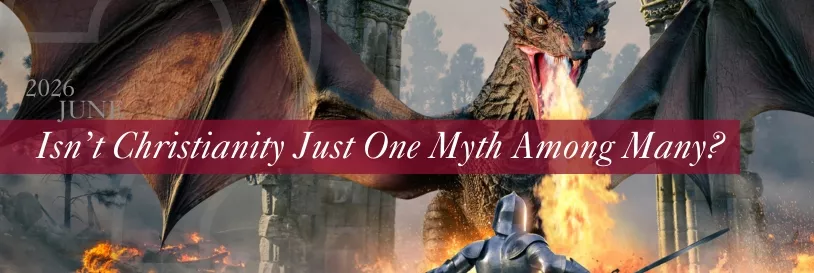
A miraculous birth. A dying and rising hero. A descent into darkness followed by unexpected triumph. These motifs appear in ancient myths across cultures—from the Egyptian Osiris to the Greek Dionysus to the Norse Balder. They sound strikingly similar to the story Christians tell about Jesus. So the question arises: Isn’t Christianity just another myth? Isn’t it one more inspiring legend among the many that humans have created to make sense of life?
This question resonates deeply in our modern world. Fueled by popular documentaries, skeptical scholars, and online forums, the claim that Christianity borrows from older mythologies has become widespread. If so, many ancient cultures told similar stories, doesn’t that weaken the uniqueness—or even the truth—of Christianity?
Yet the question, taken seriously, leads us somewhere unexpected. Rather than undermining the gospel, the mythic echoes in other religions may help us understand why Christianity stands apart—not as a myth like all the others, but as the true myth, to borrow a phrase from C.S. Lewis.
The Power and Meaning of Myth
Let’s begin by rethinking what we mean by “myth.” Today the word often suggests something untrue. Historically, myth refers to a narrative that expresses deep, symbolic truths about the human condition—an attempt to answer the universal questions we all ask: Who are we? What’s gone wrong with the world? Is there any hope?
C.S. Lewis, a scholar of ancient literature and mythology at Oxford and Cambridge, understood this better than most. Myths, he said, are not lies. They are echoes of truth. They awaken something in us—stirring the imagination, pointing to a reality just beyond our grasp.
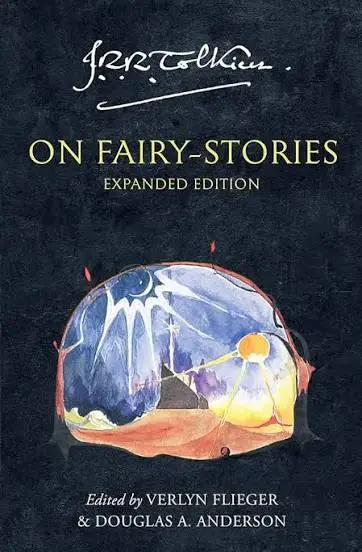
For much of his early life, Lewis admired these myths deeply but dismissed Christianity as just one more tale in the same category. That changed after a life-altering conversation with his friend and fellow author J.R.R. Tolkien. Tolkien suggested that all human myths reflect, in fragmented form, the longing for a greater story—a story that, in the gospel, actually happened.
What if Christianity is not just one more myth, but the fulfillment of all myths? The myth become fact?
Christianity’s Claim: This Happened
Unlike mythologies that float in the mists of legend, the Christian story insists on historical particularity. Jesus was born in Bethlehem, lived under Roman rule, and was crucified under Pontius Pilate (Luke 3:1; Matthew 27:2).
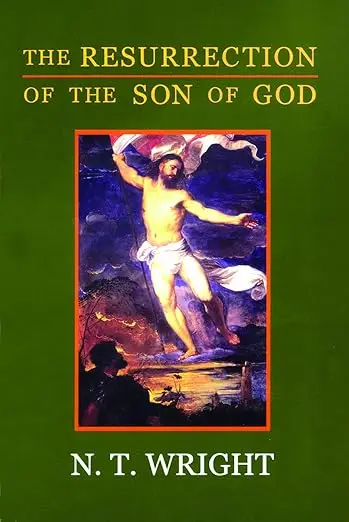
More importantly, Christianity’s central event—the resurrection—is presented not as metaphor but as literal history. In 1 Corinthians 15, Paul lists eyewitnesses to the risen Christ, including more than 500 people, most of whom were still alive when he wrote. In essence, Paul was saying: Go ask them yourself.
The early Christians did not treat their message as mere spiritual inspiration. They believed they had seen something that changed everything. And they were willing to die for it. Luke insists that his account is based on careful investigation and eyewitness reports (Luke 1:1–4). The early church did not hide its claims behind mystery; it invited scrutiny.
Even non-Christian sources confirm aspects of the story. The Jewish historian Josephus, writing in the late first century, refers to Jesus as a wise teacher who was crucified and whose followers claimed He rose from the dead (Antiquities, 18.3). Roman historians such as Tacitus and Suetonius also mention Jesus and his followers.
Not a Myth We Would Write
Some have argued that Christianity is simply wish-fulfillment—a hopeful projection meant to ease our fears of death or meaninglessness. But that theory fails to account for the strange and unsettling nature of the gospel story.
If we were going to invent a religion, would we center it on a crucified Messiah executed in shame and weakness? Would we tell people that they are sinners who can’t save themselves, and that salvation comes not through merit but by grace? Would we invent a God who washes the feet of His followers and who wins by dying?
The Christian message does not flatter us. It confronts us. It overturns our assumptions. It calls us not to self-improvement but to surrender. If it were merely a myth, it is a most peculiar one—far too strange, too demanding, too self-incriminating to be manmade.
The True Myth
So is Christianity a myth? In one sense, yes—and that’s the point. It is a story that touches the deep places of the heart, that awakens longing and resonates with ancient echoes. But unlike the myths of old, Christianity claims to be true. Not just symbolically true, but historically true. It is the myth that became fact.
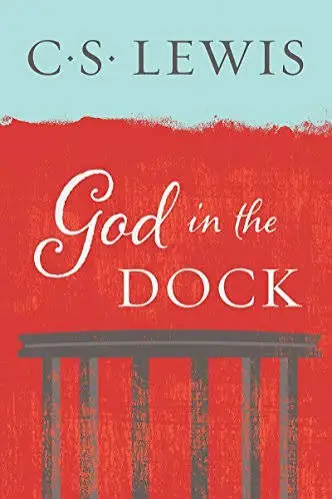
Lewis put it like this: “The heart of Christianity is a myth which is also a fact.” He didn’t mean Christianity is make-believe. He meant that all the mythic themes we see across time—death and rebirth, sacrifice and salvation, heroism and hope—are finally fulfilled in one real event: the incarnation, death, and resurrection of Jesus Christ.
In Jesus, God steps into the story. The eternal enters time. The Creator becomes a character. The Word becomes flesh. Christianity is not the story we tell about God; it is the story God tells about Himself.
An Invitation to Seek
If you’ve ever felt drawn to stories of redemption or sensed a longing for a world beyond this one, consider this: What if those desires are not illusions but signposts? What if the myths of the world are not proofs against Christianity but prelude?
This was the journey of Lewis. From skepticism to belief. From dismissing Christianity as a myth to recognizing it as the true myth—the only story big enough to explain the human condition and strong enough to save it.
The gospel doesn’t ask you to turn off your mind or your imagination. It asks you to bring both—and to follow the story to its source. Because maybe, just maybe, the reason the gospel feels like the story we’ve always longed for . . . is because it’s true.
Thiago M. Silva, D.Min., is the City Director for the C. S. Lewis Institute Lake Charles. He has been the pastor of Bethel Presbyterian Church (PCA) in Lake Charles, Louisiana, since August 2022. He earned his Th.M. in Systematic Theology from Calvin Theological Seminary (2016) and completed his doctoral studies at Puritan Reformed Theological Seminary (2024). He’s authored several articles and books including Discipleship in a Post-Christian Age: With a Little Help from C. S. Lewis (Wipf & Stock, 2025). Thiago’s God-given vocation is to equip people to live as Christians in every sphere of life through teaching and preaching.
COPYRIGHT: This publication is published by C.S. Lewis Institute; 8001 Braddock Road, Suite 301; Springfield, VA 22151. Portions of the publication may be reproduced for noncommercial, local church or ministry use without prior permission. Electronic copies of the PDF files may be duplicated and transmitted via e-mail for personal and church use. Articles may not be modified without prior written permission of the Institute. For questions, contact the Institute: 703.914.5602 or email us.
0All Booked0.00All Booked0.00All Booked29802Heart and Mind Discipleship Live Online Small Grouphttps://www.cslewisinstitute.org/?event=heart-and-mind-discipleship-live-online-small-group-las-vegas-nairobi-philippines&event_date=2026-11-06®=1https://www.paypal.com/cgi-bin/webscr2026-11-06
Thiago M. Silva, D.Min., is the City Director for the C. S. Lewis Institute Lake Charles. He has been the pastor of Bethel Presbyterian Church (PCA) in Lake Charles, Louisiana, since August 2022. He earned his Th.M. in Systematic Theology from Calvin Theological Seminary (2016) and completed his doctoral studies at Puritan Reformed Theological Seminary (2024). He’s authored several articles and books including Discipleship in a Post-Christian Age: With a Little Help from C. S. Lewis (Wipf & Stock, 2025). Thiago’s God-given vocation is to equip people to live as Christians in every sphere of life through teaching and preaching.







 COPYRIGHT: This publication is published by C.S. Lewis Institute; 8001 Braddock Road, Suite 301; Springfield, VA 22151. Portions of the publication may be reproduced for noncommercial, local church or ministry use without prior permission. Electronic copies of the PDF files may be duplicated and transmitted via e-mail for personal and church use. Articles may not be modified without prior written permission of the Institute. For questions, contact the Institute: 703.914.5602 or email us.