Is It Really That Important to Pay Attention to Others?
In a world of constant distraction, relentless schedules, and growing digital noise, it’s easy to ask: Is it really that important to pay attention to others? Doesn’t God understand how busy we are?
This question might seem modern, but it reveals a deep spiritual issue at the heart of contemporary life: we’ve lost the art of seeing one another. And with it, we’ve lost something central to what it means to live as followers of Jesus Christ.
The Disappearing Neighbor
We are more connected than ever, yet lonelier than ever. People attend large churches, live in crowded cities, and scroll through thousands of faces online—yet still feel unseen. Pastors hear it often: “I feel invisible,” “no one checked in,” or “I just wanted someone to notice.”
This isn’t merely a social inconvenience; it’s a theological problem. Human beings are made in the image of God—not just to exist, but to be known. As infants, we enter the world cradled by attention. We are fed, held, sung to. We don’t earn this care; it is simply given. But as we grow up, independence is emphasized, sometimes at the cost of true community. We master skills, accumulate resources, and achieve autonomy, which often leaves us isolated.
Jesus: The Lord Who Sees
The Gospels paint a vivid picture of Jesus as the One who pays attention. He sees the people others miss. He notices Zacchaeus hiding in a tree. He stops for the bleeding woman in the crowd. He speaks gently with the Samaritan woman at the well. He welcomes children when the disciples try to push them away. He looks at the rich young ruler and “loves him.” He meets the eyes of Peter after the betrayal—and restores him.
His attention is redemptive. It is how He dignifies, heals, and restores. As Henri Nouwen wrote in Out of Solitude, “To care means first of all to empty our own cup and to allow the other to come close to us.” Jesus made space in His life for the stories of others, and so must we. C.S. Lewis echoed this idea powerfully in The Weight of Glory: “There are no ordinary people. You have never talked to a mere mortal.” Lewis said in the same paragraph, “It is in the light of these overwhelming possibilities, it is with the awe and the circumspection proper to them, that we should conduct all our dealings with one another.”
To ignore another person is not just bad manners—it’s bad theology.
Why Attention Is a Spiritual Discipline
We live in a society that undervalues presence. Everything is urgent, everything is filtered, everything is curated. But real human interaction cannot be rushed or faked. It takes time. It takes vulnerability. It takes love.
Christians have often spoken of the spiritual disciplines: prayer, fasting, Scripture reading, worship. But what if attention is also a spiritual discipline? What if taking the time to look someone in the eye, ask how they’re doing, and listen is one of the holiest things we can do?
Dietrich Bonhoeffer, in Life Together, said: “The first service that one owes to others in the fellowship consists in listening to them . . . Listening can be a greater service than speaking.” This act of holy listening is more than politeness. It is participation in the life of Christ. In a culture that trains us to talk more than we listen, to produce more than we pause, to scroll rather than see, attention becomes a radical form of love.
Individualism, Collectivism, and the Church’s Alternative
Much of the problem lies in two competing forces in our culture: individualism and collectivism. Individualism tells us we are self-sufficient and don’t need others. Collectivism tells us we are just a part of a larger whole, easily replaced and interchangeable. Both are distortions.
The Church, however, offers a third way. The apostle Paul described the Church as the body of Christ, where “the eye cannot say to the hand, ‘I have no need of you’” (1 Cor. 12:21). The body is a picture of interdependence where uniqueness is preserved within community.
This insight aligns with Lewis’s understanding of individuality and unity. In The Screwtape Letters, the demon Screwtape complains that God “wants servants who can finally become sons . . . a world full of beings united to Him but still distinct” (Letter 8). For Lewis, individuality was not obliterated by God’s presence. It was fulfilled. And that individuality is only truly realized in relationship.
Attention as Christian Witness
What would happen if the Church became known not only for preaching truth, but for noticing people? In a fragmented, distracted world, attention is one of the most powerful forms of witness. This is what Christian hospitality looks like. Not elaborate meals or perfectly decorated homes, but space in our schedules, in our churches, in our hearts. When we make room for others, we invite them into something sacred.
A Call to Recover the Ministry of Attention
The ministry of attention isn’t glamorous. But it is profoundly Christlike. It is the slow, steady work of seeing people as Jesus sees them, and allowing them to be seen.
If we believe what Lewis believed—that people are destined for eternal glory or ruin, and that our interactions have eternal significance—then there is no such thing as an insignificant person. And no such thing as an insignificant moment of attention. So, is it really that important to pay attention to others? Yes. Eternally so.
Let us reclaim this lost art. Let us slow down, look up, and begin again to see. Let the Church be known not just as a place of truth, but a place of presence—a community where no one is invisible, no one is unnecessary, and everyone is seen.
After all, that is how Jesus treats us.
For more information on this…
“Chapter 1 – The Weight of Glory ” from The Weight of Glory by C.S. Lewis
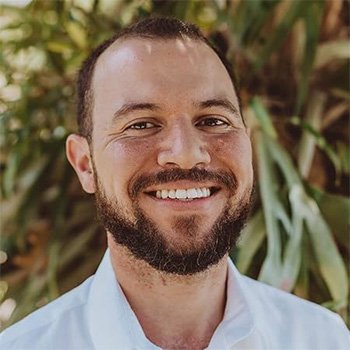
Thiago M. Silva, D.Min., is the City Director for the C. S. Lewis Institute Lake Charles. He has been the pastor of Bethel Presbyterian Church (PCA) in Lake Charles, Louisiana, since August 2022. He earned his Th.M. in Systematic Theology from Calvin Theological Seminary (2016) and completed his doctoral studies at Puritan Reformed Theological Seminary (2024). He’s authored several articles and books including Discipleship in a Post-Christian Age: With a Little Help from C. S. Lewis (Wipf & Stock, 2025). Thiago’s God-given vocation is to equip people to live as Christians in every sphere of life through teaching and preaching.
COPYRIGHT: This publication is published by C.S. Lewis Institute; 8001 Braddock Road, Suite 301; Springfield, VA 22151. Portions of the publication may be reproduced for noncommercial, local church or ministry use without prior permission. Electronic copies of the PDF files may be duplicated and transmitted via e-mail for personal and church use. Articles may not be modified without prior written permission of the Institute. For questions, contact the Institute: 703.914.5602 or email us.
0All Booked0.00All Booked0.00All Booked29802Heart and Mind Discipleship Live Online Small Grouphttps://www.cslewisinstitute.org/?event=heart-and-mind-discipleship-live-online-small-group-las-vegas-nairobi-philippines&event_date=2026-11-06®=1https://www.paypal.com/cgi-bin/webscr2026-11-06
Thiago M. Silva, D.Min., is the City Director for the C. S. Lewis Institute Lake Charles. He has been the pastor of Bethel Presbyterian Church (PCA) in Lake Charles, Louisiana, since August 2022. He earned his Th.M. in Systematic Theology from Calvin Theological Seminary (2016) and completed his doctoral studies at Puritan Reformed Theological Seminary (2024). He’s authored several articles and books including Discipleship in a Post-Christian Age: With a Little Help from C. S. Lewis (Wipf & Stock, 2025). Thiago’s God-given vocation is to equip people to live as Christians in every sphere of life through teaching and preaching.








 COPYRIGHT: This publication is published by C.S. Lewis Institute; 8001 Braddock Road, Suite 301; Springfield, VA 22151. Portions of the publication may be reproduced for noncommercial, local church or ministry use without prior permission. Electronic copies of the PDF files may be duplicated and transmitted via e-mail for personal and church use. Articles may not be modified without prior written permission of the Institute. For questions, contact the Institute: 703.914.5602 or email us.