We were strolling down the frozen food aisle when I spotted it. “Look, Son, that’s a robot.” It wasn’t much to look at—a glorified charging station gliding along on a Room-ba-like base. A peppy message flashed on the screen: “I’m Tally, the inventory robot!” I found myself staring into a pair of blinking digital eyes.
To say my nine-year-old son was captivated would be an understatement. We followed this homely machine all over the store before I finally insisted it was time to go. Predictably, my kids now look for any excuse to head to the store. Ostensibly concerned about our dwindling supply of bananas, they really just want to visit Tally.
Both of my young kids know that I’m a stickler about the use of proper robot pronouns. Tally isn’t a “she” but an “it.” They both roll their eyes. “We know, Dad!” Am I overreacting—intruding into a perfectly innocent realm of childhood play? Perhaps. Like most thinkers, I have the spiritual gift of being a killjoy in almost any situation. All the same, I can’t help worrying that here our choice of words matters a great deal. By some perverse logic, humanizing machines usually comes at the cost of mechanizing humanity, and you certainly don’t have to be a history buff to recognize that a mechanistic view of persons can lead to true horrors.
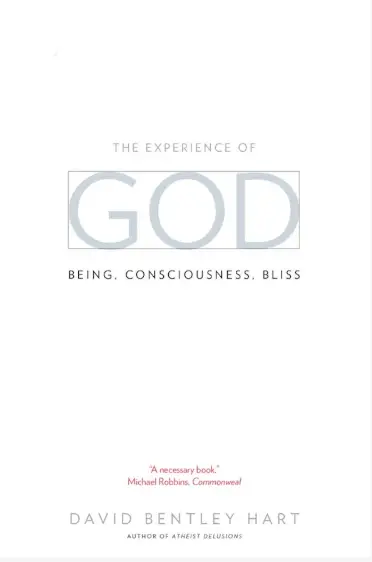
In his book The Experience of God, David Bentley Hart argues that our metaphors tend to mislead us in our thinking about technology: “memory,” “thinking,” and indeed “computing”—all words we apply to our devices with great frequency. In this manner, careless speech can and does lead us to personify our machines. But it’s not just our words. To a significant degree, the late modern imagination has been formed by personified machinery and I’m not just talking about Terminator’s Skynet. The film WALL-E accomplishes wonders with its titular robot’s expressive eyes. But you don’t need state-of-the-art animation to pull off the ruse. Popular children’s YouTuber Mark Rober simply sticks googly eyes onto various bots and devices, instantly transforming them into seemingly “friendly” companions for his young audience.
In fact, our devices don’t think, compute, or remember anything; only we do. Sadly, well before the ubiquity of open AI, we were already predisposed to humanize machines. The problem is that AI actually talks back. For this reason, it’s capable of fooling us into thinking we’re interacting with another mind.
The simulacrum of consciousness is convincing, particularly to young children who are still learning proper discernment in these matters. But I’m using the word fooled for a reason. AI may be capable of fooling us into thinking that we’re encountering a distinct personality, but the subtlety of the deception doesn’t change the fact that it’s an illusion. And a powerful illusion is still just an illusion.
In this sense, we might think of AI as an exceptionally skilled illusionist. Sleight of hand isn’t transformed into actual magic by human perception. The better the illusionist, the more powerful the illusion. Regardless of whatever marvel they unfold, it’s still just an ingenious trick. As with a skilled illusionist, our minds might tell us that we’re actually seeing someone fly, or a nice lady from the audience being sawed in half, or a flurry of doves being conjured from thin air. The exceptional illusionist might make us believe they’re an actual magician. Likewise, with AI we may believe that we’re truly interacting with a friend, or, to use the faintly sinister word favored by tech companies, a “companion.” But, again, the stage magician is not actually flying; the nice lady from the audience is still perfectly intact; the doves were not spontaneously generated on the spot, and our “friend” or “companion” isn’t there. No one is there.
Is it always bad if my daughter slips up and refers to Tally as a “she”? No. But what I’ve tried to argue here is that our words shape our view of reality. In this case, an overestimation of AI (imbuing it with human qualities) will lead to an impoverishment of our view of humanity. The distance between slapping a pair of googly eyes on a device and turning to an AI companion for consolation in a fit of severe depression is smaller than one might think.
In Proverbs 18:24, we read, “A man of many companions may come to ruin, but there is a friend who sticks closer than a brother.” (ESV) Such intimacy is possible only between persons. Should my children have robot friends? I’m hoping that by the time of this writing they’ll simply recognize the question as a basic category mistake.
Director of Apologetics, CSLICameron McAllister is Director of Apologetics for the C.S. Lewis Institute. He cofounded Thinking Out Loud, where he’s a speaker, writer and one half of the Thinking Out Loud podcast, a weekly podcast about current events and Christian hope. He and his father co-authored Faith That Lasts: A Father and Son on Cultivating Lifelong Belief. A staff writer with Christ & Pop Culture, Cameron’s writing has appeared in Christianity Today, Relevant Magazine, Think Christian, and Fathom Magazine. He holds a master’s degree in apologetics from Houston Baptist University. Cameron and his wife Heather live in the Atlanta area with their two children.
Support the ministry of Cameron with CSLI.
COPYRIGHT: This publication is published by C.S. Lewis Institute; 8001 Braddock Road, Suite 301; Springfield, VA 22151. Portions of the publication may be reproduced for noncommercial, local church or ministry use without prior permission. Electronic copies of the PDF files may be duplicated and transmitted via e-mail for personal and church use. Articles may not be modified without prior written permission of the Institute. For questions, contact the Institute: 703.914.5602 or email us.
0All Booked0.00All Booked0.00All Booked29802Heart and Mind Discipleship Live Online Small Grouphttps://www.cslewisinstitute.org/?event=heart-and-mind-discipleship-live-online-small-group-las-vegas-nairobi-philippines&event_date=2026-11-06®=1https://www.paypal.com/cgi-bin/webscr2026-11-06
Director of Apologetics, CSLICameron McAllister is Director of Apologetics for the C.S. Lewis Institute. He cofounded Thinking Out Loud, where he’s a speaker, writer and one half of the Thinking Out Loud podcast, a weekly podcast about current events and Christian hope. He and his father co-authored Faith That Lasts: A Father and Son on Cultivating Lifelong Belief. A staff writer with Christ & Pop Culture, Cameron’s writing has appeared in Christianity Today, Relevant Magazine, Think Christian, and Fathom Magazine. He holds a master’s degree in apologetics from Houston Baptist University. Cameron and his wife Heather live in the Atlanta area with their two children.
Support the ministry of Cameron with CSLI.









 COPYRIGHT: This publication is published by C.S. Lewis Institute; 8001 Braddock Road, Suite 301; Springfield, VA 22151. Portions of the publication may be reproduced for noncommercial, local church or ministry use without prior permission. Electronic copies of the PDF files may be duplicated and transmitted via e-mail for personal and church use. Articles may not be modified without prior written permission of the Institute. For questions, contact the Institute: 703.914.5602 or email us.