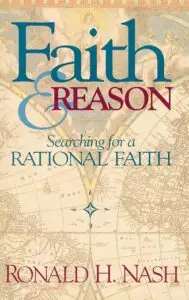
Ronald Nash defined a worldview as a “conceptual scheme by which we consciously or unconsciously place or fit everything we believe and by which we interpret and judge reality” (Faith and Reason). A worldview has been compared to a pair of glasses through which a person views everything about the world and their experience of it. It can seem practically invisible since it’s the lens through which we view everything.
A number of circumstances contribute to the formation of our worldview: geographical location, family dynamics, economic condition, historical setting, education, and physical and psychological makeup, to name a few. In addition, our worldviews vary in their level of coherence. Those who think the least about their worldviews are the most sus- ceptible to incoherent beliefs. Sound reasoning and critical thinking bolster our worldviews. Human limitations mean worldviews will include both true and false beliefs. Moreover, worldviews often change over time as some beliefs are found to be inadequate and new ones are adopted. Since worldviews involve such a wide range of human experience, for the purposes of our present discussion, I will use the term to describe how a person answers the big, existential questions of life, including
Where did we come from?
Who are we?
What is wrong with the world?
What can be done to fix it?
Here we see that worldview shapes how we understand life’s most fundamental issues.
For the Christian, there are two key aspects of worldview to which we must give attention. First, we need to conform our individual worldviews to the Christian worldview. Second, we should understand how the Christian worldview answers the big questions just listed.
Developing a Christian Worldview
Very few people in the United States hold a Christian worldview today. According to research by George Barna in 2025, only 4 percent of the nation’s adult population possesses a biblical worldview. Among American adults who self-identify as Christians, only 6 percent have a biblical worldview.
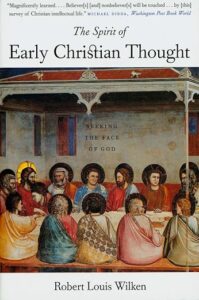
When we seek to develop a Christian worldview, we are aiming to view every aspect of human experience through the lens of God’s revealed truth in Scripture. As church historian Robert Louis Wilken points out, “Christianity is more than a set of devotional practices. It is also a way of thinking about God, about human beings, about the world, and history. For Christians, thinking is part of believing” (The Spirit of Early Christian Thought).
The most effective way to develop a Christian worldview is to regularly read, study, and meditate on Scripture. Jesus constantly appealed to Scripture to settle a myriad of questions raised by His followers and His opponents (e.g., Matt. 19:4; Mark 10:3; Luke 10:26). Similarly, Paul writes, “Do not conform to the pattern of this world, but be transformed by the renewing of your mind. Then you will be able to test and approve what God’s will is—his good, pleasing and perfect will” (Rom. 12:2 NIV).
Along with Scripture, books and other media by trustworthy Christian thinkers are very helpful for forming a Christian worldview.
The C.S. Lewis Institute offers a rich collection of these resources. A number of books specifically address the Christian worldview and its competitors, including volumes by Ronald Nash, James Sire, J.P. Moreland, Philip Graham Ryken, Jeff Myers, and Kenneth Samples.
Answering the Big Questions
A worldview should accurately answer the four big questions raised above. These are foundational questions for understanding what kind of world we live in and who we are. The Christian worldview provides a coherent answer to these questions that also matches our lived experience. The answer takes the form of a play in four acts: Creation, Fall, Redemption, and Restoration. These four acts also encapsulate the overarching storyline of the Bible from Genesis to Revelation.
Where did we come from? / Who are we?
Creation
The first act in the Christian account of the world answers our first two questions. Genesis 1 records that God made the world and made humans in His image. This explains why the universe exists, and why we humans inhabit planet Earth. Our identity flows from the fact that we’re made in God’s image, which grounds our intrinsic value, and points to our purpose of having a relationship with God and other humans, as well as stewarding God’s creation.
What is wrong with the world?
Fall
Although in the beginning God’s creation was “very good” (Gen. 1:31), it was corrupted because of Adam and Eve’s rebellion against God (Genesis 3; Rom. 8:19–22). Human beings would henceforth be born into the world alienated from God, themselves, and other humans (Rom. 1:18–28; 5:18–19). The Christian worldview thus explains how humans are capable of both great good (because they’re made in God’s image) and great evil (because of the fall).
What can be done to fix it?
Redemption and Restoration
Most historically significant worldviews offer little hope for redemption. Christianity offers both, along with the promise of ever- lasting life with God and His people. Immediately after Adam and Eve fell, God announced a rescue plan in which a human being would crush Satan’s head, yet suffer an injury in the process (Gen. 3:15). This was a prophecy fulfilled by Jesus Christ who dealt a lethal blow to Satan through His death and resurrection, while also taking the punishment for sin due to every human being so that they could be reconciled with God (John 3:16; Heb. 2:14–15; 1 Peter 2:24; Rom. 5:10–11).
The paradise that was lost in the fall will be restored when Christ returns and creates a new heavens and new earth (Rev. 21:1). There God’s people will spend an eternity growing in their love and knowledge of God and enjoying fellowship with one another.
The Christian worldview thus answers our deepest questions and meets our greatest needs. Through it we can be encouraged that, in C.S. Lewis’s words, we are part of a Great Story “in which every chapter is better than the one before” (The Last Battle).
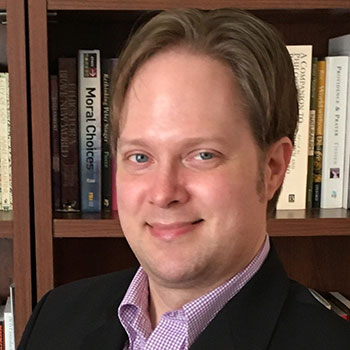
Christopher Reese (MDiv, ThM) is an accomplished writer, editor, and journalist. He is the founder and editor of The Worldview Bulletin and a general editor of the Dictionary of Christianity and Science (Zondervan, 2017) and Three Views on Christianity and Science (Zondervan, 2021). His work has appeared in Christianity Today, Bible Gateway, Beliefnet, Summit Ministries, and other sites. Christopher got his undergraduate degree in English and History from Jacksonville State. He then obtained his MDiv from Beeson Divinity School and his ThM from Talbot School of Theology.
COPYRIGHT: This publication is published by C.S. Lewis Institute; 8001 Braddock Road, Suite 301; Springfield, VA 22151. Portions of the publication may be reproduced for noncommercial, local church or ministry use without prior permission. Electronic copies of the PDF files may be duplicated and transmitted via e-mail for personal and church use. Articles may not be modified without prior written permission of the Institute. For questions, contact the Institute: 703.914.5602 or email us.
0All Booked0.00All Booked0.00All Booked29802Heart and Mind Discipleship Live Online Small Grouphttps://www.cslewisinstitute.org/?event=heart-and-mind-discipleship-live-online-small-group-las-vegas-nairobi-philippines&event_date=2026-11-06®=1https://www.paypal.com/cgi-bin/webscr2026-11-06
Christopher Reese (MDiv, ThM) is an accomplished writer, editor, and journalist. He is the founder and editor of The Worldview Bulletin and a general editor of the Dictionary of Christianity and Science (Zondervan, 2017) and Three Views on Christianity and Science (Zondervan, 2021). His work has appeared in Christianity Today, Bible Gateway, Beliefnet, Summit Ministries, and other sites. Christopher got his undergraduate degree in English and History from Jacksonville State. He then obtained his MDiv from Beeson Divinity School and his ThM from Talbot School of Theology.






 COPYRIGHT: This publication is published by C.S. Lewis Institute; 8001 Braddock Road, Suite 301; Springfield, VA 22151. Portions of the publication may be reproduced for noncommercial, local church or ministry use without prior permission. Electronic copies of the PDF files may be duplicated and transmitted via e-mail for personal and church use. Articles may not be modified without prior written permission of the Institute. For questions, contact the Institute: 703.914.5602 or email us.