



Back to series



Stranded in Space, Grounded in Faith
VOLUME 11 NUMBER 3 ISSUE OF BROADCAST TALKS (PDF)
BROADCAST TALKS presents ideas to cultivate Christ-like thinking and living. Each issue features a transcription of a talk presented at an event of The C.S. Lewis Institute.
The following is adapted from an interview with Barry “Butch” Wilmore, conducted by Joel Woodruff, President of the C.S. Lewis Institute. It was broadcast on November 14, 2025, as a virtual event titled “Stranded in Space, Grounded in Faith,” having been recorded the previous month.
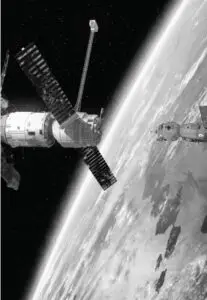
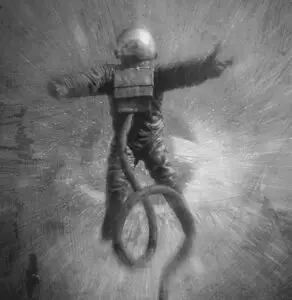
Note: The images throughout this publication are artistic illustrations created to accompany the text. They are not actual photographs or images from Barry “Butch” Wilmore’s mission or time aboard the International Space Station.
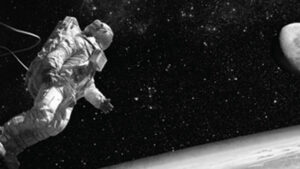
On June 5, 2024, Barry “Butch” Wilmore and Suni Williams became the first astronauts to strap into a Boeing Starliner capsule and be launched into space. Due to technical difficulties, their eight-day mission to the Space Station and back turned into a nine-month marathon. They were in essence stranded in space until an alternative ride home was made available to them. Butch and Suni’s positive outlook—their joy and professionalism in the midst of a harrowing time of uncertainty—captured the attention of millions around the world. On this broadcast, we’re blessed to talk with Butch, who thankfully was brought home with Suni via the SpaceX Dragon capsule on March 18, 2025. It’s my pleasure to introduce astronaut Barry “Butch” Wilmore.
I know that millions were praying for you and your safe arrival. Looking back to that day, June 5, 2024, when you were strapped into the Boeing Starliner, tell us what transpired in those minutes and hours before and after your launch into space.
Leading up to the launch, it’s a long evolution, years for us. This wasn’t training. This was a brand-new spacecraft. Suni and I both are trained test pilots. This was a whole evolution of development, finding issues here and there, rectifying them. We rewrote every single procedure, added procedures as we went through this process. That’s standard for something new, but there had been several delays for some issues that we were trying to work through over years. So when we finally got to the point of lying on our back, strapping in, with the tanks all fueled and ready to go, that was indeed special, because there had been a lot of effort, not just by us, but by the entire team that had come together to bring this to fruition.
There’s a great deal of responsibility when you’re the one lying on your back in the commander seat, not apprehensive but excited about what’s to come. We developed a great number of tests to certify the spacecraft and get it ready for future missions, and this day was going to be full of those. That launch day, it wasn’t ending after launch. We had a whole slew of tests and tasks that we would be going through. Considering all that, I was just praising the Lord and thanking Him that, for whatever reason, like it says in the Psalms, He was giving me this desire of my heart. To be able to use all that test pilot training, never dreaming, back when I was first selected as a test pilot, that I would have an opportunity to fly a first flight in a new spacecraft. All of those thoughts, all those emotions coming together as you’re lying there on your back, as a countdown continues.
And so then tell us what happened as you’re sitting there and then were launched. What happened in the next minutes and hours before you hit the Space Station?
That day, launch was amazing. I had launched previously on the Space Shuttle, and I’d launched on a Russian Soyuz. They’re all different, a unique feeling, if you will. Thrust levels are similar but different, and the way things transpire when staging happens. When the propellant is completely expelled out of the first stage, there’s jarring. It stops. The spacecraft stops accelerating, and you come forward in your straps, and then the second stage . . . so all those spacecraft are different. No one had ever ridden an Atlas V and then Centaur, dual-engine Centaur, which are the engines and the rockets that propel the Starliner into space. We were the first to experience that. And it was thrilling and amazing.
We got to main engine cutoff, when you actually are in space. You’re not going to stay there long, because you’re on a trajectory that’s looping up high and then it’s going to come back into the atmosphere. So 31 minutes into that launch, we’re halfway. We’re at our apogee, the highest point above Earth’s surface; then we do a second burn to circularize our orbit, so we don’t reenter the atmosphere.
There are a lot of key things that have to take place at the right time to make sure that you continue the mission as planned. And all of that went great. Then eventually we got up, into orbit, full orbit, did that orbit insertion burn, did a couple of other burns, and then we got into our test plan, where we’re evaluating various automation and manual modes, and all of those went wonderfully well. Day 1 was exciting, thrilling, any emotion you can imagine. Satisfying, of course, having been several years in that preparation and the developmental process that we had gone through. So day 1 was great!
This must have been quite an amazing experience. How did it compare to the other previous flights into space?
If I were to compare them to vehicles, the Space Shuttle is a Cadillac. All capable. The Russian Soyuz—you know those cars that race in the desert? They’re bouncing around; I don’t know how you’d term those, but that was a Soyuz. It was capable, sturdy, tough, rugged if you will. And I would characterize the Starliner as a sports car. It was very maneuverable, very precise, what you would want if you’re going around a curve at a high speed. That was the Starliner. So a Cadillac, a desert racer, and a sports car is how I describe it.
So you get up on the first day, but the second day . . . tell us about that second day.
On June 6, we’re in the process of rendezvousing with the Space Station. We had gone through multiple developmental processes to get all this squared away. And things were going great initially. The Space Station is at an altitude. As you’re orbiting the planet at 17,500 miles an hour, the Starliner catches up eventually to the Space Station from below, and then you start to effect these burns that bring you out in front of the Space Station, and then you effect your docking.
So we‘re in that process, coming up, raising our altitude up to the Space Station altitude, out in front of the Space Station, and we had a thruster fail, one of our aft firing thrusters. The thrusters are positioned kind of orthogonal, top and bottom, starboard and port. So top, bottom, starboard and port in these what we call doghouses. These thrusters, at each of these four positions, have seven thrusters that point in different directions. On each of those doghouses, two of those thrusters point aft on each doghouse. So you’ve got eight aft pointing thrusters. I hope that’s clear. Eight aft pointing thrusters, but we lost one on our starboard side.
It’s not greatly concerning; we’d had two uncrewed missions previously, and we had lost some thrusters on those missions as well. The crew module, where we are, and the service module are connected all the way through the mission. But eventually the service module detaches and burns up in the atmosphere. The crew module is what returns. So you don’t get those failed thrusters back so you can analyze and assess why they failed. You have to use the data you have and also engineering judgment based on your understanding of the thrusters and their mechanisms. So those thruster failures from the previous uncrewed test flights—you don’t really know for sure why they failed. You assess the most likely scenario.
So we had lost a thruster. Not so concerning. We build fault tolerance into our systems, meaning you can have a failure. Dual fault tolerance is our go-to, if you will. You have one failure; you can still have two more failures before that system would be dramatically affected. So we’re still dual fault tolerant. We can still have two more failures and still be fine.
As we continue the rendezvous, we lost a second thruster, aft firing, this time on the bottom doghouse. That was when it became a bit more concerning. Now, instead of being dual fault tolerant, we’re single fault tolerant. And this is maintaining six degrees of freedom control. You have three degrees in attitude: pitch, roll, and yaw, right? And then you have translation. You go forward and aft, up and down, and left and right. That’s three more degrees of freedom. You put all this together, you got six degrees of freedom, attitude, and translation.
So now we’re single fault tolerant to being able to maintain full control of that sixth degree of freedom. More concerning. Again, traveling 17,500 miles around the planet, we acquired the velocity vector out in front of the Space Station; we call it the V-bar velocity. So we acquire the V-bar, we’re right out in front of the station, about 260 meters, and we lose a third thruster. This is very concerning, because now we’re zero fault tolerant to maintaining six degrees of freedom control. Had we lost that third thruster before we got established on the V-bar, the spacecraft would have automatically aborted. The software would have said, “You’re zero fault tolerant. We’re not going to even acquire that V-bar.”
So if we’d have lost it 10 minutes sooner, we would have left the vicinity of the space station, which would not have been a good scenario. I attribute that—obviously, our Lord is sovereign. He’s in control of all things—He determined that He was going to allow that third thruster to fail after we got established in a safer posture, if you will, because leaving the Space Station with three thrusters failed . . . I’m beginning to think, “If we don’t dock, we might not make it back to Earth,” because the controllability—it’s manual control at this point. I’m on the control. I’ve got . . . my right hand is controlling the rotation. My left hand is controlling the translation, the movement in space.
So I’m manual control, and they want me to hold at 260 meters. We’ve lost two bottom thrusters, one starboard thruster. The bad one to lose would be the second starboard thruster, because then we lose full six-degree of freedom control. I’m not sure what the control would have been if we’d lost one of the top or the port thrusters. But the thrusters, the aft thrusters, when you translate, fire on both sides of the spacecraft, because it’s got to be balanced. If only one thruster fires, it’s going to cause you to be unbalanced in your attitude, right? You have to fire them both to be balanced, so your translation takes place.
We had two locked down on the bottom, one on the starboard—I hope I’m not going too fast.
Oh, this is—no! This is fascinating!
Yeah. So I’m thinking, “Okay, we could lose one of these others, and we might be okay, but if we lose that starboard thruster, we’re gonna lose full six-degree of freedom control, and then what’s the chances of that—that one thruster failing?” So we’re established on manual control, and then we lost that thruster—our fourth thruster down. We don’t have six degrees of freedom control. We don’t have the ability to do the forward maneuver. We can’t move forward at all. And all the other degrees of freedom are very degraded. Remember, I said they were pristine, perfect, for day 1. Now they’re not. They’re struggling. And I’m struggling to maintain attitude and position.
Even the sound of it . . . Sound doesn’t travel in a vacuum. You have to have air for sound to travel, and space is a vacuum. There’s no air. But the sound from the thrusters back in the service module behind us, it travels through the structure. Sound does travel through solids and liquids, so it travels through the structure, and then it gets into the air inside the capsule, so we can hear the thrusters firing. You’ve got the piston, a little piston that will open to allow the propellant to flow through and then close, and it does it really fast. So the piston would fire, open and close, and we could hear that. Day 1, we could hear that ch-chheu, ch-ch-ch-chheu, ch-chheu, ch-chheu-chheu. That’s close to what it would sound like. Day 2—we’re down four thrusters. It’s very different. To maintain the attitude and the position—the system is physically laboring, you can hear it. Those pistons are opening and closing so fast, every second, you can’t even determine how often. And it sounds like a machine gun. Ching-t-t-d, ching-t-d, ching-d-d is how it sounded. It was a sick spacecraft maintaining that position, and we could hear it as well.
So the Ground basically says, “Okay, 260 meters. Stay there.”
(laughs) “I hope we can.” Now, I’m definitely—“We’ve got to dock.” I don’t have full control of the spacecraft. It’s very difficult to maintain my position and my attitude. I’m thinking, orbital mechanics: you determine how spacecraft fly together in proximity. You’ve got the big Space Station, and you’ve got our little Starliner. Orbital mechanics: if you’re above or below another spacecraft in space, which is what the ISS is, their orbital mechanics dictate how they fly. Like, you’re faster. Even if you’re 10 feet below, you’re faster going around the planet, so you’re going to leave it. And even if you’re 10 feet above, you’re slower. You’re going to get closer. So I’m using orbital mechanics. For every control input I make, I’m thinking through how this is going to affect orbital mechanics.
And I tell you, again—this is the providence of our Lord. Sitting in that seat, in that left seat, when we launched the day prior, there was one astronaut that had experience with hands-on controls in a spacecraft in space. And that was me. I’d flown the space shuttle. I’d been hands on the controls. Nobody to that point that was left within the astronaut corps had that experience, but I had, and I had lived rendezvous and docking for decades. The Lord had put me in positions—combat missions when I was in the Navy. The Lord put me in positions, stressful situations where you can’t just let those stressful situations affect your performance. You have to compartmentalize and put a lot of those things aside and focus on what your tasks are. The Lord had put me over the years, decades, in many situations where that was the case. It’s like Joseph. The Lord’s preparing him for eventually what he went to, eventually into Egypt, put in prison, and wound up third in power under Pharaoh, and all the position. Step, step, step, step. He’s preparing.
I felt like it was the same for me, in my situation, that I had the experience. I had the background. Not because I’m good, not because I’m great, but just because the Lord had pulled me through all of those different scenarios. And then, when I’m sitting there in the Starliner and it’s difficult to maintain the attitude and position and ability to visualize what my control inputs would make, I attribute it to the Lord’s providence and how He had worked through all of that.
So the Ground, Mission Control, wants me to maintain my position. We want to maintain our position. We have sensors on the spacecraft that see the Space Station, cameras, infrared sensors, LiDAR that see the station and actually build a picture of what the station is in its computer memory. And we have to maintain a position of looking at the station. If we lose that, even for just a couple of seconds, all that’s gone, and we will not be able to get it back and rendezvous with the station via this automated means.
So I have to maintain my position, have to maintain my attitude looking at the station. And that was very difficult. Again, I note my decades of experience in this realm and simulation. I have a thousand hours of simulation. Ray Bigonesse was our rendezvous officer. We were pretty close for these years. He’s a volunteer fireman, and he’d say, “Hey, I’m coming off shift at 5:30 on Saturday morning,” one of his volunteer fireman shifts. “Let’s go to the sim. Meet me in the sim.” I’m like, “Okay.” So 6:00 on a Saturday morning, we’d go into the sim, and we’d be doing various scenarios to prepare ourselves, unknown first flight, not knowing what’s going to happen. Never envisioned a scenario like this, but all of that is, again, the providence of our Lord working providentially through circumstances in preparation for what eventually took place.
So it’s hard to maintain position, hard to maintain attitude. And then the Ground says, “Okay, we’re going to send some test signals to these failed thrusters, to see if they produce enough thrust to reactivate them.” To do that, you can’t touch anything. That’s pretty hard. “Maintain your position, maintain your attitude, and don’t touch nothing!” for up to 15 seconds. So again, that was pretty tough, but just pointing, pointing, not drifting, maintain, orbital mechanics . . . “Okay, hands off!” And then they’d send the signal. Through that process, we got two of the four thrusters back. Now, the Ground thought that we had three of the four back, based on their data. They relayed that up to me, but in the—we’ll call it the heat of battle—I did not get that message. I thought we only had two of the four thrusters back, which was accurate. So, again, the providence of God, my understanding was correct. Their understanding was incorrect. Somehow, the system had deceived them. Again, providence of God—I’m the one on the controls. I’m the one that really needs to know the correct information. And the Lord allowed me to have that information, even though what was sent up was different. I didn’t catch it. Again, thinking back, this obviously is the Lord’s working through all this.
I’ve got enough control now to where I can limp my way closer. They want me to come in to 200 meters. I start to do that, coming in to 200 meters. And I had been thinking through so many things in my mind, just firing. “What if we lose communication with the ground? What would I do in this scenario?”
Now that I have a little bit of control back. And my plan was to go all the way in to 10 meters, evaluate the controllability of the spacecraft; if it was good enough to control, I’m going to dock, because if I don’t, I’m not sure we can get back to Earth. I’m not sure we can maintain that attitude to do a de-orbit burn, go through that whole process. I’m not sure we can even get to that point and do that. So, again, we have to dock.
And I’m also thinking, when we had the four thrusters down, “What if I lose a fifth aft firing thruster?” This is uncharted territory! I have no idea what the control will be, if I’ll be able to control at all. I don’t know. I don’t know how it will affect it. So we get in to 200 meters. We have two thrusters down, and then we did lose that fifth thruster. One of the top thrusters failed. Now, by the providence of God again, we’d already gotten two of the failed ones back. So now we’re back to three thrusters down. We’re zero fault tolerant. By the flight rules, we can’t come closer to the Space Station than 200 meters with zero fault tolerant to loss of six-degree of freedom control. But I’m already thinking, “We’re going to have to waive that flight rule, because we can’t leave in this scenario. We can’t go away here.”
And in discussions after the fact, the Ground was already there, too. We were going to waive that flight rule, because that was really our only option. So again, “Maintain your position, maintain your attitude. Don’t touch anything!” Same scenario. So I get the attitude, not much drift, hands off. They send signals to the thrusters again. These thrusters are reducing in thrust, and that’s why the computer system is pulling them out of the mix. I hope I’m giving enough detail to make it understandable but not boring.
No! This is fascinating! Thank you.
They send signals again. We’re able to get two of those three thrusters back. What’s happening is these thrusters are reducing in thrust level. So the computer—it goes below a certain percentage, and the computer says, “Pull them out.” So now, to get those thrusters back in, reestablish them, we have to cancel out that fault detection software that shuts them down. Even if they’re producing 20 percent of thrust, that’s 20 percent more that we had that we still need. We had to do that. We canceled all the FDIR, it’s called, Fault Detection Indication Response software for those thrusters, so they wouldn’t drop offline again. And got those two thrusters back. Now the only thruster that was down was on the bottom. We’re 200 meters. We’re back above our fault tolerance, even though the spacecraft is still sick. It’s still making that same sound, as it’s controlling that g-d-d-di, g-d-d-di, as those pistons are opening and closing so fast.
Obviously, nobody knew all this was going on. I even remember thinking, “I know my wife and daughters. I bet they don’t understand what’s taking place here,” that this is a pretty . . . dire is the best term, because we either dock or we probably can’t come home. We do have, in the spacecraft, a back-up mode, which kind of bypasses the computers and sends signals directly to the thrusters. If we couldn’t have docked for whatever reason, we’d have likely been in that back-up mode. Even if those thrusters were deselected, what little thrust they had, we would have gotten, so that would probably have been our desperate move. Fortunately, though, we did dock, obviously, and it was quite the relief when you get safely attached to the Space Station, because now that’s the safe haven for this scenario.
The first thing I did—I called the flight director, and I said, “Okay, we made it. Praise the Lord!” And again, I attributed all of this, this is the sovereign God working, the Mission Control team coming up with a plan on the fly. I mean, this had never happened before. No spacecraft in the history of human spaceflight had ever lost the ability to fully control in space. This was a first. To come up with a scenario and build that from scratch to get these thrusters back and get us safely docked, I attribute that first and foremost to my sovereign Lord, who was at work. And I attribute that to answered prayer. We had prayed, many had prayed, especially through this whole evolution, “Lord, help us find everything that we can find, any problem with this.” We found many lethal failure modes going through the process. And the prayer was also continued: “What we don’t find, have us prepared to handle the situation.” And that’s exactly what happened. Many people praying for many years, that’s exactly how it played out, the Lord answering that, because we were prepared. The ground teams, the crew on board, we were prepared to handle this unexpected, never-before-happened scenario and get safely attached to the Space Station.
It wasn’t decided until the end of August that we were not coming home on Starliner. But of course I knew it early. About the first of July, we’d been there a month, I did tell my wife and daughters: “You know, the most likely scenario is that we don’t make it home until sometime in 2025. I don’t know that we’ll be coming back on Starliner.” And, again, I saw the Lord’s providence playing out. I know many of your people who didn’t even know us were praying; I’ve felt the prayers throughout the entire process. The transition from—like I said, I knew early that we probably wouldn’t come back. It wasn’t like we just figured it out one day, and, “Oh, my!” I knew it out in front of the Space Station on the sixth of June, that it was probably the most likely scenario.
But just the prayers and the comfort in that. And I found great comfort in things that I didn’t expect during the process, as the days turned into weeks, turned into months. How special music was! I mean, I was raised in the church. I know a lot of the hymns by heart. I can’t tell you the name, but as soon as you start playing the melody, boom, I know the whole song, because I’ve just lived it. I just didn’t realize or expect how special that was. I mean, I played music. I got to the point, as the days turned into weeks and then months, of gaining strength from music and the comfort of God’s Word in song, the hymns. I’m so grateful for that, that I could pull up—we had a little internet capability. It was sporadic, but we could tie in via satellite links and get internet. And I could pump in some guy’s hymn music and really worship.
I got to tie into my local church, which was special. Being a part of the local church is what God’s Word calls us to. The Lord gave us His church because we need it. We need it to live worthy. We need it to worship. We need it to be empowered by the power of the Word in this sinful world. We need that continual infusion. God gave us the church, because we need it. It’s His church. It’s the only thing He says He has established and He will continue forthgoing until He returns. We need each other.
Can you tell us a little bit of how you were able to connect there with your family and church?
I jokingly say, when I got to the Space Station, there was no room at the inn, meaning we had four crew quarters, and they were all taken by the people already there; we were supposed to be there for just a short period of time. I took up residence in the corner of a module. I mean, it’s in the open. I was there for the first four and a half months. I was just in the open corner of the module until finally a crew quarters became available, which I had for several months. Anyway, in the corner of the module, I set up my little home, including a computer, which had the internet capability. On Sundays I would pull up my home church, and also Grace Baptist Church in Mount Juliet, Tennessee, where I grew up. A buddy of mine is an elder there, and another buddy is the teaching pastor. I’d tie into my church and their church every Sunday. And I’d sing. Back there in the corner, I’d have my headphones on, and I’d sing along—of course, it’s one way. They didn’t see me or hear me, but that fellowship was vital, important. I needed to hear the Word preached from the pulpit, not just because I was there, but it’s the same thing here. And I need that. We all do. And it was a wonderful thing in the providence of the Lord, that He made this capability. It wasn’t always continuous. You’d have gaps in the coverage. But it was wonderfully special and necessary. Like I said, not just in this scenario, but in all scenarios alike. We need the Lord’s people and the Lord’s church, worshiping collectively, collaborating together for this common goal of honoring and glorifying our Lord. That’s why He leaves us here, and He’s preparing us to share the blessed truth as He gives us opportunity, even like now, the saving gospel of Jesus Christ.
How did your colleagues in the Space Station respond to your approach to dealing with the uncertainty and being in that kind of situation, as you sought the Lord?
I think, going through the processes—there were some things that we found out as we were going through the process. I won‘t go into those gory details, but things that could have rectified some things, if some decisions had been made, if some different things had occurred. You can‘t go back and change it. That‘s hindsight. But the fact that some of these things had occurred was somewhat frustrating, and dealing with that… I can‘t go back and change it, so processing that and moving forward to try to…. The whole thing now then became, “Okay, how can we rectify this?” find out what happened as best we can. Again, we can‘t go out and inspect these thrusters. These thrusters are not going to make it back to Earth. The service module, if it goes back without us, is going to detach and burn up in the atmosphere. So we‘re not going to get them back. How can we best assess what the issues were? And some of that—there was some back and forth with the Ground and all of that, and dealing with that was challenging. Life is challenging. How you deal with that is challenging.
We’d have those discussions, of course, on the Space Station. But ultimately, you can only do what you can do. And that’s the thing I’ve learned during this life—that I’m in control of nothing. The Lord is in control of all things. But the things I have no purview over, why am I going to get frustrated or fret over that? I can’t do anything about that. And that’s my trust in the Lord. I don’t proselytize openly from my position as an astronaut. I never did that, in press conferences and those type of things, unless I get asked the question. And I know the Lord’s sovereign there. So we were having a press conference at one point, and one reporter—again, it’s just a camera. We don’t see anybody, but we can hear them. One gentleman asked, “Captain Wilmore, what is your number-1 takeaway from all of this?” And I’m like, “Okay, that’s the question!” “My number-1 takeaway is, in all situations, I am content, because I know my Lord is sovereign. He’s in control. He’s working out His plan and His purposes, for His glory and our good, in and around all things. Because of that, I am content.” There’s a lot of theology in that comment; I know I didn’t have time to go into in detail. But He gave me that opportunity to share that.
Then, from that one question, every press conference after that someone would ask something similar. So I could expound on it a little. And I’ll share it for you: I think about Paul. Paul, the Scriptures tell us, in Corinthians, I believe it is, that he was whipped, right? Five times, 40 lashes minus one. It happened five times. He was beaten with a rod three times. He was stoned and left for dead. He was shipwrecked multiple times, a day and a night in the depths of the sea. He was maligned, cursed, and hated. And through it all, in Philippians, he says, “Hey, you know what? I am content.” It doesn’t mean he enjoyed—physically, emotionally enjoyed those scenarios. It doesn’t mean like, “Oh, my Lord, I’ve been flogged five times. Let’s do it again!” It doesn’t mean that. It means that he knew he was in the center of the Lord’s will through it all; therefore, regardless of the circumstances, “I know how to abound, and I know how to be abased.” Regardless of the circumstances, he’s content.
That’s strengthening to me, understanding the Scriptures, understanding those, seeing this play out in so many aspects of my life, thinking about these things that I shared about being on the controls and the difficulty, and the Lord had prepared and prepared and prepared where, like I said, on the controls, it’s not like I’m thinking, “Okay. Step by step, what’s going to happen with orbital mechanics if I do this and do that?” That’s just the way I think. Because I’d done it so much, I didn’t have to put it into active thoughts. It’s almost inactive thoughts. “I know this is going to do this. I know this is going to do that,” with respect to the orbital mechanics and how these two spacecraft fly in proximity to each other. Nobody had more experience in that than me. And part of that was the extension of our launch time frame, that we’d been years past when we were originally supposed to launch. And the developmental process in which all this was coming together culminated in those actions that were like second nature. Not because I’m good, just because that’s where the Lord had positioned me.
Did you ever experience fear during your time there in space, or even in previous parts of your life as a combat pilot? If so, how did you deal with any kind of fear?
Again, I attribute this to the Lord. I had several combat missions. I flew in Operation Desert Storm. I was seven years old at that time! That’s a joke. Desert Storm was in 1991. So it’s been many years ago. But when we would go in country, and it was time to do that business, there was no fear. The Lord took it all away. There was fear leading up to it. We’d be 20 miles south of the border, traveling inbound, about to go into bad guy country, and all that apprehension would go away. Every single mission. Except one.
There was one mission: The scenario played out—I won’t go into all the details. My flight lead made a mistake. I got behind everybody because I couldn’t get fuel. I couldn’t in-flight refuel. The tanker didn’t have enough fuel for me. Eight planes were going into country in the middle of the night. I was last to get gas, and the tanker was dry. So I had to go find another tanker to get gas while they went in country. Seven airplanes went in without me. I went and got my gas as they went in country and did employed some tactics in the middle of the night. And so I’m coming, racing after I got my gas, racing back up toward them. And my flight lead said, “Hey, it’s pretty benign in there. Go on in there and just kind of expel your weapons, because . . . when you have weapons on your aircraft, your weight is so high you can’t land safely on the aircraft carrier, so you have to dispel your weapons, or you can’t come back to the ship. And we don’t want to expel unfused weapons into the Red Sea, which is where the aircraft carrier was. They sink to the bottom. You don’t want to do that . . . So he says, “Hey, go in country, go into this area that our target was in, and expel your weapons.” That’s the one time I was fearful, because at nighttime on night missions, we’re all lights out. We’re separated by altitude and timing, so we don’t hit each other, but you’re still lights out. You can’t see anybody, but you know, they’re there. Well, in this scenario, he had me go in country by myself. That comfort of being in the close proximity to your brothers in arms wasn’t there, and that was the one time I was fearful going in country. It played out okay.
That type of thing is also what happened here. No, not fearful at all. Focused. You’ve got to be focused. Fear is a detriment to performance in stressful situations. Like I said, the Lord has shown that to me time and again in His providence. There was no fear at all. It was just matter of fact. “Okay, we’ve got to dock. If we don’t dock, we probably don’t live.” And again, content, because—I can’t help but share the gospel here. The Lord Jesus Christ, my Lord and Savior Jesus Christ—came to this earth because He loved me. And I’ll make it personal. He wasn’t thinking Barry Wilmore alone, obviously. “Whosoever will believe.” He came for those who will believe, me being one of them, because He gave me the ability to believe. And He came here—never committed a single sin, not one, perfect—and went to the cross to pay the price, incur the wrath of the Father for my sin, every sin I’ve ever committed. And He did that because He loved me. And this wrath is beyond my ability to understand. It’s not like, “Oh, yeah. At least three hours, and it was pretty painful.” No, this is wrath—separated from the Father. He’d never been separated in eternity past, and that’s forever. And He is the only option for forgiveness of our sin. Sin is so horrendously heinous. There are other adjectives I could use, but we’ll use those two. Beyond my ability to describe is how horrible sin is against a holy, righteous, just God. And He must punish sin. 
I’ve read God’s Word. He’s shown me and detailed His character. You know, I wrote a book, Life’s Emergency Procedures. I go through this in this book, about God’s character, why He must punish sin. He is holy, righteous, and just. And there’s more in the book, more than I have time to say on that, but He must punish sin. He will punish sin, or He’s not the God of the Bible. And there’s a reason for that. “Be ye therefore perfect even as your Heavenly Father is perfect.” That’s what we’re called to. That’s the requirement, because of His character. And if we don’t believe, if we don’t embrace the forgiveness incurred only through the blood of Christ, that He shed and the wrath He incurred of the Father on that cross, there’s no other option. That’s why hell is forever. Because we can’t pay the price. It’s that bad. Only Christ is worthy to pay the price for our sin. He is the only option because He is perfection. “Be ye therefore perfect.” Perfect forgiveness requires a perfect sacrifice, and that is only Christ Jesus. And He is the only way. And because of that, I know that He has saved me. He has forgiven me, wretched sinner that I am.
You have said some wonderful things. I appreciate what you said as you introduced me. But I look at myself through the lenses of Scripture. I’m a wretched sinner saved by grace. That’s who I am, because I know what God’s Word says that I am. I praise Him that I’m not just a wretched sinner, because I’m guilty, but I’m saved by His grace. The only option for my cleansing, the only option for my forgiveness, the only option for my transformation is Jesus Christ, because He’s the only one worthy to incur the wrath of God and pay that price for my sin, or I will pay it for all eternity. And that’s the message that ultimately we want to get across.
That’s why you do this, Joel, right? You share different aspects of different lives and different circumstances, praying that ultimately the people who hear and listen will be drawn to the truth of the gospel. That’s why we do this. That’s why the Lord has left us here. He saved me years and years ago. I’m here only because He wants me to live a life worthy, be an example for His glory, and share His blessed truth when He gives us opportunity, else He would have taken me to glory, right? I mean, that’s where we all want to go anyway. This world is not our home. We don’t—this is not comfort. This is not for the believer. This is a sinful, horrible, wretched place that we are prayerful and compassionate toward the lost, not antagonistic toward those who are antagonistic toward us. We want to love them to the truth. And only the gospel will do that.
Well, it sounds like your understanding of the gospel and coming to know Jesus earlier in your life gave you the peace and contentment to be able to face all these situations; through your relationship with Jesus, you know our perfect God, whose love casts out all fear. It sounds like the Lord has spared your life on multiple occasions.
That’s true. And you said it. The Lord has given this and takes away all fear. But I’m still in the flesh. And I don’t say that I’m never fearful. I’m saying, in this situation, knowing what would transpire, I was not fearful, but I’m weak, right? I’m weak. I’m weak because I’m still in this sinful flesh, and I’m not able to live the life that He would have me live. I’m not able to do it on my own. That’s why we need the church. That’s why we need continual infusion of the truth. That’s why we need continual encouragement. That’s how it all plays out together. Because when I’m not there, when I’m not involved, my faith is weaker. And that’s how He keeps us, in the sinful surroundings in which we live, strong in His truth.
That’s a wonderful message. It’s wonderful to hear how, even during your time in space and its uncertainty, you were able to have the encouragement of your brothers and sisters in the church, your family and others—and your relying on those hymns and the truth that comes through Scripture to help maintain that strong faith.
Yes, sir.
The good news, as far as the story of the Space Station, is that you eventually made it home. Splash down. Reflecting on your life, not only this past excursion to the Space Station, but also your multiple trips into space and your accumulated years, are there any particular lessons that you’d love to pass on to your children?
I tell you, Joel, this is going to be a long session right here. It’s funny you mentioned that. It wasn’t in the plan. We didn’t talk about this before we started recording. Before I launched, I had started to write a book. My wife and I had our daughters fairly later in life. We were both in our forties before we had our daughters. And they were not aware of a lot of things that had transpired in our lives. So I had started putting some things on paper for them. When I was on Space Station, life was busy. You’ve got to maintain the station. There’s a lot of science to track. And as we melded ourselves into that Space Station mind-set, there was not a lot of extra time, but I wanted to always use my time wisely and with a godly intent. So I did find some time to write a book. I’m in the process of doing some final edits now, and it basically details this life, and it’s focused on the Lord’s sovereignty, as we’ve discussed here, and His providential direction within our lives. I just give the details of this life. And I did it for my daughters.
So to answer your question: “What would I do?” I think I’d write a book that focuses on the Lord’s sovereignty and His providential direction, which I’ve done. And I haven’t let them read any of it yet. I mean, it may be published early next year; we’ll see how that plays out.
Ultimately, it was written for them, so that they, too, will be encouraged by the Lord’s work in their dad’s life and their mother’s life; obviously it’s got some things about my wife, Deanna, in there as well. They will be encouraged by that. They will be strengthened by that, because, ultimately, the legacy that we leave is our children. That’s the most important legacy we leave. Mark 8:36 said, “What does it profit a man if he gained the whole world yet loses his soul?” And that verse sticks with me. You gain the whole world, you lose your soul, it profits you nothing. So our ultimate legacy is what we leave within our children as they continue to perpetuate this biblical truth, in a world that is constantly trying to deceive and lead them astray.
Satan’s at work. He doesn’t rest. He’s always going constantly. And we know that. We’re always fighting back with truth. And the only place you can find absolute truth in the entire universe is where? It’s in the pages of Scripture. And I’ve been using the Scriptures throughout my life. That’s the thing I pray that my daughters will continue to move forward with—their children and then their children also and pass along and continue that legacy of loving Christ because He first loved us.
It sounds like we may not be able to read that book right away, but I understand you’ve written another book that we could read if it is available. Tell us about that.
It’s called Life’s Emergency Procedures. I wrote it with a friend from the Navy, Craig Ziemba. We had a Bible study many, many years ago on an aircraft carrier. We’ve maintained this close brother friendship and came up with this idea. It’s a pocket checklist. We fly with a pocket checklist in jet aircraft. It’s in our G suit pocket. It’s a quick reference. You’ve got some procedures in it for any number of emergencies. You can grab it right quick. Any various emergencies.
We did the same. It is modeled like a pocket checklist, emergencies listed down the side. Similar to some basic aircraft information that’s vital to understanding your aircraft, we give vital information to understanding life in our Lord. So at the top, there are tabs that say God’s Word, God’s character, man’s problem, God’s plan. And that goes through that, and that details the gospel. And then, with the problems of life, pride, lust, profanity, anger, greed, envy, fear, idolatry, lying, laziness, tragedy, addiction, sexuality, abortion, suicide, emotions, conflicts, and some subtitles on that as well. But you go through the details, and it’s written just like an emergency procedures checklist with boldface. The boldface are the Scriptures and notes and cautions and warnings throughout, and then some details about some heroes of the faith, biblical heroes, Daniel, Ezekiel, others, and it goes through the details of them.
That’s something that’s out right now. Heirloom Press is the publisher. It’s a group out of Laurel, Mississippi. Josh Nowell has started a publishing company, Heirloom Press, and you can get it there. Again, written just to help people go to God’s Word with the various issues of life, these emergency procedures, issues of life that they deal with. It’s a quick reference. It gives a plan of salvation, the gospel, and why we’re in need of a Savior. From there, it continues on into courage, wisdom, integrity, steadfastness, discipline, prayer, leadership. It’s almost like a one-stop shop. So anyway, yeah, that’s what we did.
Just hearing a bit of your story, I can’t think of anyone who’s gone through more emergency procedures, being a test pilot and NASA astronaut. So I encourage everyone to take a look, pick up that book. It looks like a great resource, something that would be a great help to many.
You’ve had quite a life up to now with all of these different experiences as a pilot and an astronaut; you’ve had a lot of scientific and engineering background as well. One thing I’d like to ask, because I know a lot of people today are thinking about it. How do science and faith mix? Are they incompatible? Are they unrelated? And what has been your experience, as far as your understanding of how faith and science come together, after all your experiences in space and seeing the world and the universe?
That is a great question, one that I have dealt with even recently. So the Bible is true. I can’t make you believe it. I can’t make anyone believe it. But the Bible is God’s Word. It is inspired by Him. He inspired writers to pen it in the fashion in which they wrote. It is inerrant. That means it’s without error, because it comes from a God who is infallible. It’s without error. And it’s all sufficient. It’s all we need. It’s absolutely all we need.
Because of that, I know that God created and made every single thing. The Bible is very clear. There’s nothing that is made that He did not make. Everything. And that includes science. So basically, Satan has constructed the lie that science and faith are not compatible, but God is the one who orchestrated all of it. How can it not be compatible, when God is the creator of it all?
So this claim of incompatibility goes with the mantra that God is not Creator, He is not sovereign, He is not in control. That’s the lie, the deception, that’s out there. And knowing God’s word, understanding God’s word, living the truth of God’s word, we know it to be true. And this is just another lie of Satan trying to dispel the truth that God is the Creator of all, and the plan of salvation and His plan and purposes for all eternity shall reign.
Let me give you a one-sentence summary of the Bible. Ready? Summarize the Bible in one sentence. Before the foundation of the world, God the Father determined to present God the Son with a redeemed humanity that would honor and worship and glorify Him for all eternity. Now, that’s summarized in one sentence. There’s a lot of details within that, but God has a plan and a purpose for all eternity, of which He is calling out a redeemed humanity from this planet that He designed to be inhabited, to honor, worship, and glorify the Son for all eternity. Believers are a love gift from the Father to the Son. That’s who we are. I mean, that’s humbling. That’s terribly humbling.
You can only understand and grasp that through the truths of Scripture, and the truths of Scripture include everything. It’s all sufficient. It’s not a science book, but every single place it speaks of science, it’s absolutely 100 percent accurate. Physics is a form of science. Two plus two. It’s four. It’s always four. It’s never not four. That’s physics. Theoretical science is different. Theoretical science includes theory, hypothesis, assumptions built into the science, right? There are some theoretical sciences that would differ from Scripture. That’s what Satan is using to try to say this is not compatible. But all of that includes assessments, theories, hypotheses, assumptions, like I said. Physics—there’s no physics that disagrees with Scripture. You know, 2 plus 2, physics. Mathematics. I mean, I can mathematically describe the orbits of the planets, right? I can do that mathematically. That’s physics.
With the exception of miracles, of course. Creation is a miracle. I mean, nothing, out of nothing, into nothing, God created. I mean, that’s a miracle. You can’t assess that. You can’t repeat that. Science has to be repeatable. You can’t repeat that. You know, in the Valley of Gibeon, when the sun appeared to stop in the horizon, that’s a miracle. From the vantage point of the viewer, the sun stopped. It’s probably that the earth stopped rotating for that day, right? As that’s described. Because the writer is writing from the vantage point of the viewer. I don’t know that. I don’t know the science of what happened, but that’s a miracle. I can’t explain that with physics. That’s a miracle.
So with the exception of miracles, the Bible is absolutely accurate in everything having to do with science, even though it’s not a science book. So the lie—Christ is talking about the end times with His disciples in Matthew 24. And the disciples say, “How are we going to know when all this is coming about?” The first thing Christ says, the very first thing He says, is, “Be not deceived.” And then He goes into a litany of other issues, right? But He says, “Don’t be deceived.” I take comfort in that when I hear all this, that science and faith don’t mix. It’s just another lie of Satan. God created it all. It absolutely is 100 percent homogeneous. It comes together. It works. It’s true. There are no contradictions. Science, true science, and Bible, and God’s Word properly discerned, there are no contradictions. So that’s how I answer that.
I imagine your experience in actually using the physics to orbit the earth and to dock at the Space Station, all those things fit into the way God created the world to work.
Yes, sir.
This has been so good to have this time together. We could probably talk for hours and hours. It’s so fascinating, what you’ve been doing. I think I read that you’ve recently retired from NASA. What are your future plans?
Good question. I think, as a young man, I was like most. I was inquisitive. I wanted to experience. I had desires of my heart wrapped in sight of trying to do what the Lord would have me do, the Lord’s will. Now, those personal aspirations, things I’d like to do and experience, don’t exist anymore. But doing what the Lord would have me do and inside of His will is even stronger as I’ve gotten more mature spiritually and older. And that’s what drives me. Whatever the Lord would allow, wherever He wants me to go, whatever He wants me to do, I am ready, willing, and able, my wife and I both. We talk about this. We pray about this. I don’t know what that is right now. This departing from NASA—it was time. I mean, 25 years is long enough, and the experiences and the opportunities the Lord provided, I’m so very grateful for His graciousness on us. But it was time to move on and do whatever the Lord would have us do. And we’ll see where that falls out.
How might we pray for you, Butch, as you embark in this new season of life, after a really remarkable career with NASA?
I appreciate that, Joel. When I make comments like “I’m a wretched sinner saved by grace.” Do I really mean that? Is that really who I am? Or are those merely words coming out of my mouth? When I tell my wife, “I love you,” do I really mean that? Do I love her as Christ loved the church, as I’m called to love her? Or do I love her in a fashion that, if she’s happy, then I’ll be happy, and I’ve got ulterior motives? I search my own heart for those things. I want to be what the Lord would have me be, truly to the core of my being, not just what I say. I want it to be that. And I’m not. I’m not always there. That would be a personal desire for me.
Also, of course, praying for my daughters and that they would continue to grow and be strengthened. And that the world would understand that God’s Word is true, that they would be drawn to it, and that the Lord might use me in that. So those are the things I would seek prayer for, that I would be the man I espouse that I am. I believe it when I say it, but is it really me? Sometimes I question that, and I need the Lord’s help in that.
Would it be all right if I pray with you now?
Yes, please. Thank you.
Heavenly Father, I just thank you for Butch. I thank You for his life, the way that You have been with him through different phases and stages. We thank You for sparing his life in combat and space, but also for equipping him, just as You equipped Your servants in the Scriptures, Joseph and Daniel and others, for such a time as this. And even recently on the Space Station. Thank You for the way You prepared him to be there to help dock and just be a colleague with Suni and others on the ship. And we thank You for his life, his witness. Thank You for the ways that You have encouraged him in his faith. And Lord, we lift him up to You now, ask that Your Holy Spirit continue to fill him and empower him. Bless his daughters. Encourage them, as he’s written a book for them and wants to share these truths with them down the road. We pray that they would grow into godly young women who come to serve You. Thank You for his wife and marriage. Bless them. And we pray, Lord, that as he makes his transition from NASA You would guide him step by step. May he know Your continued presence and peace. We thank You for his story. And I pray that he’d be able to share it with many others. Pray even too for this new book that You would get that out to many people and that You would work in and through all he says and does in the future. And thank You for this time we’ve had together. And we pray this in Jesus’s name. Amen.
[Video of complete version of this interview, including additional content, is available at Stranded in Space, Grounded in Faith. Additional information about the topic of this interview is included in the book Stuck in Space: An Astronaut’s Hope Through the Unexpected (Heirloom Press, 2026).]
Barry Wilmore
Barry Wilmore, NASA Astronaut Barry “Butch” Wilmore served 25 years at NASA, is a decorated U.S. Navy captain who has flown numerous tactical aircraft operationally while deploying aboard four aircraft carriers during peacetime and combat operations. A graduate of the U.S. Naval Test Pilot School, he went on to serve as a test pilot before NASA selected him to become an astronaut in 2000. The Tennessee native earned a bachelor’s and a master’s degree in electrical engineering from Tennessee Technological University and a master’s degree in aviation systems from the University of Tennessee.
 COPYRIGHT: This publication is published by C.S. Lewis Institute; 8001 Braddock Road, Suite 301; Springfield, VA 22151. Portions of the publication may be reproduced for noncommercial, local church or ministry use without prior permission. Electronic copies of the PDF files may be duplicated and transmitted via e-mail for personal and church use. Articles may not be modified without prior written permission of the Institute. For questions, contact the Institute: 703.914.5602 or email us.
-
Recent Podcasts

Almost Heretical – Deconstructing Christian Finds His Way Back – Nate Hanson’s Story
Influenced by voices like Francis Chan and immersed...Read More
- The Faith of Malcom Muggeridge
- The Scientific Evidence He Couldn’t Ignore: Dr. Brian Miller’s Journey
-
Recent Publications

Is It Really That Important to Pay Attention to Others?
The Gospels paint a vivid picture of Jesus...Read More
- Should My Children Have Robot Friends?
- Stranded in Space, Grounded in Faith
Grow Your Faith with a New Online Course:
